Living without money for 20 years: Heidemarie Schwermer's bold, liberating bet
🚀 Key Takeaways
- Core concept : Living by gift economy and reciprocal exchange.
- Practical tip : Start with a local time-bank or skill-swap group.
- Did you know : Her experiment turned her into a public speaker and a symbol of alternative living.
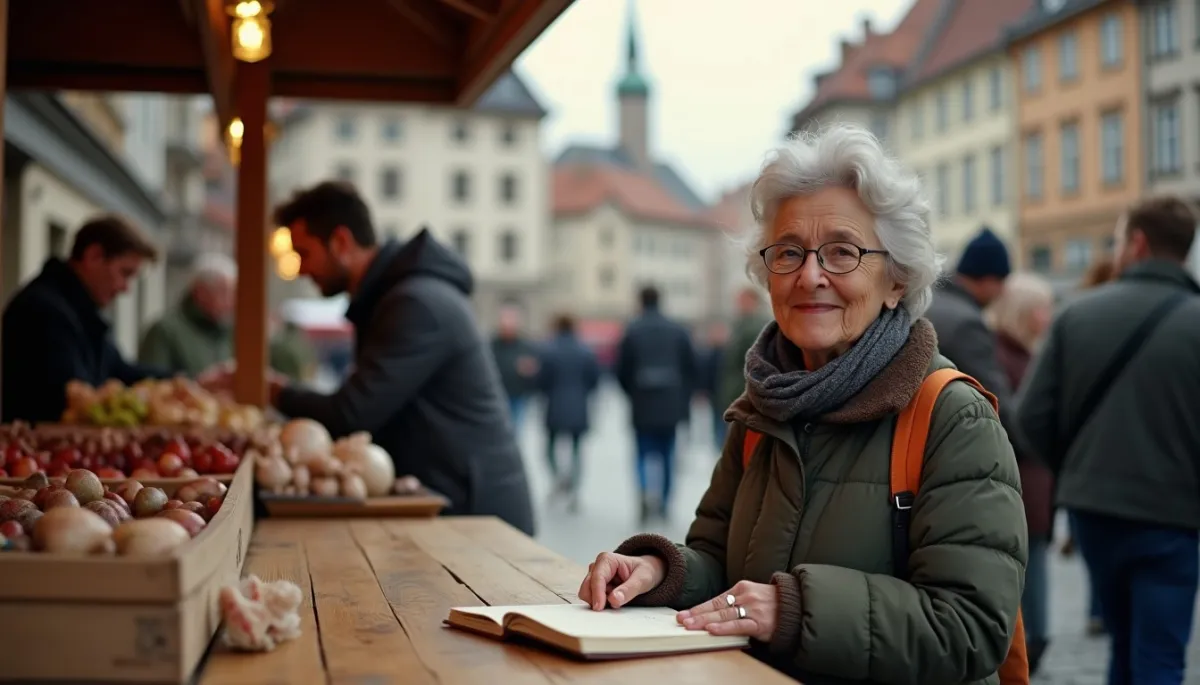
She smiled and put a small notebook on the counter. Imagine a busy market in a German town, a handwritten list of offers and needs pinned to a corkboard, and strangers trading food, a night of shelter, or a repair for a conversation.
Un geste visible
Heidemarie Schwermer became a living emblem of an idea often discussed in theory, but rarely tested in full: living without money. In the mid-1990s she decided to refuse monetary transactions and to live instead by asking for and offering favors, goods and services.
Based in Germany, she relied on a simple method: a notebook and word of mouth. People wrote down what they could give (a meal, a place to sleep, a ride) and what they needed. Offers were accepted freely, with gratitude and later reciprocity when possible.
Her story reached beyond local circles. Journalists, academics and activists came to interview her. She gave talks, and her life became a case study for debates about gift economies, sharing and social trust.
Naissance d'un choix
The reasons behind her choice mix personal, social and philosophical motives. Disillusionment with consumer culture and a desire for simpler, more connected living pushed her to try another way.
Practically, she reduced possessions, learned to ask for help, and offered what she could: household chores, mending clothes, cooking, and later, occasional lectures. This created a circulation of services and support that replaced money for many daily needs.
The movement she embodied resonates with other initiatives: time-banks (where hours of work are currency), local exchange trading systems, community fridges and tool libraries. These are formal or informal ways to apply exchange without cash.
Doutes et vérités
Living without money is not a moral purity test. It brings contradictions. Dependence on goodwill can be fragile, and some goods or services remain difficult to obtain without cash, like medical care in some systems, taxes, or long-distance travel costs.
Yet her experiment showed that people often respond generously when given the chance. Small acts of hospitality—an offered bed for a night, a basket of vegetables—accumulate into a safety net, especially in tightly knit communities.
For readers curious to try aspects of this life, start small. Join a local swap group, offer a skill on a community board, or try a cash-free week using time exchanges. The key lessons are practical: cultivate trust, keep records of offers (a simple notebook works), and be ready to both give and receive.
Thanks for reading, and don't forget, Enjoy Life Moments!