Frida Kahlo and Diego Rivera: devouring passion, art and resilience in the face of suffering
🚀 Key Takeaways
- Key concept : A volatile couple who made personal pain visible through art.
- Practical tip : Visit Casa Azul in Coyoacán and Detroit Institute of Arts to see their legacies in person.
- Did you know : Diego's 1933 mural at Rockefeller Center was destroyed; its controversy made international headlines.
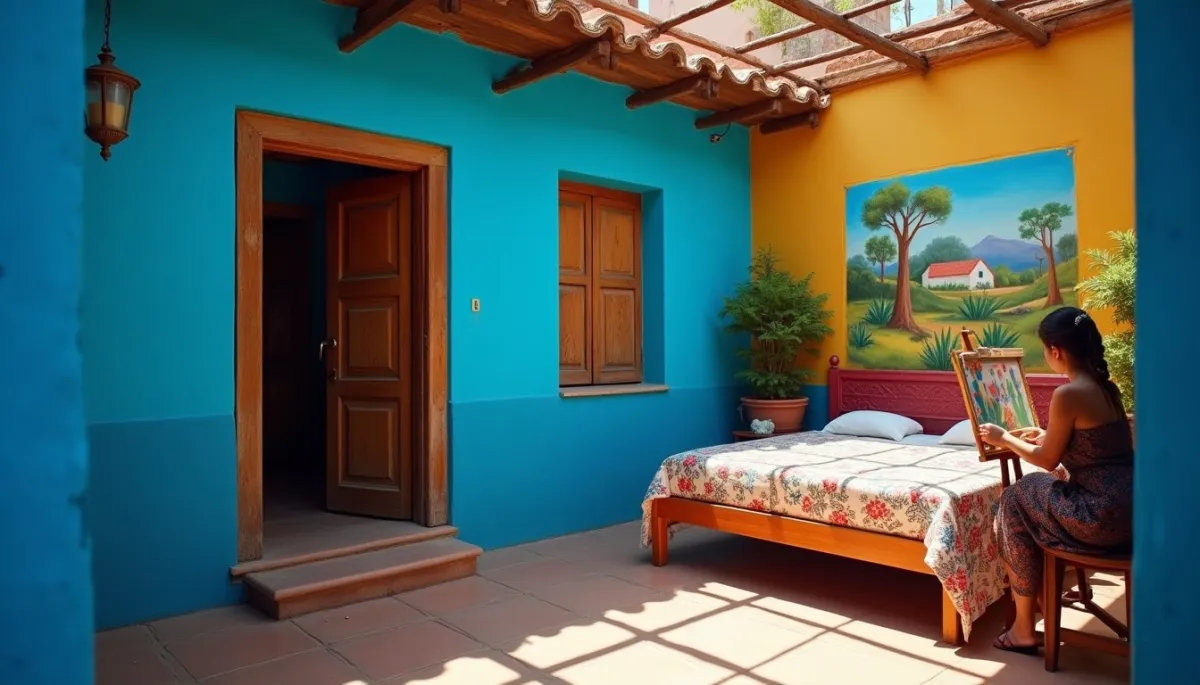
Pain can become a portrait. Imagine a sunlit courtyard in Coyoacán, blue walls and dry flowers, a woman painting beside a bed—her face direct, unflinching.
Faces entwined
Frida Kahlo (1907-1954) and Diego Rivera (1886-1957) were both giants, but of different scales. Diego, celebrated for vast frescoes like the Detroit Industry murals (1932-33) and the 1929 murals in the National Palace, was a leading figure of Mexican muralism and political art.
Frida made herself the subject. Works such as The Two Fridas (1939) and Self-portrait with Thorn Necklace and Hummingbird (1940) turned private suffering into universal images. Her use of traditional Tehuana dress created a visual language of identity and resilience.
During their lives, Rivera's public commissions often overshadowed Kahlo's intimate canvases, yet today both names travel together in popular imagination: politics, pain, color and myth.
Fire and meeting
Their meeting and marriage explain much. They married on August 21, 1929, when Kahlo, a young artist recovering from the physical and emotional aftermath of a 1925 bus accident, and Rivera, already famous and politically active, found mutual admiration.
Kahlo's life was marked by illness. Polio in childhood, the traumatic bus crash at eighteen, and decades of surgeries shaped the themes of her work. She painted in bed using a mirror attached to the canopy, turning confinement into creation.
Rivera, a Communist and muralist trained in Europe, offered Kahlo entry into Mexico's artistic circles, and she brought back a fierce, personal voice. Their home, La Casa Azul in Coyoacán, became a meeting place for artists and activists, and later a museum open to the public since 1958.
Fractures and fidelity
Their passion was not only creative but destructive. Infidelities marked the couple, including Rivera's affair with Frida's sister Cristina, a scandal that led to their 1939 divorce. They remarried in 1940, an act that testified to an obsessive bond rather than a tame reconciliation.
Despite ruptures, they influenced each other. Rivera's support helped Kahlo exhibit work abroad, including her 1938 show in New York and her first solo show in Mexico City in 1953. Kahlo in turn sharpened Rivera's personal iconography, insisting on the politics of identity.
Resilience is visible in choices: Kahlo's refusal to stop painting despite chronic pain, her political commitment, and the way both turned personal narrative into national story. Their legacies invite us to look at struggle not as mere tragedy but as source of creative power.
Practical advice: if you travel to Mexico City, book in advance for Casa Azul, explore the murals at the National Palace, and allow time in Coyoacán to feel the layered history.
Thanks for reading, and don't forget, Enjoy Life Moments!