Krug champagne: the symphony of blending and the philosophy of rarity
🚀 Key Takeaways
- Core concept : Krug's Grande Cuvée is a blend of many vintages, creating consistency and complexity.
- Practical tip : Serve at 8-10°C in a tulip glass, pair with rich seafood or mature cheeses.
- Did you know : Krug keeps a 'library' of reserve wines (in oak) to enrich blends for years.
A single bottle, a small revolution.
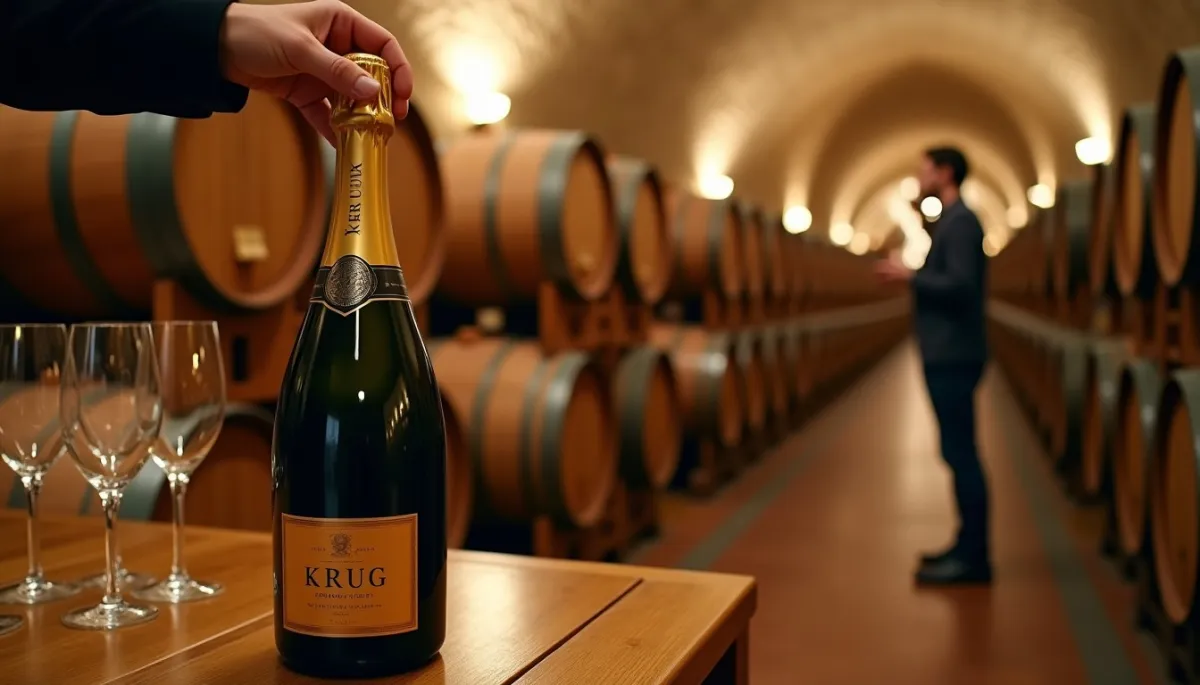
Imagine a dimly lit cellar in Reims, rows of numbered magnums and large oak tuns, an experienced chef de cave studying verticals. A faint hum of corks popping from tastings, the scent of brioche and toasted hazelnut that comes from long ageing. This is where Krug writes its scores, note by note, vintage by vintage.
An endless score
Krug's signature lies in an audacious idea: blend broadly to reach singularity. The Grande Cuvée is assembled from dozens, sometimes over a hundred distinct wines, drawn from more than ten vintages. Each wine is treated as an instrument, some young and bright, others matured and complex, all combined to achieve an identifiable style that transcends any single harvest.
This method produces consequences felt on the market and at the table. The Grande Cuvée is reliably complex, with layers of citrus, toasted bread, orchard fruit and mineral notes. Collectors prize it for consistency, sommeliers for its food versatility, and auction rooms for its provenance. Meanwhile, Krug's single-plot expressions, like Clos du Mesnil or the tiny Clos d'Ambonnay, create sharp contrasts, rare bottles that command attention and high prices.
For the consumer, the result is paradoxical: a non-vintage champagne that tastes unique, and vintage cuvées that feel like precious, limited chapters. The house's reputation is founded on that interplay between abundance of input and scarcity of output.
Roots and reasons
Why blend so many components? The answer is both practical and philosophical. Practically, Champagne's climate is variable. A single vintage can bring brilliance or lean acidity. By keeping and ageing reserve wines, Krug smooths climatic irregularities and preserves aromatic memory from warmer or cooler years.
Philosophically, Krug pursues an ideal: the persistent expression of pleasure. The house believes that craftsmanship lies in selection and harmony. To do this, Krug stores reserve wines in a 'library' in oak casks, sometimes for decades. These reserve wines act like seasoning, adding depth, toasted notes and glycerin texture that younger wines alone could not deliver.
Historically, Krug was founded in 1843 in Reims by Joseph Krug, and the house has remained synonymous with meticulous work. Today it belongs to a larger luxury group, yet retains a family spirit and an artisanal approach, where the chef de cave and the team taste through hundreds of samples every year to design each release.
Controlled rarity
Rarity is central to Krug's aura but it is not mere scarcity for marketing. It is curated scarcity. Limited parcels, tiny single-plot clos cuvées, older vintages pulled from the library, all generate wines whose existence is constrained by nature and by choice. When Krug chooses to bottle a Clos d'Ambonnay, it is because a particular parcel has delivered an exceptional, singular fruit that cannot be reproduced at scale.
That deliberate limitation shapes value. Rare Krug bottles appear at high-end restaurants, private cellars and auctions. They age superbly, sometimes for decades, rewarding patience with evolving aromas of toasted brioche, candied peel and dried fruits. For collectors, provenance and cellaring history matter as much as the producer's name.
And yet, contradictions remain. As luxury groups globalize distribution, scarcity becomes a balancing act. Krug must protect the exclusivity of its clos cuvées while maintaining the availability of its Grande Cuvée to satisfy a growing international appetite. The house manages this by strict parcel selection and by limiting production of single-plot wines.
Practical advice for readers: open Krug when the moment matters. Chill gently, use a tulip or white wine glass to reveal nuance, and pair with dishes offering both richness and acidity, think lobster with brown butter, smoked salmon, or mature Comté.
Krug is both method and myth, a house where blending is composition and rarity is a deliberate value. Each bottle is a testament to the patience of cellar work and the art of choosing.
Thanks for reading, and don't forget, Enjoy Life Moments!