Aston Martin vs Ferrari: the duel of automotive philosophy between poise and passion
🚀 Key takeaways
- Core concept: Aston Martin trades on understatement and grand tourer refinement, Ferrari on racing-born emotion and driver engagement.
- Practical tip: Choose Aston Martin for luxury and presence, Ferrari for track-bred thrills; both are collector assets but serve different desires.
- Did you know: Aston Martin is forever linked to James Bond, while Ferrari’s identity is inseparable from its Scuderia and Maranello test track.
Silence, then a measured growl.
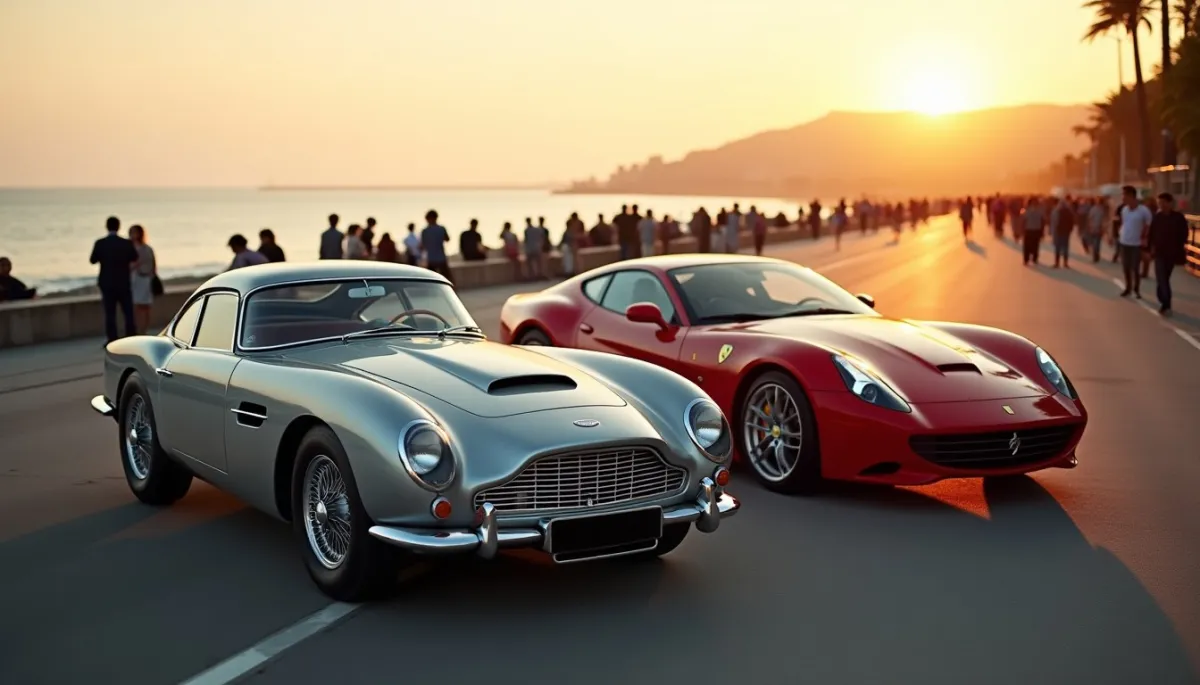
Imagine the lawn at Goodwood on a warm morning. A silver Aston Martin glides past in immaculate composure, its leather interior smelling faintly of cedar, while across the paddock a Ferrari arrives in a flurry of lights and engine note, mechanics smiling, a small crowd leaning in. Both draw eyes, but for different reasons.
British poise
Aston Martin is shorthand for cultivated restraint. Founded in the early 20th century in Britain, the marque built a reputation for grand tourers that favour long-distance comfort, hand-stitched cabins, and proportions that read as aristocratic more than aggressive. The DB series, from the DB5 to the DB11, cemented that image.
The brand’s cultural currency is strong. Appearances in James Bond films turned a car into a character: the DB5 is not just a model, it is a mood. At concours events like Pebble Beach, Aston Martins are presented as objets d'art, often personalized through Q by Aston Martin, the in-house atelier that offers coachbuilding touches and bespoke interiors.
On the road, an Aston is about composure. Chassis tuning privileges comfort and grand touring stability, engines deliver power with refinement, and the cabin is an exercise in calm. For many buyers the appeal is presence rather than adrenaline, an accessory to cultivated living.
Heart of passion
Ferrari was born from a racing obsession. Enzo Ferrari’s early companies led to a marque whose headquarters in Maranello and private Fiorano test track are pilgrimage sites for enthusiasts. Scuderia Ferrari is the oldest team in Formula 1 and its colours, sounds, and statistics built a myth of performance.
Design at Ferrari is often sculpted around aerodynamics and driver feedback. Models like the 250 GTO, F40, and more recently the SF90 Stradale, speak of stripped intent. Even road cars carry a sense of competition, with steering and engine response calibrated to communicate every input to the driver.
Scarcity is part of the strategy. Ferrari limits production and manages allocation, a policy that feeds waiting lists and strong resale values. At auctions, rare Ferraris command prices that speak to their cultural status, and collectors expect high performance as well as pedigree.
Routes to tomorrow
Both brands face the same modern demands, but respond differently. Electrification and regulatory pressure are real. Ferrari has invested in hybrid technology as a way to boost performance while preserving the sensory signature of its cars. Aston Martin has explored electrified powertrains and revived Lagonda as a high-end electric sub-brand, seeking to marry luxury with new propulsion.
Collaborations illustrate divergent strategies. Aston Martin worked with Red Bull Advanced Technologies on the Valkyrie hypercar, an exercise in mixing British refinement with extreme aerodynamic performance. Ferrari continues to design in-house but also leverages its racing department to translate track tech to road cars.
These choices create tensions. Purists worry that full electrification will erase the acoustic and tactile cues that define these marques. Yet customers, particularly younger collectors, ask for sustainability. The challenge is preserving identity while adapting technology, a balancing act both companies navigate differently.
For the buyer, the decision is philosophical. Do you want to arrive with understated elegance, or do you want to feel the crescendo of a V12 at the red line? Both cars tell stories, and both are investments in lifestyle. Consider provenance, after-sales service, and intended use. A weekend track day calls for Ferrari instincts, a long coastal tour favours Aston comfort.
In the end, Aston Martin and Ferrari are less competitors in a single lane, and more storytellers with different narratives. One invites you to sip champagne in a leather-clad cabin, the other to feel the heartbeat of racing in your ribs. Either way, the pleasure is real.
Thanks for reading, and don't forget, Enjoy Life Moments!