Ceremonial matcha: more than a drink, a ritual of clarity
🚀 Key Takeaways
- Core concept : Matcha is shade-grown, stone-ground green tea meant to be whisked and consumed whole, creating a focused calm.
- Practical tip : Use 1 to 2 grams of ceremonial matcha, 70 to 80°C water, whisk with a bamboo chasen in an M motion for 15–30 seconds.
- Did you know : Powdered tea rituals date back to Song China, and Japan refined the tea ceremony with figures like Sen no Rikyu in the 16th century.
Silence in a bowl.
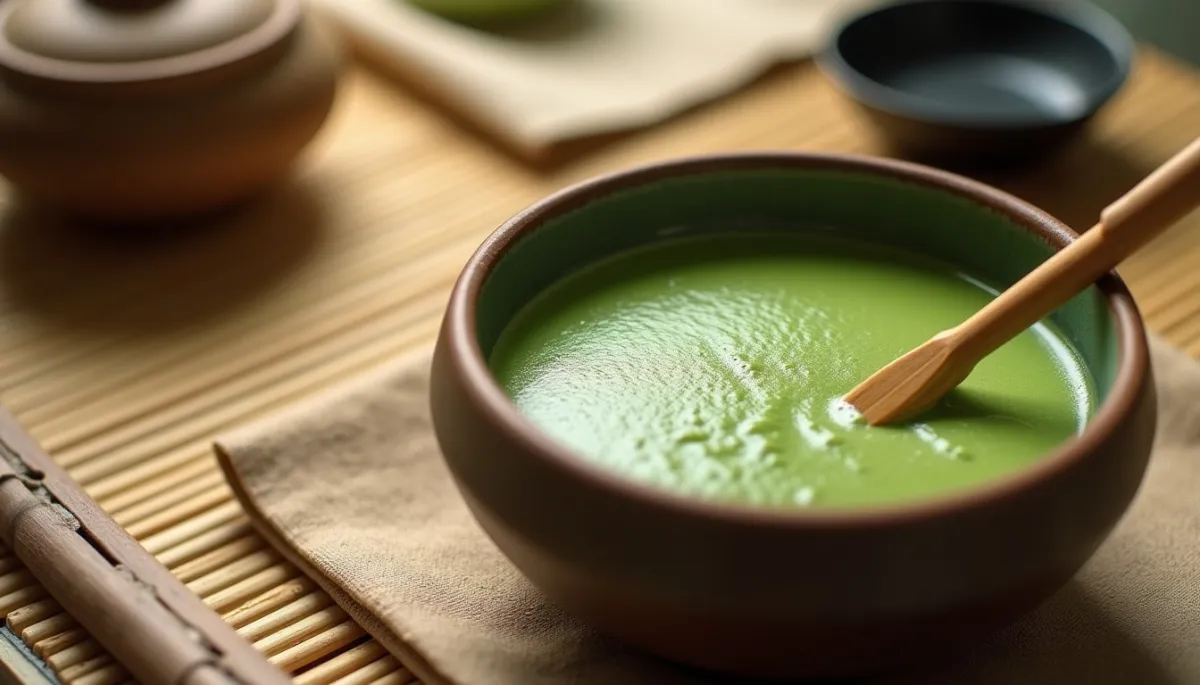
Imagine tatami warmed by morning sun, a small wooden shelf holding a natsume (tea caddy), a chashaku (bamboo scoop), and the whorled bamboo tines of a chasen. A host moves slowly, every gesture rehearsed, the whisk breaking air into a froth the colour of spring. You are present, the rest of the world reduced to steam and green powder dissolving into a thin, luminous liquid.
moment of clarity
Today, ceremonial matcha is both tradition and trend. Once confined to Japanese tea houses and Zen monasteries, it is now served in cafés from Kyoto to New York. The powdered form of green tea provides a concentrated experience: you ingest the whole leaf, not an infusion, which intensifies flavour and effects.
Scientific studies and popular wellness coverage since the 2000s have spotlighted matcha for its combination of caffeine and L-theanine. This amino acid promotes alpha brain waves, associated with relaxed alertness. The pairing offers sustained focus without the jittery spike some people feel with coffee, which helps explain matcha's appeal for creative work, study sessions, and meditation.
The aesthetic and social result is a ritualized pause in hectic days. Between 2010 and 2020, matcha became a symbol of mindful consumption in the West, moving from niche specialty shops to mainstream menus. The consequence is cultural diffusion: matcha lattes, desserts, and even beauty products, while ceremonial-grade matcha remains distinct in quality and purpose.
roots and rituals
Powdered tea originated in China. During the Song dynasty, powdered tea was whisked in bowls for court rituals. Zen monk Eisai (1141–1215) brought tea seeds and Buddhist teachings to Japan around 1191, planting seeds for a uniquely Japanese practice. Over centuries, the tea ceremony, or chanoyu, was refined by masters such as Murata Juko, and notably Sen no Rikyu (1522–1591), who embedded the aesthetics of wabi-sabi, simplicity and imperfection.
Matcha production itself is deliberate. Tea plants are shaded about 20 to 30 days before harvest to boost chlorophyll and amino acids, creating sweeter, more umami-rich leaves. After steaming and drying, leaves called tencha are stone-ground into a fine powder. 'Ceremonial grade' indicates tea intended for whisking with hot water and savoring plain, as opposed to culinary grades used for lattes and baking.
Tools matter. The chasen (bamboo whisk) creates an even froth, the chashaku doses precise amounts, and the chawan (tea bowl) frames the act. These utensils are not mere props, they structure attention. Learning their names and uses connects you to centuries of practice, and to the story of communities that kept this craft alive.
modern contradictions
The global popularity of matcha raises tensions. Commercial demand has led to large-scale production, sometimes blurring quality lines. Labels such as 'ceremonial' can be used loosely on marketing materials. A consumer seeking true ceremonial matcha should look for single-origin Japanese teas, ideally from regions like Uji (Kyoto), Nishio (Aichi), or Shizuoka, and for vendors who describe harvest dates and processing.
There is also the cultural issue of appropriation versus appreciation. When matcha becomes a flavor in a franchised drink, context is often lost: the history, the ritual, the farmers and artisans behind the powder. Respectful engagement means learning the terms, understanding grades, and supporting small producers when possible.
Yet hybridization yields creative outcomes. Contemporary tea masters and cafés experiment with tea-ceremony-inspired sessions that last 20 minutes, adapting to urban lives. Corporate mindfulness programs sometimes use matcha-making as an anchor for short practices of focus. The future likely holds both commodification and careful renaissance, side by side.
Thanks for reading, and don't forget, Enjoy Life Moments!