The hermit of wisdom: 40 years of silence and meditation in the Himalaya
🚀 Key Takeaways
- Concept key : Long-term silence as a spiritual and practical practice.
- Practical tip : Start with short silent retreats, gradually extend time; keep a basic structure (sleep, food, sitting periods).
- Did you know : Jetsunma Tenzin Palmo undertook a 12-year cave retreat in the Himalaya from 1976 to 1988; Milarepa, the Tibetan yogi, symbolizes solitary practice since the 11th century.
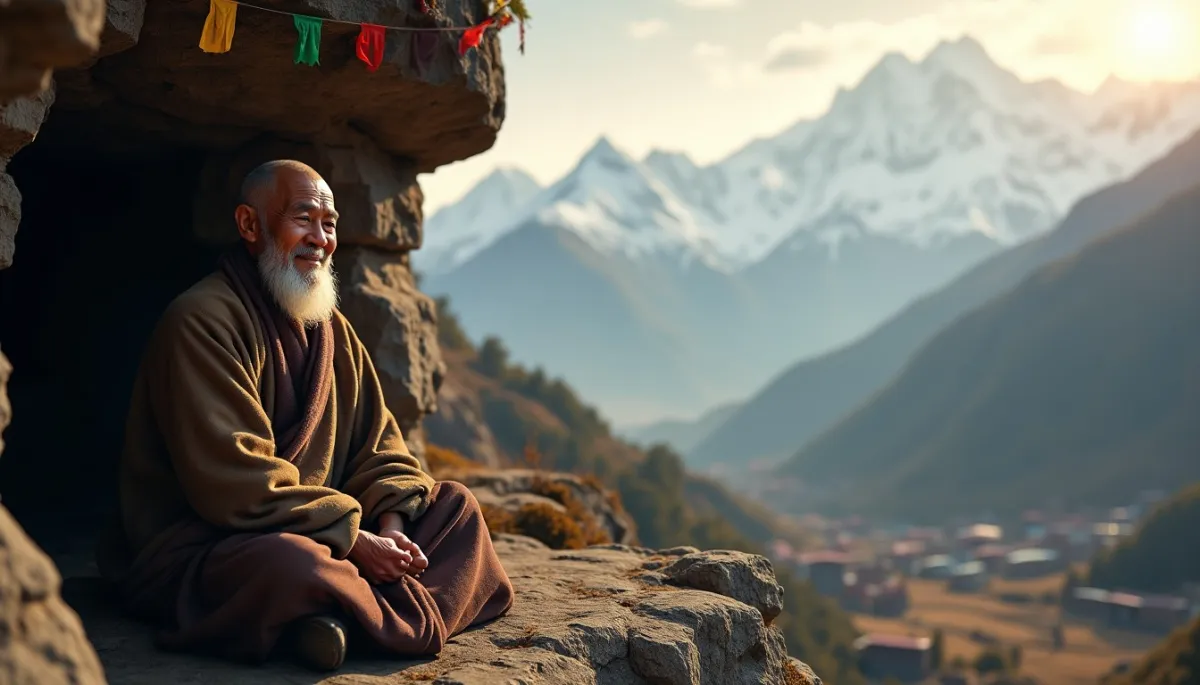
He sits at dawn, wrapped in a worn wool cloak, watching clouds slide along a ridge. The air is thin and the prayer flags on a dry pole flap with a patient rhythm.
Silence habité
The man villagers call the hermit of Khangsar arrived in the valley in 1986. His given name, Lobsang Norbu, appears on a handful of permits issued by the local monastery in 1987. Photographs taken by a trekking guide in 1995 show a solitary figure at the mouth of a small cave, a thin smoke column rising from a metal pot.
Over four decades he became both legend and neighbor. Farmers brought barley and yak butter once a month until an old village woman, Tsering, insisted that he accept soup instead. He rarely refused. Pilgrims, scientists and a couple of documentary teams visited between 2003 and 2018, always reporting the same facts: few words, excellent breath control, and a laughter that surprised listeners.
His practice combined Tibetan Buddhist meditation techniques (shamatha and vipashyana, translated simply as calm-abiding and insight) with long periods of silence (mauna). He kept no public diary, but one disciple, now a monk in Leh, recalls a letter dated 2001 asking permission to fast during an eclipse, a detail filed at the monastery archives.
Pas après pas
Lobsang's path did not start in a cave. Born in 1958 in a village near Lhasa, he trained briefly as a postulant, then worked as a porter on Himalayan treks in the early 1980s. A turning point came in 1985 when, during a harsh winter near the Annapurna foothills, he witnessed a collapse of a snow bridge that cost the life of a young muleteer. The experience shook him.
In 1986 he walked north, past Mustang and Spiti, until he reached Khangsar, an isolated hamlet at roughly 4,200 meters. There he found a small abandoned hermitage with a cave carved into the rock. The monastery granted him a formal solitary retreat permit in 1987, a practice still recorded in local registries. The reasons people turn to solitude are complex: grief, spiritual calling, recovery from trauma, or the wish to test the limits of attention. In Lobsang's case, friends mention grief and a desire for deeper clarity.
Stories from the 1990s speak of small acts that reveal character: mending a broken school door in 1992, guiding three lost shepherds back to their village in 1998, gifting his only jacket to a child in 2004. These events kept him connected to the community despite the silence.
Contrastes vivants
Silence, however, is not absence. Modernity arrived in the valley with solar panels in 2007, a radio tower in 2012, and tourists with smartphones after 2015. The hermit's solitude confronted the noisy world. Some visitors respected the boundary; others sought selfies, a temptation that the monastery publicly discouraged in a 2016 bulletin.
There were tensions. Local officials debated whether to grant him a pension in 2010. Conservationists worried about the cave's fragile ecosystem after a surge of illegal camping in 2014. The monastery mediated, and a small regulatory protocol was adopted in 2015 to protect both the hermitage and the practice of solitude.
At the same time, his retirement attracted attention from scholars. A 2019 ethnographic study published in an academic journal used interviews with villagers to map rhythms of giving and receiving, showing how a long-term hermit can become an axis of social reciprocity. The study concluded that solitude was embedded in social life rather than opposed to it.
Leçons du silence
What can modern readers learn from forty years of quiet? First, that silence is a practice, not a fix. It requires structure: regular posture, simple food, and rites that mark time. Second, long retreats magnify ordinary needs. Reports from caregivers mention dental problems, joint stiffness, and seasonal vitamin shortages, reminding us that the body must be cared for.
Practical advice for those curious: start small, with a day of silence, then a three-day retreat. Limit inputs: no screens, basic journal for emergencies, and an accountability partner. If you go to altitude, prepare physically and talk to a physician. Learn a basic breathing technique (box breathing or abdominal breaths) before attempting long sits.
Finally, remember the social dimension. Like Milarepa, who performed songs and teachings after long retreats in the 11th century, a hermit often returns or communicates. Lobsang's rare public words emphasized compassion and simplicity. In 2025, during a brief visit to the monastery, he told a young monk: "If you want to know the mountain, befriend it. If you want to know the mind, befriend silence."
Thanks for reading, and don't forget, Enjoy Life Moments!