Investing in Hermès bags: why the Birkin beats gold for returns
🚀 Key Takeaways
- Key concept : The Birkin's resale market is driven by scarcity, provenance and collectible desirability.
- Practical tip : Favor classic sizes and provenances, keep boxes and receipts, and verify exotic skins' legality.
- Did you know : The Birkin was born from a chance meeting between Jane Birkin and Hermès' CEO in 1984.
It feels like holding a small piece of fashion history.
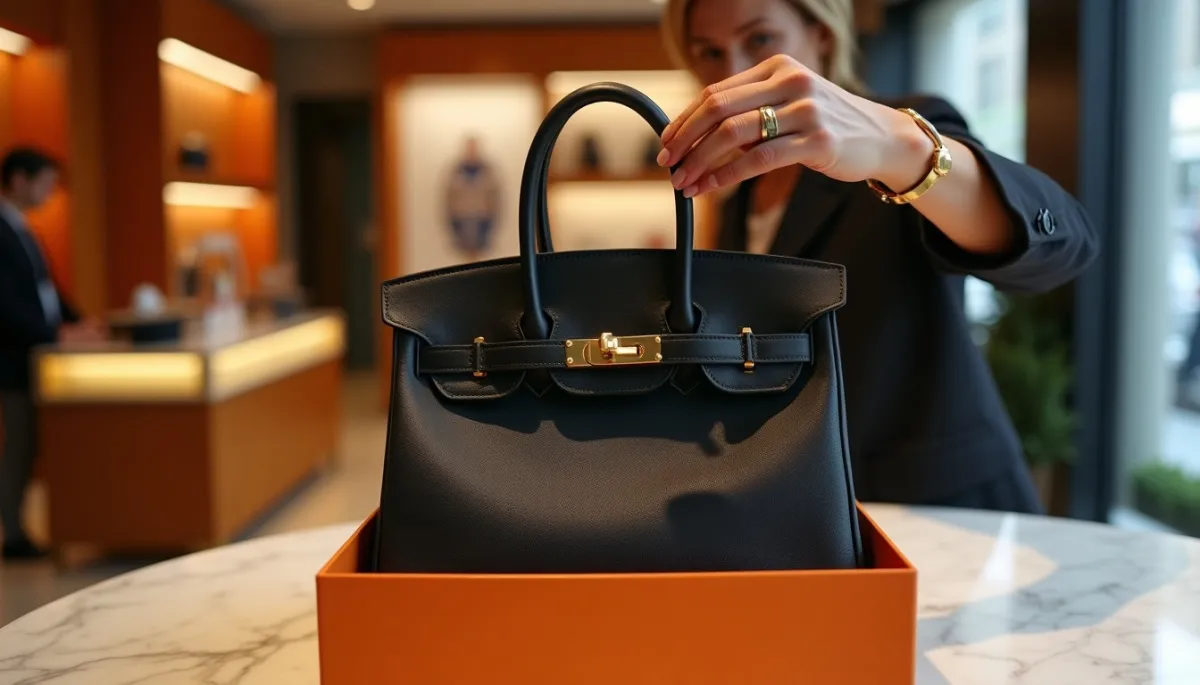
Imagine the cool marble of 24 Rue du Faubourg Saint-Honoré in Paris, a Hermès sales associate gently unpacking a Togo leather Birkin for a waiting client, the soft leather smell, the careful stitch work. Elsewhere, a bidder in a Hong Kong saleroom raises a paddle as a crocodile-skin Birkin climbs beyond estimates. Both scenes, at first blush worlds apart, belong to the same market: bags traded as prized tangible assets.
Value that climbs
Over the last two decades, certain Hermès Birkins have posted returns that surprise even seasoned investors. Luxury indices and auction records consistently show handbags (and particularly Hermès pieces) among the top-performing categories in the collectible market, often outpacing traditional safe havens during periods of low yields.
Why do prices reach such heights? Auction highlights and private-sale reports from Christie's, Sotheby's and regional houses in Hong Kong and New York reveal repeated patterns: rare materials (like Himalayan crocodile), hard-to-find sizes and iconic colours fetch premiums. In practical terms, a sought-after Birkin can appreciate significantly in resale value compared with its original retail price.
Geography matters. Major luxury hubs — Paris, London, New York and Hong Kong — are not just storefronts, they are price-setting markets. Asian demand, especially from collectors in Greater China, has been a major price engine since the 2010s, regularly lifting auction tallies for exceptional pieces.
Why it outperforms
Scarcity is deliberate. Hermès controls production and distribution. The brand does not publish production numbers, and waitlists, client lists and in-store allocation policies create a persistent gap between desire and availability. In economics, limited supply with steady or rising demand pushes prices up.
Craftsmanship and brand equity add intrinsic value. A Birkin is handmade by a single artisan, often requiring many hours. That narrative of artisanal labor, combined with Hermès' century-long heritage (founded in 1837), transforms a handbag into an object with cultural and historical capital.
Provenance and certification matter in resale. Bags sold with original boxes, receipts, and a clear ownership history command higher prices. Auction houses and specialist platforms (BagHunter, TheRealReal for secondary market visibility) provide verifiable chains of custody that institutionalize value the same way certificates and provenance work for fine art.
Not without nuance
This is not a passive, risk-free investment. Liquidity varies: extraordinary Birkins can find buyers quickly at auction, but ordinary colours and sizes may sit longer on resale platforms. Transaction costs (auction fees, buyer premiums, shipping, insurance) reduce net returns and must be accounted for.
Legal and ethical constraints can complicate things. Many top-performing Birkins use exotic skins (crocodile, alligator), which are subject to CITES regulations and sometimes import restrictions, increasing paperwork and limiting market access. Moreover, maintaining condition (professional cleaning, correct storage) is essential to preserving value.
Finally, fashion is cyclical. Icons endure better than trends, so investment-minded buyers focus on classics (neutral colours, popular sizes like 25, 30 and 35 cm) and notable materials, rather than seasonal novelties. Expert appraisal and patience remain crucial.
Practical steps
Start by learning the market. Follow auction results from Christie's and Sotheby's, consult specialized indices (Knight Frank and boutique market trackers), and read resale platform pricing to spot real-world premiums.
Choose wisely: classic colours (black, gold, etoupe), popular sizes, and pieces with full provenance are safer bets. For rare leathers, consider buying at auction rather than retail; auctions can provide immediate market pricing and a transparent sale record.
Protect your asset: keep packaging, receipts and a condition report. Insure high-value pieces, and factor maintenance into your cost of ownership. When selling, use reputable auction houses or vetted consignment services to maximize visibility and price realization.
Thanks for reading, and don't forget, Enjoy Life Moments!