Keanu Reeves: The private tragedies behind Hollywood's kind cowboy
🚀 Key Takeaways
- Key concept: Keanu's public kindness is rooted in private tragedy and resilience.
- Practical tip: Small acts of empathy, like listening or helping behind the scenes, build trust and meaning.
- Did you know: He lost a stillborn daughter in 1999 and his girlfriend Jennifer Syme died in 2001; River Phoenix, a close friend, died in 1993.
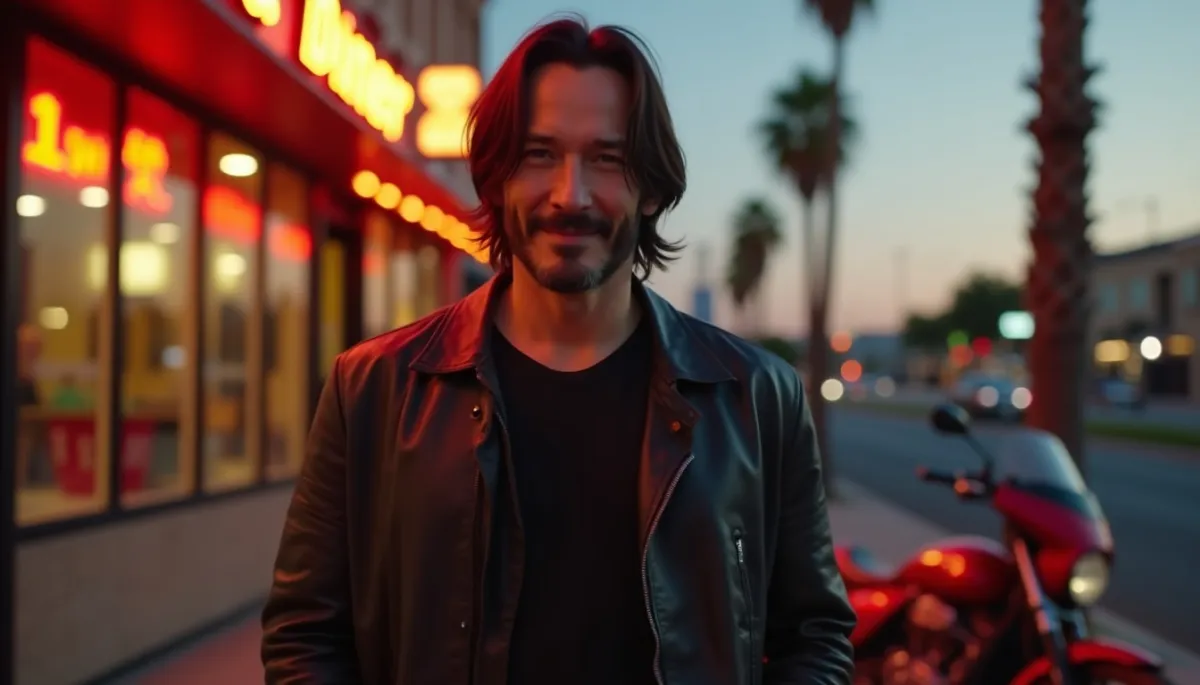
He looks like a cowboy from an old movie, but his eyes tell of other journeys. Picture him leaving a diner at dusk in Los Angeles, leather jacket, low-key smile, stepping into ordinary life after a long day on set.
Faces and films
Keanu Charles Reeves was born on September 2, 1964, in Beirut, and grew up between New York and Toronto. His breakthrough came with Bill & Ted's Excellent Adventure (1989), which revealed his comic timing, and Speed (1994) that made him an action star.
The turn came in 1999 with The Matrix, where Reeves' portrayal of Neo made him a global icon and shifted the landscape of sci-fi cinema. Years later, John Wick (2014) reintroduced him as a stoic, relentless lead and launched a franchise beloved by audiences for its choreography and worldbuilding.
Beyond film, he plays bass in the rock band Dogstar and co-founded Arch Motorcycle in 2011, showing an affinity for craft and mechanics that fits the 'cowboy' image many fans assign him.
Fault lines of fate
Loss has punctuated Reeves' life. In 1993, River Phoenix, a close friend and fellow actor, died of a drug overdose outside the Viper Room in Hollywood. Reeves was in the vicinity and has spoken about the shock of losing someone young and talented.
In 1999, Reeves and his then-partner Jennifer Syme experienced the stillbirth of a daughter, Ava Archer Syme-Reeves. The couple's private grief was profound. Two years later, on April 2, 2001, Jennifer Syme died in a car accident in Los Angeles, compounding Reeves' sorrow and reinforcing his retreat from tabloid life.
Earlier, his childhood was unsettled: his parents separated, and the family moved frequently. He has mentioned struggles with dyslexia, and he watched family members face illness. Those experiences seeded a humility and a resolve to protect private life from the public gaze.
Kindness in practice
Reeves' gestures of generosity are well documented. He rides the subway anonymously, gives time to fans, and is known to invite colleagues to lunch. Reports say he shared a significant portion of his Matrix sequels' earnings with effects and costume crews. Whether the exact figures are reported differently, the pattern is clear: he incentivizes teams rather than hogging credit.
He founded Arch Motorcycle with Gard Hollinger, an enterprise rooted in collaboration. He also reportedly supports medical research and children's causes through private donations, often routed quietly to avoid publicity. That discretion is part of his ethos: do good, but don't trumpet it.
For readers, there is a practical takeaway. Empathy is not performative. Small, repeated acts—covering a shift, acknowledging a colleague's work, sending a note—build a reputation of care more than grand gestures. Reeves embodies this approach: persistence and consistency.
Contradictions and choices
Fame and privacy sit uneasily together. Reeves embraced blockbuster fame but limited interviews and publicity tours. This paradox—being everywhere on the screen and absent in press circuits—allowed him to curate a life where grief could be mourned away from cameras.
His calm exterior sometimes invites myths: the $75 million checks headline is famous, though reporting varies. What matters is the broader image: a star who spends time and money to improve the conditions of collaborators. He models a less flashy, more sustained form of generosity.
There is also an artistic contradiction. Reeves plays violent or mythic figures on screen, yet off-screen he cultivates gentleness. That tension makes his performances compelling—an actor who understands both damage and repair.
Small lessons
Keanu Reeves' story shows how private pain can seed public compassion. Grief need not harden; it can call someone to quieter acts of service. For anyone seeking to translate loss into meaning, the principle is simple: start small, stay consistent, and protect inner work from spectacle.
Terminology note: when I write about 'resilience', I mean the ability to maintain values and purpose after trauma, not an absence of sadness. It is an active process, often supported by community and routine.
Keanu remains a reminder that celebrity can coexist with discretion, and that the most memorable kindnesses are often the least photographed.
Thanks for reading, and don't forget, Enjoy Life Moments!