The enslaved woman who became a spy: Harriet Tubman's incredible courage for freedom
🚀 Key Takeaways
- Core idea : Harriet Tubman went from fugitive to Union scout and liberator.
- Practical tip : Visit Auburn, NY and Maryland sites to walk the paths she knew.
- Did you know : She helped plan the Combahee River Raid on June 2, 1863, freeing about 700 people.
She moved with purpose.
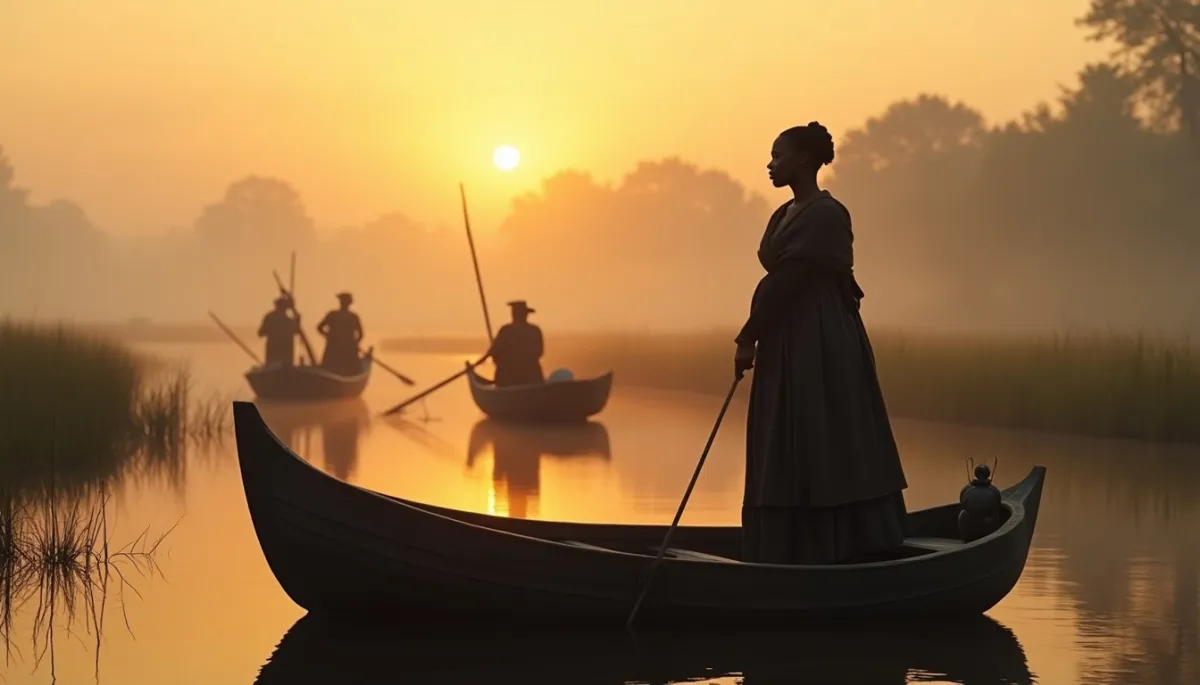
Imagine a humid dawn on the South Carolina coast, small boats cutting through tidal marshes, a short, resolute woman standing at the bow, giving directions in low, urgent tones. Around her, Union soldiers and newly freed men and women navigate creeks toward safety. That woman, Harriet Tubman, was both guide and strategist. Her presence charged the air; every footstep and whisper might mean capture or freedom.
Au fil de la route
Harriet Tubman was born Araminta Ross around 1822 in Dorchester County, Maryland. Enslaved as a child, she endured brutal labor and, at about 12 years old, a head injury that left her with seizures and vivid visions. She later changed her name to Harriet after marrying John Tubman in 1844.
In 1849 she escaped north to Philadelphia. Rather than remain safe, she returned to Maryland at least a dozen times over the next decade, guiding roughly 70 people to freedom via the Underground Railroad, a clandestine network of routes and safe houses. Contemporary accounts praised her courage; abolitionist publications nicknamed her 'Moses'.
Her actions were concrete and risky. She used songs, local knowledge of waterways, and night travel to avoid patrols. Bounties and slave catchers were constant threats; despite this, historical tradition holds she never lost a 'passenger', though records vary on exact numbers.
Plans et batailles
When the Civil War began, Tubman offered her services to the Union. She worked as a nurse, cook and, crucially, as a scout and spy between 1862 and 1863. Her knowledge of Southern geography and enslaved communities made her an invaluable asset.
On June 2, 1863, she helped lead what is now called the Combahee River Raid. Working with Colonel James Montgomery, Tubman guided Union gunboats through the South Carolina rivers, freeing about 700 enslaved people from plantations near Beaufort. The raid was one of the largest liberation actions of the war, and Tubman's role was decisive.
She also aided recruitment for Black regiments, including encouraging men to join units such as the 54th Massachusetts. Her wartime service challenged contemporary gender roles and expanded the idea of who could be a military asset.
Foi, mémoire et contradictions
Tubman's life mixes spiritual conviction and political action. Deeply religious, she interpreted dreams and visions as guidance. Critics later debated details of her stories; memory and myth intertwined. Historians disagree on exact counts of rescued people and the frequency of returns, but agree on her extraordinary leadership.
After the war she married Nelson Davis, a Black Union veteran, in 1869. She settled in Auburn, New York, where she cared for her family and campaigned for pensions for veterans and former enslaved people. She also worked with suffragists, linking the fight for freedom and for women's rights.
She died on March 10, 1913, in Auburn. Her home and burial site became places of memory. Today museums, trails and national park sites in Maryland and New York invite visitors to learn from her life, balancing myth and meticulous history.
Visiter et comprendre
To connect with Tubman's story in person, plan ahead. The Harriet Tubman Home in Auburn is a quiet, powerful place. In Maryland, guided tours and a national historical park trace landscapes she knew. Summer visits can be hot; spring and fall offer gentler weather and fewer crowds.
Recommended reading includes Kate Clifford Larson's 'Bound for the Promised Land' and Catherine Clinton's biography. These works untangle myth and fact and provide dates, documents and maps to anchor her feats.
Practical advice: walk slowly, listen to guides, and imagine the landscape at night, when most escapes took place. Respect the sites as places of memory and courage.
Harriet Tubman teaches a lesson that remains urgent: courage is a combination of faith, careful planning and willingness to risk everything for others. Her life invites us to ask how we act when injustice stands in front of us.
Thanks for reading, and don't forget, Enjoy Life Moments!