George and Amal Clooney: when love marries Hollywood glamour with human rights defense
🚀 Key Takeaways
- Core idea : Celebrity can amplify legal advocacy.
- Practical tip : Support local human rights NGOs and follow TrialWatch updates.
- Did you know : The Clooney Foundation for Justice launched TrialWatch to monitor fairness in trials worldwide.
Love can be a public act.
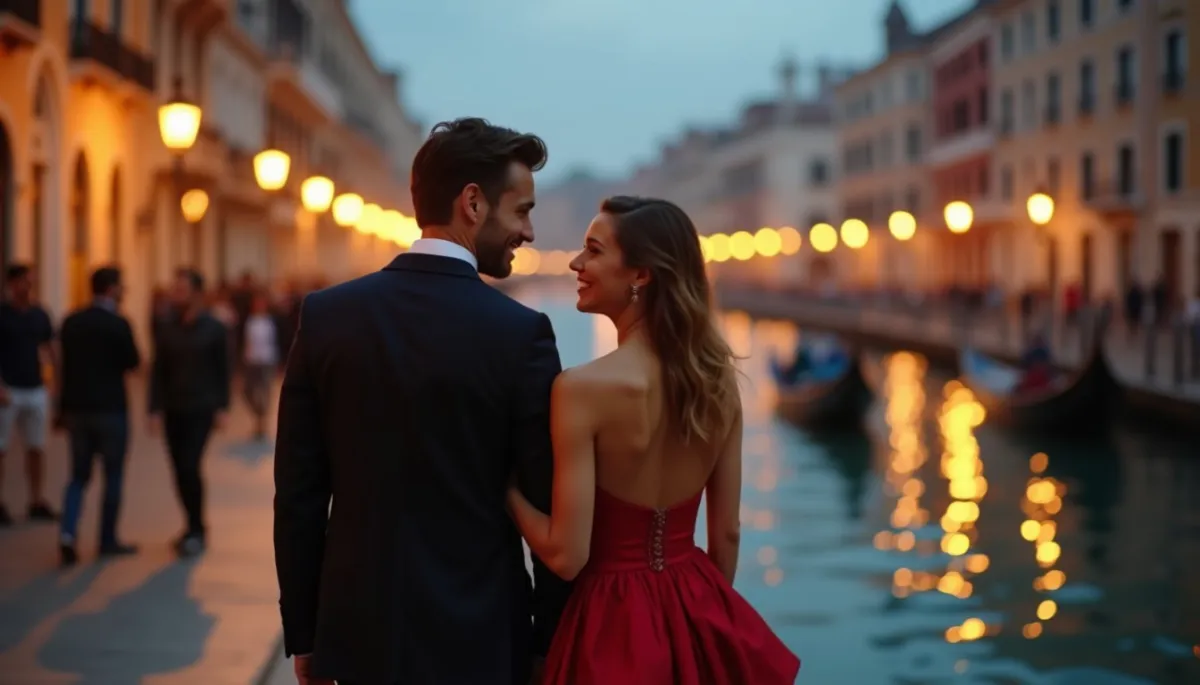
Imagine a Venetian evening in September 2014, gondolas sliding under low bridges, cameras reflecting on water. A bride in cream, a groom in tuxedo, and beyond the flashbulbs, conversations about rule of law and displaced families mingle with the music. That image—romantic, cinematic—became also the opening chapter of a partnership that would take celebrity into courtrooms, conferences and crisis zones.
Glamour engagé
George Clooney is a name synonymous with Hollywood. Born in 1961, he rose to fame with TV and film roles, from ER to Ocean's Eleven. His Oscar for Syriana (2006) and his acclaimed direction of Good Night, and Good Luck (2005) cemented a status that draws attention worldwide.
Amal Clooney, born Amal Alamuddin in Beirut in 1978, built her reputation in another arena. Educated at Oxford and New York University, she became an international human rights lawyer, appearing before institutions such as the International Criminal Court and the European Court of Human Rights. Her work spans complex cases involving press freedom, war crimes and displaced communities.
Together, their public profile creates a dual stage: George brings media attention, Amal brings legal expertise. When they speak in public—whether at a gala in Los Angeles or a panel in The Hague—the message reaches both tabloids and specialists. That unusual pairing makes their activism uniquely visible.
Parcours croisés
Their union was formalized in Venice on 27 September 2014. That weekend of celebrations also launched conversations about what a modern power couple could represent—style, yes, but also substance. Soon after, the couple turned attention to systemic injustices.
In 2016 they founded the Clooney Foundation for Justice. The foundation combines legal teams, investigators and technology to pursue accountability. One of its most public initiatives, TrialWatch, was created to document and analyze trials where the outcome may be compromised by political interference. The project partners with journalists and lawyers to produce evidence-based reporting.
George's earlier activism on Darfur, including public appeals and co-founding efforts such as Not On Our Watch, provided a precedent. Amal's courtroom experience offered a roadmap. The result: targeted campaigns that mix star power with legal strategy, fundraising and policy outreach.
Doutes et défis
Celebrities who champion causes sometimes face skepticism. Critics ask whether fame oversimplifies complex issues, or whether high-profile fundraising translates into systemic change. The Clooneys have confronted those critiques by emphasizing concrete tools: legal briefs, monitoring mechanisms and local partnerships.
Their work is not without tensions. Advocating for victims in places with fragile institutions means navigating security risks, diplomatic sensitivities and the limits of public pressure. Legal battles endure for years, and wins are often partial. Yet the couple's approach—combining courtroom rigor with media-savvy—helps keep neglected cases in the spotlight.
For readers inspired to act: support independent human rights organizations, follow TrialWatch reports, and consider small, sustained contributions rather than one-off donations. Attend local public lectures by human rights lawyers, and foster conversations that move beyond headlines.
George and Amal Clooney illustrate a modern truth: charisma can open doors, but lasting change needs expertise, patience and institutions. Their story is part romance, part strategy, and all reminder that individual choices reverberate in public life.
Thanks for reading, and don't forget, Enjoy Life Moments!