Finding flow: the trance where player and ball become one
🚀 Key Takeaways
- Core concept : Flow is an optimal psychological state where attention, action and awareness merge.
- Practical tip : Aim for clear goals, immediate feedback and a tight balance between skill and challenge.
- Did you know : The term was popularized by Mihaly Csikszentmihalyi in the 1970s and studied across sports and the arts.
He is unstoppable.
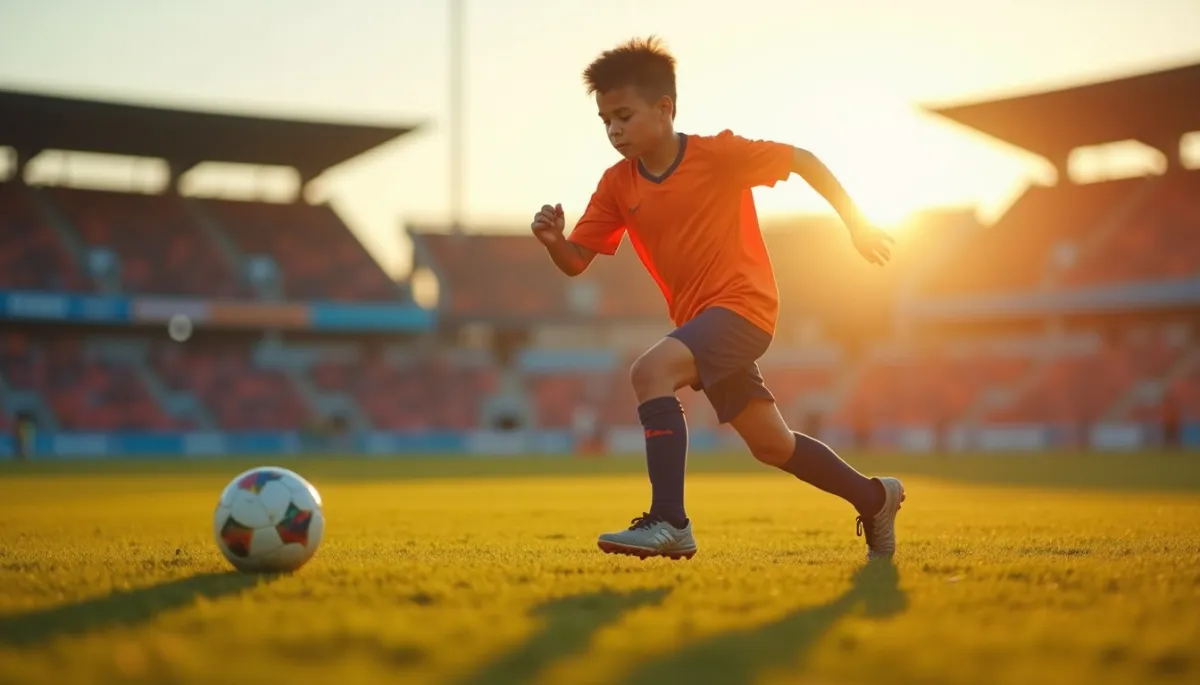
Imagine Lionel Messi in November 2012, at the height of a season that would see him score 91 official goals. A defender closes in, yet Messi glides, the ball glued to his boot, decisions appearing effortless. Spectators hold their breath because time appears to thin. This is not magic. It is a psychological state athletes call flow, where perception, timing and movement align so seamlessly that the player and the ball act as one instrument.
La transe partagée
Flow describes moments of intense immersion and effortless action. Mihaly Csikszentmihalyi coined the term in research from the 1970s, then expanded it in his 1990 book, Flow: The Psychology of Optimal Experience. In sports, athletes describe it as "the zone" or being "in rhythm".
Performance research shows flow correlates with peak outcomes. Stephen Curry's 2015 and 2016 seasons, culminating in a unanimous 2016 MVP nod, included games where his shot confidence and spatial reading seemed absolute. Similarly, past World Cup performances by players like Andrés Iniesta in 2010 produced decisive actions that felt inevitable to onlookers.
Flow is not mystical. Psychologists measure it with validated tools like the Flow State Scale (developed in the 1990s and refined since), and neuroscientists have linked flow episodes to transient changes in prefrontal activity. These findings help explain why decisions during flow are fast and often accurate.
Pourquoi ça se produit
At the core, flow arises when challenge and skill are matched. If a task is too easy, boredom follows. If it is too hard, anxiety dominates. When a soccer dribble or a free throw sits at the sweet spot, attention narrows and distractions drop away.
Neuroscientist Arne Dietrich proposed a model called transient hypofrontality around 2003, suggesting that reduced activity in parts of the prefrontal cortex lowers self-monitoring. The result is less conscious interference and smoother automatic actions. fMRI studies over the past two decades support changes in brain network dynamics during high-absorption tasks.
Context and preparation also matter. Rituals before play, warm-ups tuned to task demands, and clear external goals (score, assist, maintain possession) provide the structure flow needs. Elite coaches often design drills that incrementally raise challenge so players frequently touch that matching point.
Les nuances du miracle
Flow is fragile. Small distractions, a change in routine, or overemphasis on outcome can break it. For example, players who constantly monitor statistics or outcomes risk shifting attention from the process to the result, which undermines flow. Psychological pressure at major tournaments explains why even the most skilled sometimes fail to find the zone.
Not all high performance equals flow. Some athletes perform well through sheer repetition and muscle memory without the lived experience of absorption. Conversely, an athlete in flow might not always achieve victory if external factors, like teammate errors or officiating, intervene.
Also, cultural narratives can romanticize flow as a permanent state. In reality, athletes experience it sporadically. The goal for coaches and players is to increase the frequency and duration of flow episodes through deliberate practice and environmental design.
Rituel et méthode
How to invite flow? Start with three practical pillars. First, set micro-goals. Instead of a vague ambition to "play well," choose immediate objectives: first touch control, angle of pass, or timing of run. Clear targets guide attention.
Second, create reliable cues. Breath control (slow inhalation through the nose, exhale longer), a short visual routine, or a tactile ritual (touching the ball) help anchor attention and signal the brain that focused activity is coming.
Third, train with graded challenges. Practice under slightly increasing pressure: a small-sided game with one neutral, a time limit, or a crowd simulation. These controlled stresses teach the brain to find flow under realistic conditions.
Finally, accept that rest and recovery are part of the recipe. Sleep, nutrition and short recovery rituals between sessions preserve cognitive resources that allow flow to occur.
Thanks for reading, and don't forget, Enjoy Life Moments!