Ernest Shackleton: the incredible survival on the ice
🚀 Key Takeaways
- Concept clé : Shackleton's leadership saved every man aboard Endurance.
- Practical tip : Navigation, preparation and calm under pressure matter more than plans.
- Did you know : Endurance's wreck was discovered in March 2022, remarkably preserved.
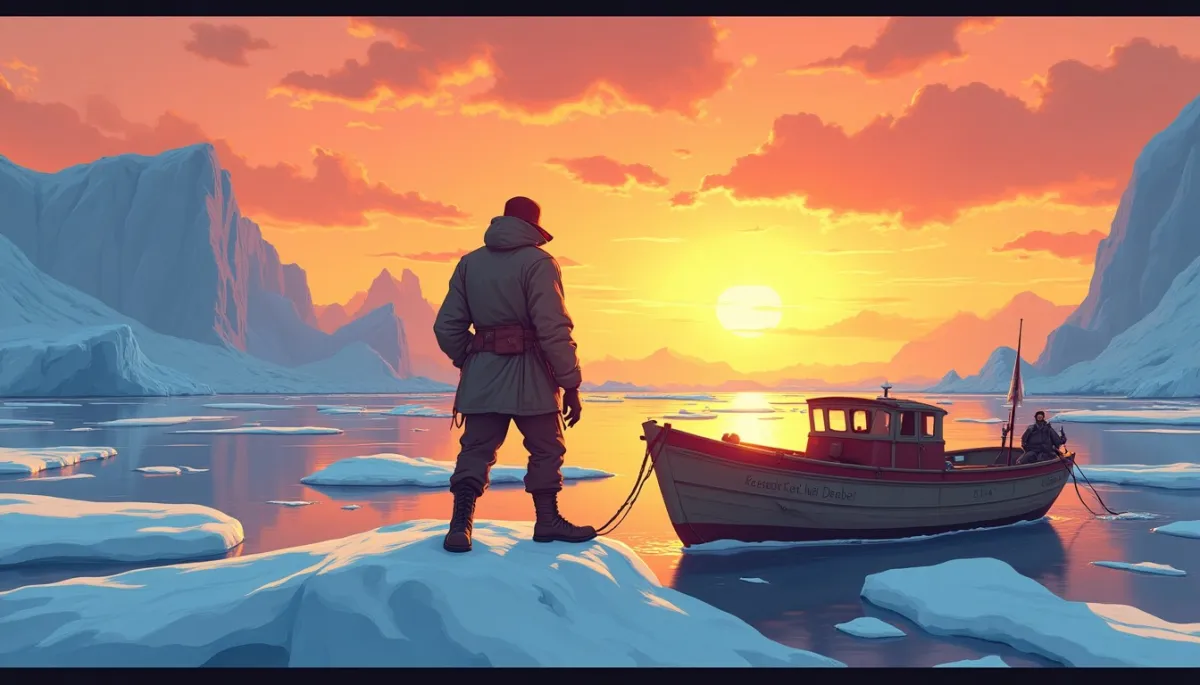
He refused to give up. On the pack ice of the Weddell Sea, Shackleton watched his ship, Endurance, groan and finally sink beneath the floes, while his men salvaged what they could into three lifeboats.
Lasting human imprint
Ernest Shackleton, born 15 February 1874, became a touchstone of modern tales about leadership and survival. The story of the Endurance expedition (Imperial Trans-Antarctic Expedition, 1914-1917) reverberates beyond polar history into business schools and leadership manuals.
When Endurance was beset by pack ice in the Weddell Sea in early 1915, what followed was not merely a shipwreck, it was a prolonged human ordeal. Shackleton's decisions, from preserving morale to rationing supplies, are credited with preventing loss of life.
All 28 men who had sailed on Endurance survived the ordeal, a fact that cemented Shackleton's reputation. The tale remains a powerful example of crisis leadership, resilience and the limits of human endurance in extreme environments.
Routes and hardships
Shackleton had a distinguished Antarctic career before Endurance. He sailed with Robert Falcon Scott on Discovery (1901-1904), and led the Nimrod Expedition (1907-1909) which reached a then-record southern latitude (88°23′S) in 1909.
In August 1914 Shackleton set out to cross the Antarctic continent via the South Pole. His ship, Endurance, became trapped in the Weddell Sea pack ice in January 1915 and was gradually crushed by the pressure of the floes. The vessel finally sank in November 1915, leaving the men to survive on drifting ice and improvised camps.
After months on the ice, Shackleton ordered the men into lifeboats in April 1916. They reached the desolate safety of Elephant Island, but its remoteness made immediate rescue impossible. From there, Shackleton selected five companions and launched the lifeboat James Caird on an 800-nautical-mile navigation to South Georgia.
Lessons from the ice
The James Caird voyage, from 24 April to 10 May 1916, is one of the great small-boat epics. Navigator Frank Worsley guided the vessel across the Southern Ocean by sextant and dead reckoning, against towering seas and with a patched hull reinforced by the ship's carpenter.
Landing at King Haakon Bay on South Georgia, Shackleton, Worsley and Tom Crean then crossed the island's untracked, mountainous interior to reach the whaling station at Stromness on 20 May 1916. That crossing secured help, and Shackleton began the effort to rescue the men left on Elephant Island.
After several attempts, the Chilean tug Yelcho, commanded by Captain Luis Pardo Villalón, rescued the remaining crew from Elephant Island on 30 August 1916. The success of the operation, and the survival of every crewman, turned what might have been a tragedy into an enduring story of leadership, seamanship and human solidarity.
Memory and discovery
Shackleton continued to explore and organize expeditions after Endurance. He died on 5 January 1922 while aboard the expedition ship Quest and was buried on South Georgia, the island that featured so centrally in his most famous rescue.
Decades later, the fate of the sunken Endurance continued to fascinate researchers. In March 2022 the wreck was located in the Weddell Sea by a team from the Falklands Maritime Heritage Trust, preserved in cold, deep water and offering new material evidence of the 1915 loss.
Beyond artifacts, Shackleton's legacy is practical. His emphasis on crew welfare, adaptability, and hands-on leadership remains instructive. For anyone facing a long, uncertain challenge, the Endurance story is both cautionary and inspiring, a reminder that preparation, calm decisions and loyalty can alter the outcome even in the harshest environments.
Thanks for reading, and don't forget, Enjoy Life Moments!