Haute couture: the hundreds of hours behind a dream dress
🚀 Key Takeaways
- Concept key : A couture dress can require from a few hundred to over a thousand hours of hand work.
- Practical tip : Look for métiers names like Lesage or Lemarié on labels, they indicate specialist embroidery or plumage.
- Did you know : The official haute couture label is governed by strict Parisian rules set by the Chambre Syndicale.
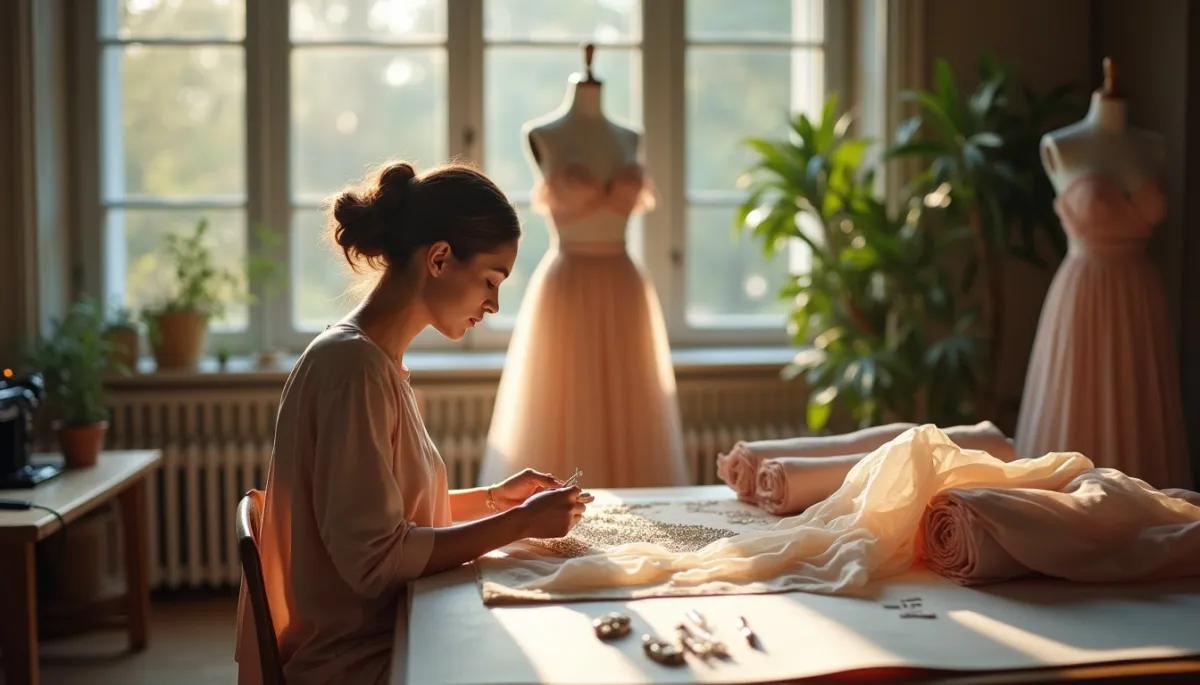
Pure wonder. Imagine a sunlit atelier on rue Cambon, a row of seamstresses bent over a toile, and the quiet rhythm of needles threading sequins.
The dress revealed
When a star steps onto the Cannes red carpet, the moment looks instantaneous, cinematic, and effortless.
Yet that instant is the tip of a long iceberg of work: fittings, pattern-making, draping, hand-embroidery, pleating and countless adjustments. For houses like Dior or Chanel, a single evening gown can mean 300 to 800 hours of labor, sometimes more for heavily beaded creations.
These hours translate into dozens of specialists. Pattern cutters sketch in charcoal, ateliers of embroiderers (like Maison Lesage) add motifs bead by bead, and pleaters work with heat and patience to shape silk. The result is a garment that moves, breathes, and tells a story.
Thread and craft
Haute couture relies on named métiers, trades that preserve centuries-old techniques.
Embroidery (broderie), feather work (plumasserie), lace-making, and millinery are distinct crafts, each often run from dedicated workshops. Maison Lesage, now part of the Chanel group, made headlines when its ateliers were saved and restored, a concrete sign of how fragile and precious this know-how is.
The Chambre Syndicale de la Haute Couture defines who may call itself 'haute couture', with rules dating to the mid-20th century (the label is controlled in France). Criteria include having a workshop in Paris and a roster of skilled staff, ensuring the continuity of those hundreds of hours of work.
Why it matters
Beyond glamour, couture preserves techniques that would otherwise disappear. It is an archive of materials, a living museum where apprentices learn by doing.
Clients pay not only for exclusivity, but for access to that human time. Couture houses often create one-off pieces for brides, heads of state, or film, charging tens to hundreds of thousands of euros. These prices sustain ateliers and their specialists.
Fashion weeks in Paris, the Met Gala red carpet, or state ceremonies transform these garments into cultural moments. A gown can revive a maison's archive, inspire ready-to-wear lines, and educate a younger generation of creators.
Between tradition and future
Yet couture faces contradictions. The hand-made methods are costly and slow, while clients increasingly expect rapid, customizable experiences.
Houses experiment: couture details appear in capsule collections, digital fittings use 3D scans, and young designers collaborate with traditional ateliers to keep techniques alive while introducing new aesthetics.
There is also a sustainability conversation. Hundreds of hours of handwork may mean durable, repairable garments, but the carbon footprint of global clients and gala travel complicates the myth of timelessness. The future of couture will likely balance ritual, provenance, and new technologies.
How to appreciate couture
Visit museums like Palais Galliera or Musée Yves Saint Laurent to see original toiles and sketches, and attend an open day if a maison offers one.
When you examine a couture dress, look inside: French seams, hand-finished linings, and tiny bar tacks tell you where hours were spent. Labels referencing known ateliers (Lesage, Lemarié, Goossens) are like signatures.
If you ever commission a piece, ask for the timeline and meet the artisans when possible. Understanding the stages—toile, muslin fittings, final muslin, embellishment—turns consumption into a learning experience.
Thanks for reading, and don't forget, Enjoy Life Moments!