Bottega Veneta's intrecciato: the artifice of absolute luxury without a logo
🚀 Key Takeaways
- Core concept : Intrecciato is a hand-woven leather technique that signals discreet luxury.
- Practical tip : Store woven pieces flat, avoid heavy rain, and entrust deep cleaning to specialists.
- Did you know : Bottega Veneta was founded in 1966 in Vicenza and made the weave its signature without relying on visible logos.
Silence can be louder than a logo.
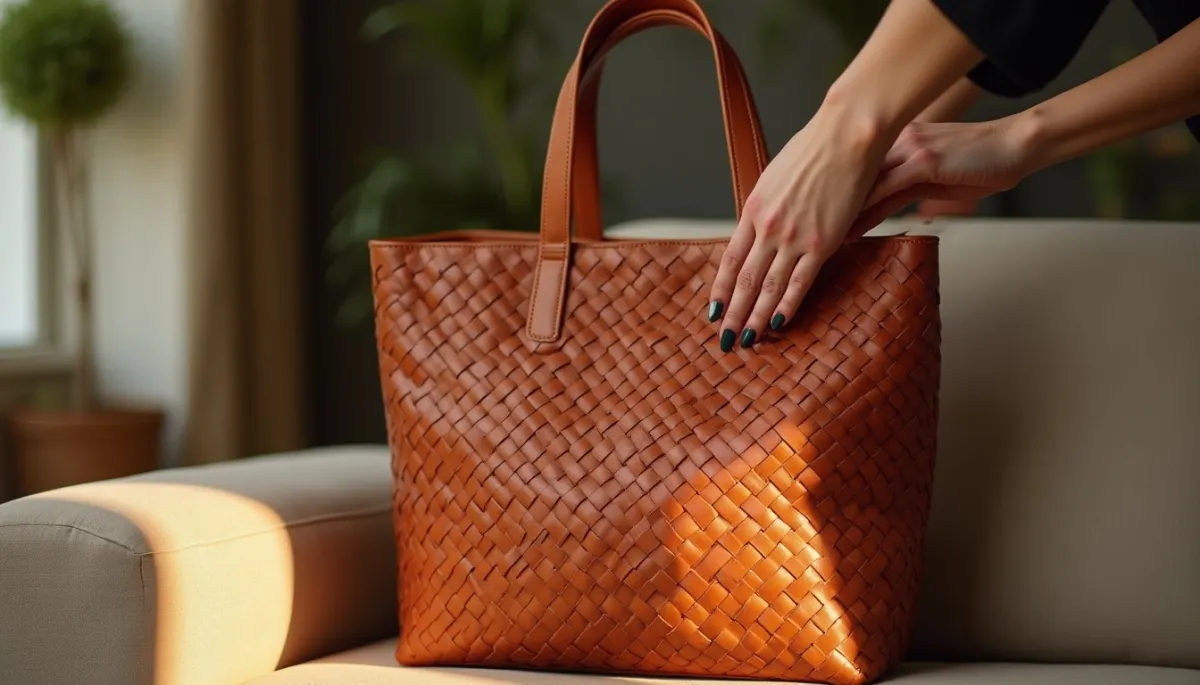
Imagine a Milan showroom in late afternoon light, a sofa draped with a nappa leather tote whose surface seems to ripple. The pattern is the same from handle to body, each strip interlaced with meticulous regularity. No metal initials, no gold plate, only the texture that invites touch. A stylist runs a finger along the braid, and you understand the argument: the weave speaks for the house.
Un langage tissé
Intrecciato literally means 'woven' in Italian. The technique predates the modern fashion house, drawn from artisanal practices in Veneto, where leatherwork has centuries-old roots. Bottega Veneta, founded in 1966 in Vicenza, adopted and refined this method, turning it into an identifiable surface that served as a visual signature without a logo.
The consequence was immediate. In an industry saturated with monograms and visible badges, intrecciato offered an alternative: a pattern that read as luxury through labor and material, rather than signage. Celebrities, stylists, and editors began to prefer pieces that broadcasted taste through texture, not loud branding.
Products from handbags to small leather goods, shoes and even ready-to-wear trims have used the weave. Each object carries a visible proof of craft: minute leather strips hand-cut, then braided and sealed so the seams disappear into pattern. The result is resilient, flexible, and aesthetically timeless.
Pourquoi cela fonctionne
At the core is provenance. Craftsmanship reassures buyers that a product is unique. Intrecciato is labor intensive, often performed in ateliers in the Veneto region, and it requires skilled hands trained to keep tension and symmetry. This human input creates scarcity, which luxury markets prize.
Another driver is cultural. Since the early 2000s, a taste for 'quiet luxury' or 'stealth wealth' has grown among affluent consumers who prefer subtle signals of status. Bottega Veneta's long campaign ‘When your own initials are enough’ crystallized that ethos. The house proved a brand can be powerful without visible logos, relying on design language instead.
Market dynamics also contributed. Under different creative directors, including Tomas Maier who re-centered the maison in 2001, and later designers who refreshed its codes, the weave adapted while remaining recognisable. The strategy resonated particularly during the 2010s and 2020s, when a backlash against overt display made discreet markers of quality fashionable.
Des compromis à considérer
However, the absence of a logo is not an absence of marketing. The weave itself became a trademark, visually distinct and widely photographed. Viral moments, celebrity sightings and editorial spreads turned intrecciato into a new kind of visual shorthand. The paradox: the more discreet the sign, the more visible it can become through cultural amplification.
Practical limits exist too. Woven leather requires maintenance. Sand, salt and prolonged exposure to moisture can dislodge strips or alter the grain. Owners must accept a ritual of care: dust bags, rotations in use, and professional cleaning. These constraints underline that luxury is not just ownership, it is stewardship.
Finally, the market evolves. Younger consumers oscillate between logo-free elegance and nostalgic monograms. Bottega Veneta's challenge is to keep intrecciato contemporary, to experiment with scale, color and materials without eroding the technique's identity. Early examples include oversized weaves, metallic finishes and hybrid materials, which hint at future directions.
Thanks for reading, and don't forget, Enjoy Life Moments!