Blancpain and the Fifty Fathoms: the true story of the first modern dive watch
🚀 Key Takeaways
- Core idea : The Fifty Fathoms standardized features we now call 'dive watch' essentials.
- Practical tip : For collectors, provenance and an original moisture indicator (MIL-SPEC) are gold.
- Did you know : "Fifty fathoms" means about 91 metres, a symbolic but practical depth metric for 1950s naval missions.
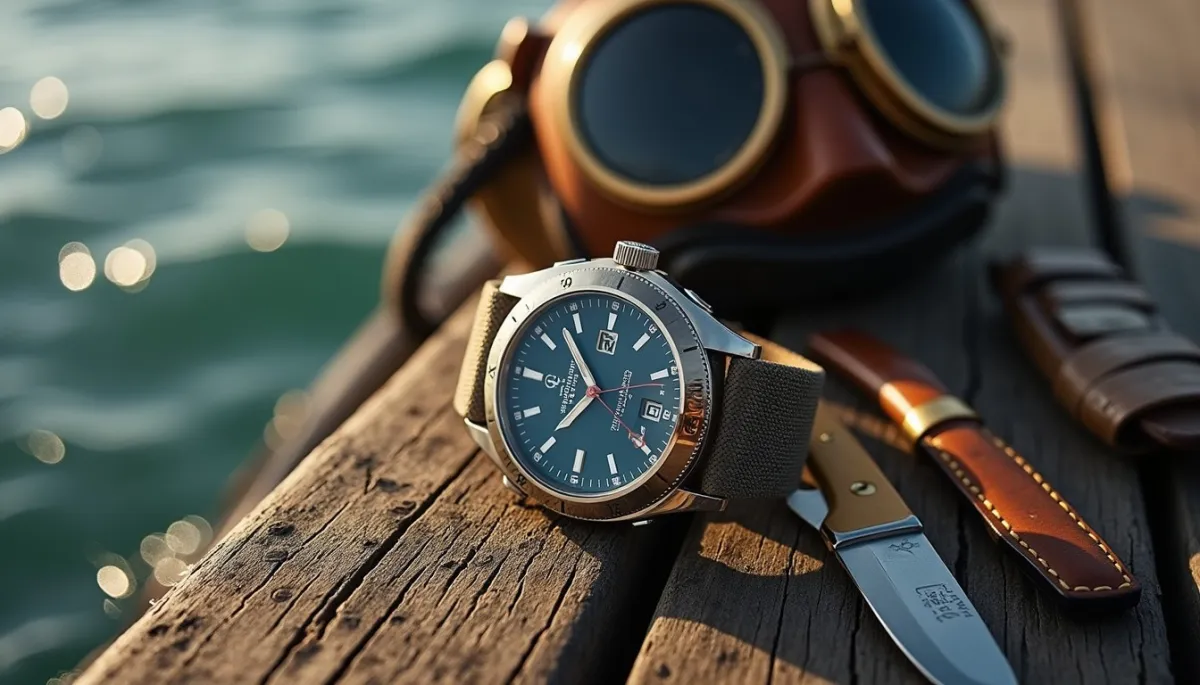
It feels like holding a piece of the ocean. Imagine a matte black dial, big luminous markers, and a bezel that clicks with purpose.
We are on a dock at the edge of the Atlantic, 1953. Two young French naval officers talk to a Swiss watchmaker about a single brief: a reliable, readable, water-resistant watch for underwater demolition and reconnaissance. That conversation will shape what the world recognizes today as a dive watch.
Ocean as benchmark
The Fifty Fathoms was conceived to meet operational needs. The brief, written by Captain Robert Maloubier and Lieutenant Claude Riffaud of the French navy (combat swimmers), demanded legibility in low light, a unidirectional rotating bezel to time dives, and robust water resistance.
Blancpain's CEO at the time, Jean-Jacques Fiechter, embraced the challenge. The result combined practical solutions: a clear black dial with large luminous indices, a locking or legible bezel to prevent accidental rotation, and case sealing technologies including a screw-down crown (to limit water ingress).
Its name refers to "fifty fathoms" (one fathom equals six feet), roughly 91 metres. In the 1950s that figure was both aspirational and a functional guideline for military diving operations.
Design that mattered
The watch introduced elements that became industry standards. The unidirectional bezel allowed only shorter remaining-time readings, a safety feature for divers. Luminous paints, initially radium and later safer compounds, ensured readability during long, dark dives.
Blancpain also supplied watches to several naval units and exploration teams, which cemented the Fifty Fathoms' reputation. Models evolved, including the MIL-SPEC versions that added a moisture indicator (a small disc that changed color if water entered the case), an early form of a warning system for wearers and maintainers.
Beyond technical traits, the Fifty Fathoms carried an aura: a tool watch with military provenance and a sober, functional aesthetic. That mix appealed not only to navies, but to scientific expeditions and, later, civilian adventurers.
From workshop to icon
Its adoption by military units created demand and credibility. The postwar era's expanding oceanography and underwater cinema increased visibility for dive equipment. Photographs of divers with robust wristwatches helped the Fifty Fathoms cross into popular culture.
Collectors and historians point to 1953 as a milestone year. While other manufacturers experimented with water-resistant cases earlier, Blancpain's offering packaged the features together in a way recognized as the modern template: bezel, luminous dial, strong sealing, and practical ergonomics.
As decades passed, the model was refined. Later riffs included improved movements, sapphire crystals, and modern lume materials. Vintage pieces, especially those with documented military provenance or original MIL-SPEC discs, are prized at auction.
Continuity and reinvention
The story does not end in the 1950s. Blancpain has periodically revisited the Fifty Fathoms line, balancing historical cues and contemporary engineering. Modern models honor the silhouette while integrating corrosion-resistant alloys, up-to-date automatic movements, and divers' safety standards like ISO 6425 (a protocol that defines test criteria for dive watches).
There are tensions. Purists value unpolished cases and period-correct dials. Modern buyers seek improved reliability and warranty support. The market, therefore, serves both historians and new adventurers, with reissues, limited editions, and high-end modern interpretations.
For newcomers aiming to buy a Fifty Fathoms, inspect the dial, bezel, caseback engravings, and any humidity indicator if present. Verify service history and authenticate provenance. For wearers, remember service intervals (approximately every 5 years for a mechanical dive watch) to maintain water resistance.
The Fifty Fathoms exemplifies how a focused brief, military need, and thoughtful execution can create a lasting design legacy. It remains a watch that tells more than time: it narrates a chapter of undersea exploration and the birth of a genre.
Thanks for reading, and don't forget, Enjoy Life Moments!