Bespoke perfumery: creating a one-of-a-kind olfactory signature
🚀 Key Takeaways
- Core concept : A bespoke fragrance is a custom-made perfume tailored to memories, personality and chemistry.
- Practical tip : Bring three memories or objects to a session, test on skin and ask for longevity notes.
- Did you know : Houses from Grasse to Manhattan now mix traditional craftsmanship with AI-assisted formulation.
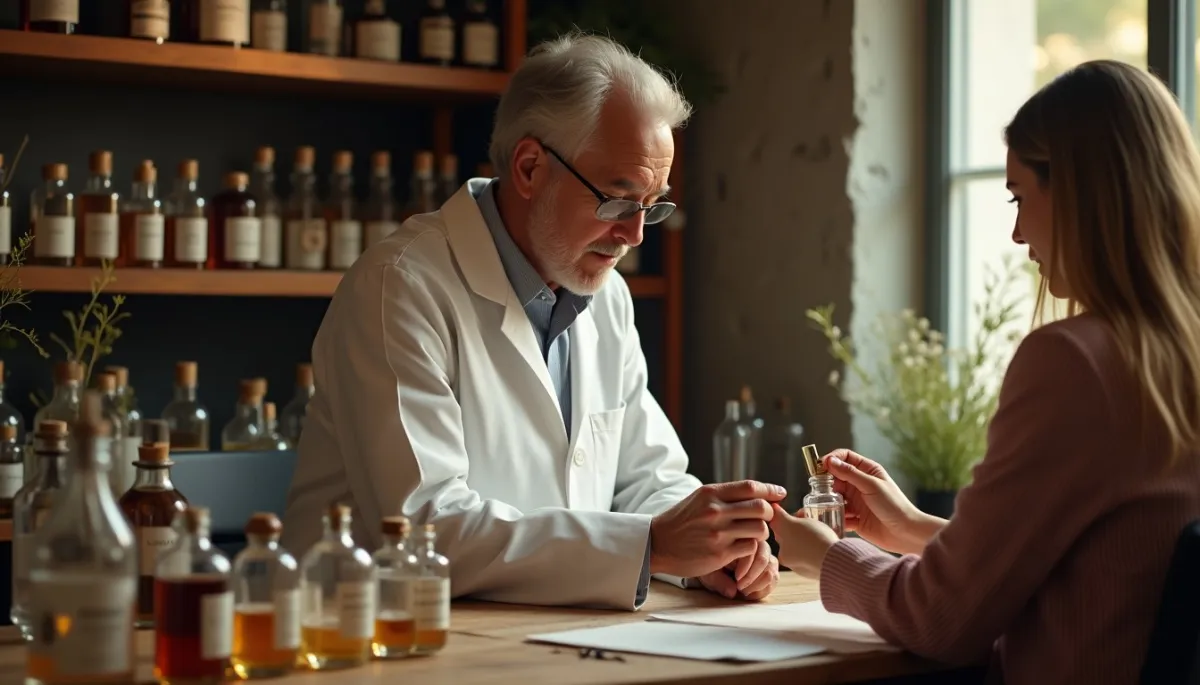
Close your eyes, inhale, and a room becomes a story. Imagine an atelier in Paris, light through high windows, glass vials lined like a constellation, a perfumer mixing oils while you describe a childhood street.
Personal signature
Bespoke perfumery translates biography into scent: a set of accords that others will recognize as uniquely yours. It is not just about exclusivity, it is about identity. Clients ask for a fragrance that evokes a place, a person, a state of mind.
Practically, a bespoke process involves consultation, olfactory interviews, trials on skin, and often five to ten iterations before the final formula. Renowned ateliers such as Maison Francis Kurkdjian, Roja Parfums and independent perfumers in Grasse offer private services, while couture houses add bespoke lines for VIP clients.
Technically, perfumes are built as an olfactory pyramid (top, heart, base). A master perfumer balances volatility, tenacity and projection to ensure the signature lasts and evolves in the desired way.
Why now
Demand for personalization has surged with luxury clients seeking meaningful ownership. According to consumer studies, a majority of affluent buyers value tailored experiences over mass products, and scent is the most intimate of these experiences.
At the same time, ethical sourcing and traceability matter. Buyers ask where the jasmine or oud comes from, and perfumers respond with transparency (supply-chain records, sustainable plantations in Madagascar or supplier audits).
Technology plays a role too. Databases of accords, chromatographic analysis and AI can suggest stable blends, shortening development time without replacing the perfumer's craft.
Craft and code
However, bespoke perfumery faces contradictions. IFRA regulations (safety norms for fragrance ingredients) and sustainability constraints limit some traditional musks or natural extracts, forcing reformulation while preserving the intended emotion.
Costs are another friction point. A true bespoke scent involves hours of creative labour and rare materials, often priced in the high thousands. To democratize personalization, some brands propose semi-bespoke services: adjustable bases, limited modifications, or made-to-order refill options.
Looking ahead, the marriage of artisan know-how and digital tools will evolve the field. Expect hybrid journeys: an initial workshop with a perfumer, augmented by algorithmic suggestions and transparent sourcing certificates.
Practical advice: arrive with clear references (a song, a place, a fabric), be open to small surprises, and always test a sample for 24 hours on your skin. Request a refill plan and the written formula if you wish to reproduce or slightly tweak the scent later.
Thanks for reading, and don't forget, Enjoy Life Moments!