How to avoid 'Moctezuma's revenge', the traveler's food poisoning
🚀 Key Takeaways
- Core idea : Most traveler's diarrhea is preventable with common-sense choices.
- Practical tip : Favor hot-cooked food, bottled drinks, and hand hygiene.
- Did you know : "Moctezuma's revenge" is a popular name for travelers' diarrhea in Mexico, named after the Aztec emperor.
Ouch, not the souvenir you hoped for. Imagine stepping out of a cenote at Akumal, sun on your shoulders, when your stomach reminds you who's in charge.
The travel toll
Travelers' diarrhea remains one of the most common ailments affecting visitors to Latin America, Africa and parts of Asia. Estimates from travel medicine reviews indicate incidence rates that can range from about 20 percent to over 50 percent depending on destination and length of stay.
Symptoms are usually sudden: three or more loose stools in 24 hours, often with cramps, nausea, and sometimes fever. Most cases are self-limiting and resolve within a few days, but dehydration and missed plans are the usual penalties.
For many, the infamous nickname "Moctezuma's revenge" summarizes the experience: a cultural shorthand that mixes humor and caution. It is real enough to change itineraries, dampen honeymoon memories, and force cancellations of boat trips or jungle hikes.
What usually happens
The main culprits are bacteria, most commonly strains of Escherichia coli (enterotoxigenic E. coli), but norovirus, Salmonella and parasites like Giardia can also be responsible. Transmission occurs when contaminated food or water reaches your plate or glass.
Street food can be perfectly safe when vendors observe hygiene, but risk increases when food sits at ambient temperature, is washed with tap water, or is prepared with unclean hands. Ice, raw salads, and unpeeled fruit washed in untreated water are typical weak links.
Resistance patterns matter. In recent years, growing bacterial resistance has changed recommended treatments. Public health authorities now often advise azithromycin as first-line therapy for severe cases in many parts of Latin America, rather than older quinolones. Always consult a healthcare professional before taking antibiotics.
Practical survival
Start before you go. A pre-travel consultation can update vaccinations and, if indicated, prescriptions for oral rehydration salts, loperamide and a standby antibiotic suited to your destination. Discuss probiotics too; some studies show modest prevention benefits when started before travel.
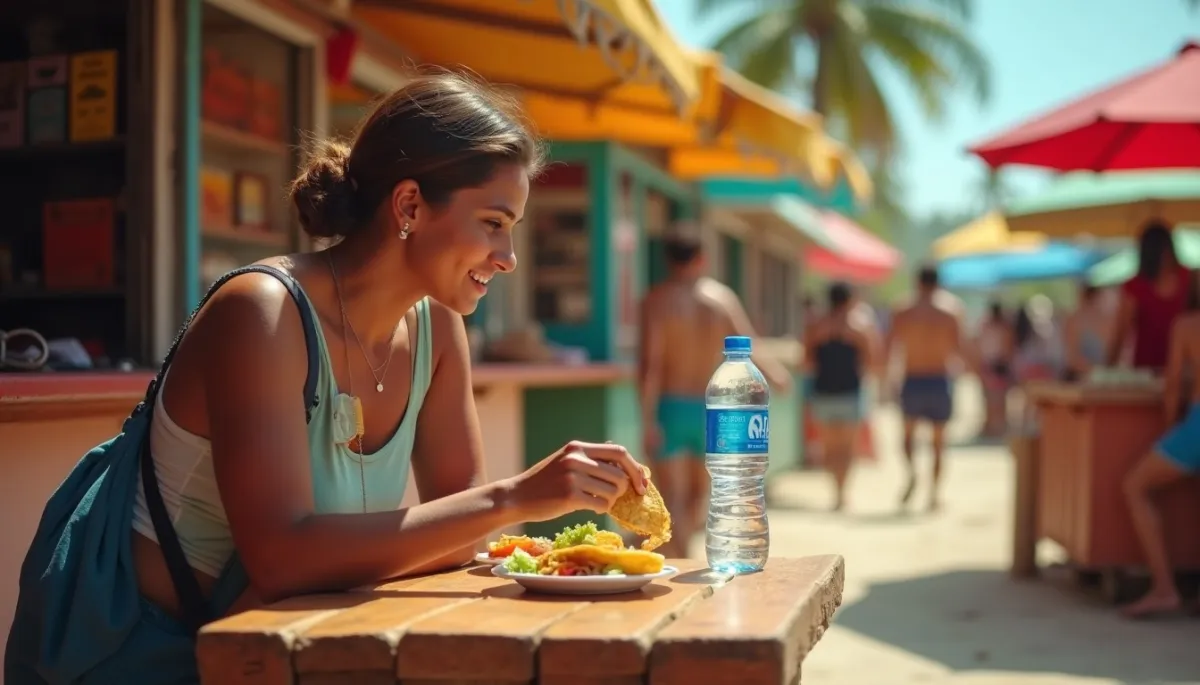
On the ground, follow easy rules. Drink bottled water or beverages made with it. Ask for drinks without ice. Eat foods that are hot and freshly cooked. If a vendor's stall is busy, that usually signals turnover and fresher ingredients. Peel fruits yourself when possible.
Hand hygiene is the simplest, most effective defense. Carry a small bottle of alcohol gel and use it before eating. Soap and water remain the gold standard, especially after bathroom breaks and before meals.
When to be careful
Not all stomach upsets require dramatic measures. If you have mild symptoms, rest, hydrate with oral rehydration solutions, and eat bland foods. Loperamide can reduce symptoms for non-febrile cases, but avoid it if you have high fever or bloody stools.
Seek medical care if diarrhea is severe, prolonged beyond 48 hours, accompanied by high fever, blood in stool, or signs of dehydration such as very reduced urine output or dizziness. In the Riviera Maya, reputable clinics and hospitals in Playa del Carmen and Cancún can provide quick tests and IV rehydration when needed.
Finally, balance vigilance with curiosity. The best meals are often the ones you discover by walking a side street early in the morning. With sensible precautions, your trip will be full of taste and stories, not regrets.
Thanks for reading, and don't forget, Enjoy Life Moments!