Modernist architecture: why Villa E-1027 became the global design icon
🚀 Key Takeaways
- Key concept : Eileen Gray's integration of architecture, furniture and landscape created a holistic modernist work.
- Practical tip : Visit Roquebrune-Cap-Martin early morning to see the villa in soft light and avoid crowds.
- Did you know : The villa's name encodes its creators' initials (E-10-2-7) and a famous adjustable table by Gray carries the same name.
Light, stone and a single low voice.
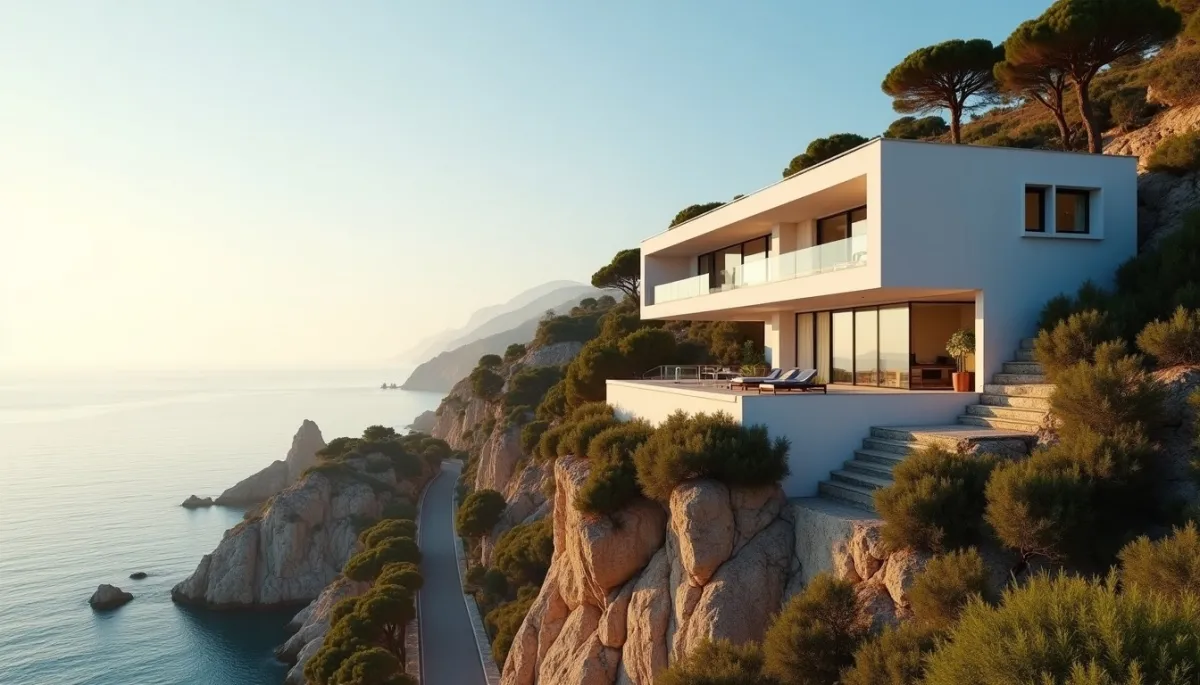
Imagine arriving by the coastal road between Monaco and Menton, parking near a casuarina, then walking a short path to a white, horizontal house sitting like a ship on a cliff. Glass doors slide open onto terraces. Inside, the sea is framed like a picture, and furniture seems made to be touched and moved, not merely admired.
un héritage visible
Villa E-1027 was built between 1926 and 1929 for Eileen Gray and Jean Badovici, on a rocky promontory at Roquebrune-Cap-Martin. Its program was simple, domestic and radical: to create flexible living spaces with minimal means, abundant natural light and a direct relation to the Mediterranean landscape.
The villa quickly became a blueprint for 'total design' where architecture, interior and furniture form a single language. Gray's adjustable side table E-1027 (dated 1927) and her tubular furniture were conceived in the same moment as the house, proof that the building and its objects were inseparable.
Over the 20th century, E-1027 inspired architects and designers worldwide. Its clarity of plan, use of terraces and built-in furniture appear in countless later works, from Mediterranean villas to modernist studio apartments.
le geste fondateur
Why did E-1027 become emblematic? First, because it embodied a human-centered modernism. Eileen Gray, born in 1878 in Ireland, trained as a lacquer artist and furniture designer before turning to architecture. Her work resisted monumental gestures and favored adaptability, comfort and craftsmanship.
Second, the villa arrived at a moment when European modernism was searching for domestic models. Jean Badovici, an architect and critic, promoted the house in the journal L'Architecture Vivante, amplifying its visibility across avant-garde circles in the late 1920s and 1930s.
Third, stories around the house added to its myth. In 1938 and 1939, Le Corbusier, who admired the site, painted murals on several exterior and interior walls without Gray's permission. That act, and later debates about recognition and authorship, turned E-1027 into a symbol not only of design but of the gendered history of modernism.
tensions et résilience
The villa's history is not only aesthetic, it is also conflictual. After World War II the house fell into neglect. Gray felt her authorship overshadowed. Recognition came late for her: she was largely rediscovered by scholars and exhibitions in the 1970s, after years of relative anonymity.
France acquired the property at the end of the 20th century, and a major restoration project stabilized the building and conserved Le Corbusier's controversial paintings. The site reopened to the public in the 2010s, offering visitors both the architecture and the layered stories of authorship and preservation.
Today, debates continue about restoration philosophy, about how to present objects that were designed to be touched, moved and lived in. Conservation teams balance preserving original materials with adaptive measures that allow the villa to be seen and experienced without being destroyed by tourist pressure.
prendre le temps
If you plan to visit, a few tips will deepen the experience. Go early in the day, when the light sculpts the terraces and the sea appears like a moving mirror. Read a short biography of Eileen Gray beforehand; knowing her background in lacquer and furniture helps you see details others might miss.
Respect the intimacy of the house. The most memorable features are often small: the adjustable table E-1027, a built-in daybed facing the sea, the sequence of low and high windows that modulate privacy and light. Photographing is allowed in some areas, but avoid flash and large groups that flatten the experience.
Finally, let the contradictions stay with you: a house that teaches modesty, and yet carries big debates about authorship, gender and conservation. That tension is part of why E-1027 remains alive in design conversations.
Thanks for reading, and don't forget, Enjoy Life Moments!