Umami: understanding the fifth taste to transform everyday dishes
🚀 Key Takeaways
- Concept key : Umami is a distinct taste driven by free glutamates and nucleotides (like inosinate and guanylate).
- Practical tip : Boost umami with Parmesan rinds, dried shiitake, kombu, anchovies or a small pinch of MSG.
- Did you know : The taste was isolated by Kikunae Ikeda in 1908, leading to the company Ajinomoto in 1909.
It feels like a secret handshake among flavors.
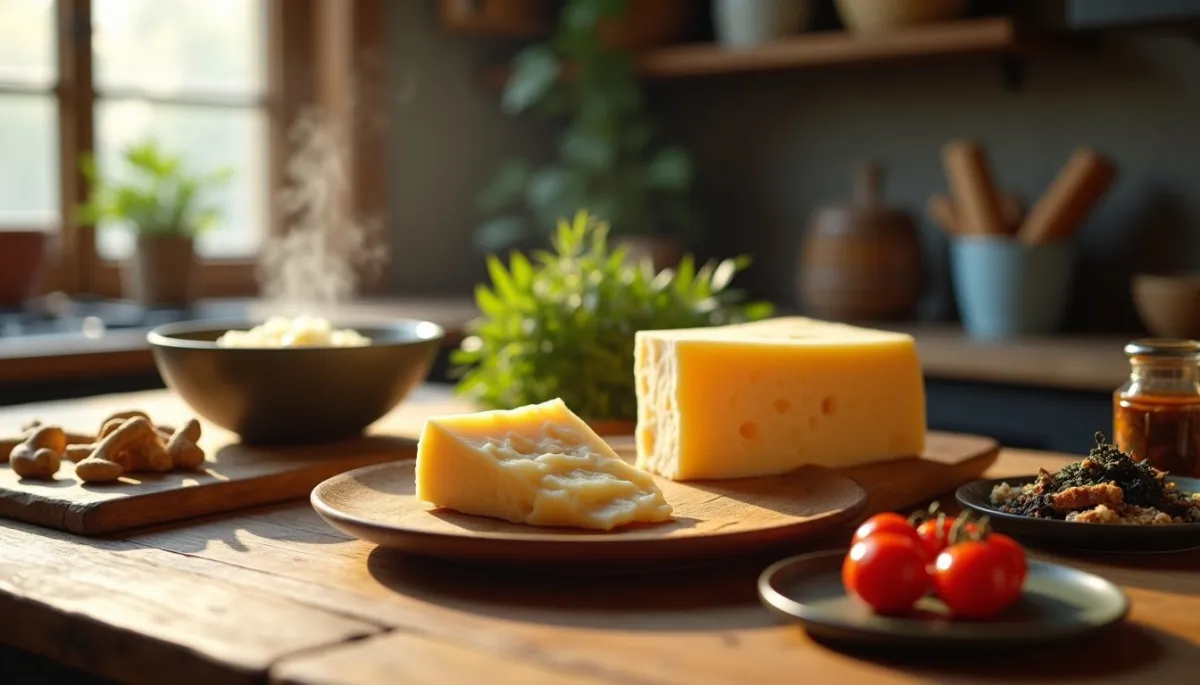
Imagine a rain-washed Wednesday evening, a pot on the stove, jar of miso, a wedge of Parmesan on the counter and a strip of kombu leaning against a wooden spoon. The kitchen smells like comfort and slow work, and the first spoonful of broth arrives with a depth that makes you close your eyes. That is umami at work: a quiet, anchoring richness that transforms a bowl into an experience.
Soft power
Umami is often called the fifth taste, alongside sweet, sour, salty and bitter. Named from the Japanese word "umai" (delicious) with the suffix "mi" (taste), the term frames a sensation of savory fullness rather than a single identifiable aroma.
Scientifically, the sensation comes from free glutamate and certain nucleotides (inosinate from meat, guanylate from mushrooms). These molecules bind to taste receptors on the tongue (notably the T1R1/T1R3 heterodimer identified in the early 2000s) and create that lingering sense of meaty, rounded flavor.
When chefs and home cooks speak of "depth" or "mouthfeel," they are often describing umami. It amplifies perception of other flavors, making sweetness sweeter and masking sharpness. That is why a spritz of lemon or a pinch of salt can make an umami-rich sauce glow.
Roots and stories
The modern story begins in 1908. Japanese chemist Kikunae Ikeda isolated glutamate from kombu seaweed and identified the distinctive savory taste. He patented a production method for monosodium glutamate (MSG) and his company Ajinomoto was founded in 1909 to commercialize it.
Long before Ikeda's paper, cultures around the world used umami-rich techniques: slow-simmered broths in China, Italian Parmigiano-Reggiano aged for months to release free glutamates, fermented fish sauces in Southeast Asia, and soy sauce in Japan and China. These are convergent culinary answers to the same sensory need: concentrated, savory backbone.
In recent decades, research deepened our understanding. The taste receptors were characterized in the early 21st century, and sensory science linked specific compounds to perceived savoriness. Meanwhile, chefs from Ferran Adrià to David Chang popularized umami experiments, introducing Western diners to kombu, dried shiitake and fermented condiments as flavor shortcuts.
Practical alchemy
Putting umami to work in everyday cooking is less about exotic ingredients and more about smart layering. A single source helps, but combinations are transformative: a handful of grated Parmesan plus a few drops of soy sauce and roasted cherry tomatoes will lift a simple pasta sauce into something restaurant-worthy.
Concrete, repeatable tricks: keep a Parmesan rind in your soup pot whenever you simmer beans or lentils; steep dried shiitake in water and use the soaking liquor as stock; add a small anchovy (they dissolve) to tomato sauces; use kombu to make a quick dashi for risotto; finish stews with a spoon of miso off-heat to preserve its nuanced flavors.
MSG deserves a practical note. The monosodium salt of glutamic acid is a concentrated source of umami. Used sparingly (think a pinch to 1/4 teaspoon for 4 servings), it amplifies savory notes without adding saltiness. Regulatory agencies, including the FDA and EFSA, consider it safe. The long-standing anecdote of "Chinese restaurant syndrome" has not been borne out by rigorous double-blind studies.
Balance and caution
Umami is powerful and can overwhelm if misused. Too much can make a dish taste one-dimensional or overly "meaty." The remedy is balance: acidity (vinegar, lemon), brightness (fresh herbs), texture (toasted nuts, crisp greens) and a clean finish.
Umami is also context-dependent. Vegetarians and vegans can achieve deep savoriness through kombu, mushrooms, roasted tomatoes, miso and aged vegan cheeses. Cultural palates vary; what reads as comfort in Tokyo may be unfamiliar in Lisbon, and vice versa.
Finally, there's a creative horizon: modern umami techniques include controlled fermentation at home (short ferments for condiments), reducing tomato sauces slowly to concentrate glutamates, and exploring cross-cultural pairings like Parmesan with soy, or dashi with roasted vegetables.
Bring these ideas to your weekly rhythm. Start with one small experiment: add a Parmesan rind to your next pot of beans, or stir a teaspoon of soy sauce into your vinaigrette. Notice how the plate shifts from filling to memorable.
Thanks for reading, and don't forget, Enjoy Life Moments!