Chrono-nutrition: eating to your biological clock to regain energy
🚀 Key Takeaways
- Concept clé : Timing matters — meal timing interacts with circadian rhythms.
- Conseil pratique : Favor a protein-rich breakfast, a balanced lunch, and an early lighter dinner.
- Le saviez-vous : Discoveries on circadian clocks earned the 2017 Nobel Prize in Physiology or Medicine.
Start with the body clock.
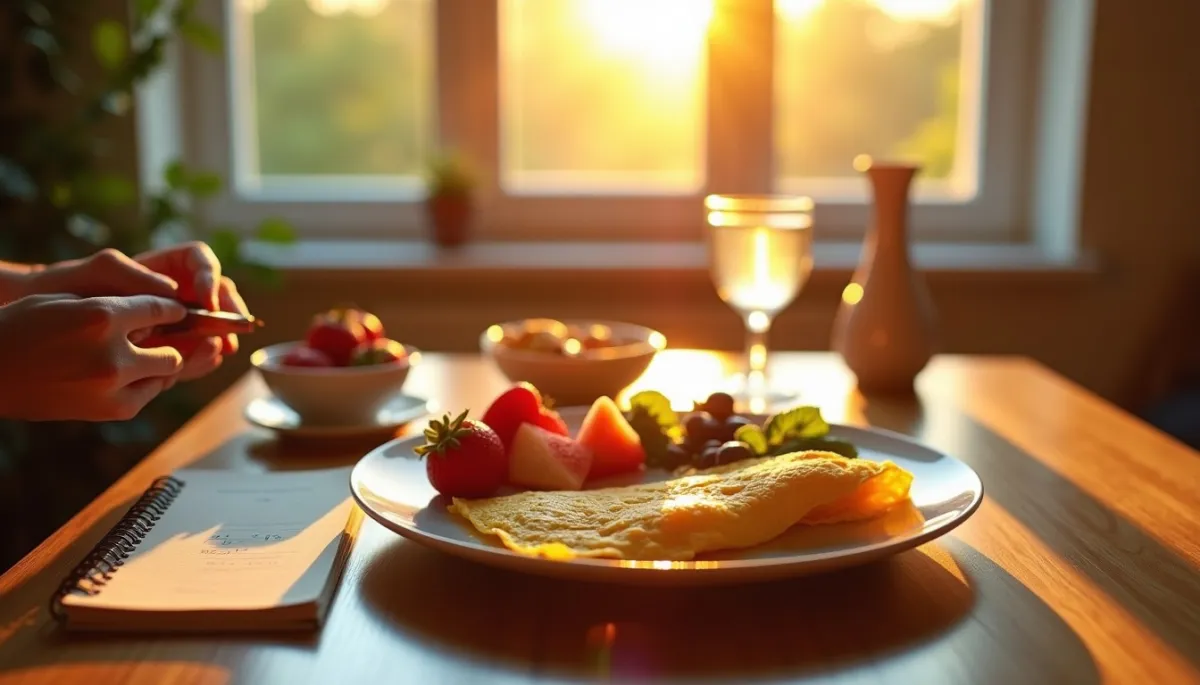
Imagine a small kitchen in Lyon at 7:30 a.m., sunlight on the tiles, a woman slicing fruit while preparing a savory omelette. She says she used to drag through afternoons. Since shifting her main carbohydrates to lunch and moving dinner earlier, she reports clearer mornings and better sleep. This simple scene captures the promise of chrono-nutrition: not only what you eat, but when you eat it.
Rythmes et conséquences
Chrono-nutrition rests on a simple observation: our metabolism changes over the 24-hour day. Glucose tolerance and insulin sensitivity are higher in the morning compared with the evening. In practice, that means the same meal can be processed differently at noon than at 10 p.m.
Clinical and population studies have shown links between late eating and higher body mass index, poorer glycemic control, and disturbed sleep. Shift workers, whose schedules conflict with natural light-dark cycles, have a higher risk of metabolic syndrome; this is one concrete illustration of timing's impact.
Public awareness grew after the 2017 Nobel Prize recognized research on circadian rhythms (Jeffrey C. Hall, Michael Rosbash, Michael W. Young). Since then, more nutritionists and doctors talk about meal timing alongside calories and macros.
Racines et raisons
L'idée n'est pas nouvelle en France. In 1986, physician Alain Delabos popularized chrono-nutrition as a dietary approach that prioritizes timing: larger meals earlier, lighter dinners, and attention to macronutrient distribution. He suggested adapting food to physiological needs during the day.
Biologically, our central clock in the hypothalamus synchronizes peripheral clocks in the liver, gut and fat tissue. Light is the main synchronizer, but food timing is a strong cue for peripheral clocks. When meals arrive at odd hours, it creates internal misalignment, which may impair metabolism.
Scientific interest has also accelerated because modern life fragments eating patterns. A 21st-century lifestyle of snacking, late dinners and irregular schedules collides with the evolutionary pattern of daytime activity and nighttime fasting.
Nuances et limites
Chrono-nutrition is promising, but not magical. Studies show modest but meaningful effects; results depend on individual genetics, sleep, stress and activity. For example, some people are evening types (owls) with later internal peaks; rigid one-size-fits-all timing can backfire.
Evidence is still evolving. Randomized trials comparing strict chrono-nutrition to conventional diets are fewer than observational studies. Nutrition scientists call for trials that account for chronotype (individual circadian preference) and lifestyle.
Practical contradictions emerge in daily life: social dinners, shift work, family schedules. The goal is not perfection, but gradual alignment. Small, sustainable shifts—earlier dinner, protein first thing, consistent meal windows—often yield better energy and sleep.
Rituel à tester
Try a simple week-long experiment. Start mornings with 20–30 grams of protein (eggs, Greek yogurt, tofu). Make lunch your main carbohydrate moment, including vegetables and healthy fats. Move dinner before 8 p.m., favoring vegetables, lean protein, and limited starches.
Couple meal timing with light hygiene: expose yourself to natural light in the morning, dim lights in the evening, and keep a stable sleep schedule. These combined signals reinforce your circadian system and improve metabolic responses.
Anecdotes matter: in Barcelona, a small employer shifted cafeteria hours and observed fewer afternoon dips among staff. In clinical practice, many patients report regained energy within two to four weeks after modest timing changes.
Thanks for reading, and don't forget, Enjoy Life Moments!