The traveling writer: Sylvain Tesson, a life lived through books
🚀 Key Takeaways
- Core idea : A writer who lives his readings, turning literature into lived experience.
- Practical tip : Try a short, solitary stay with a single book as companion.
- Did you know : He spent six months alone by Lake Baikal and co-wrote "La panthère des neiges" (2019).
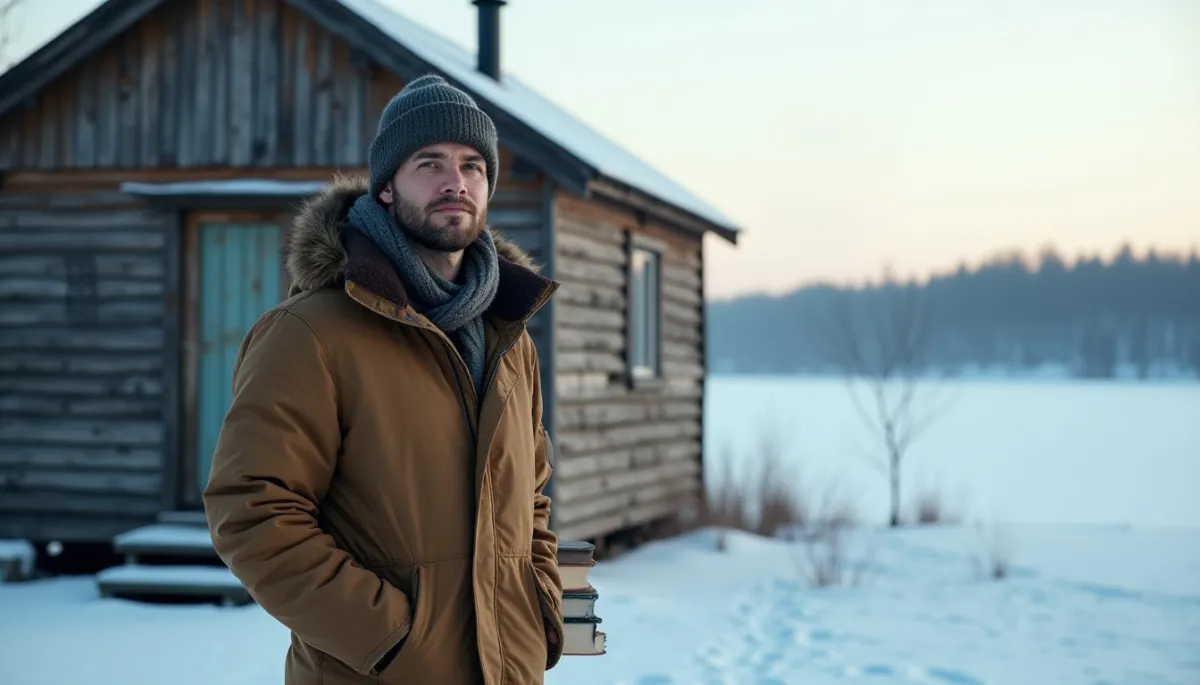
He lives where his books point. Imagine a wooden cabin, a sled of stacked volumes, a lake frozen to the horizon, and a man tracing lines from memory into a blank page.
A visible destiny
Sylvain Tesson, born in 1972 in Paris, forged his reputation as a travel writer and essayist. His best-known book, "Dans les forêts de Sibérie," recounts six months alone in a cabin on the shores of Lake Baikal. Published in 2011, the book brought him wide acclaim and made his way of life emblematic of a certain French goût for solitude and grand paysages.
He also collaborated with the photographer Vincent Munier on "La panthère des neiges," published in 2019, a lyrical account of hunting an apparition in Tibet. That book received major literary attention and prizes, and it furthered his image of a writer at the border between reportage, nature writing, and meditation.
Beyond titles, Tesson is known for traverses by motorcycle, on foot, by pony or by kayak. His itineraries, whether in Central Asia, the Himalayas, or Siberia, are as much literary projects as geographic ones. He turns travel into an experiment about how to live with fewer certainties.
Paths and origins
How did he reach this life? Early on, Tesson combined a taste for classics and a thirst for movement. He read broadly, from Herodotus to Rimbaud, and translated that reading into routes: to visit the places evoked in books or to test the ideas they carry.
Several episodes shaped him. In 2010 he retreated to Siberia for six months; the seclusion was intended as a personal experiment and a response to an overstimulated modern life. That stay catalyzed his public image and the success of the book that followed in 2011.
In 2014, Tesson suffered a severe accident after a fall from a roof, which required long months of rehabilitation. That rupture showed the fragility behind the romantic image and produced a new layer in his writing: the encounter between vulnerability and the desire for freedom.
Between myth and truth
There are contradictions in his destiny. He is both an ascetic and a celebrity, a lover of silence who becomes the subject of interviews and television. The myth of the solitary sage coexists with literary awards and public readings.
Yet these tensions make his project more interesting. Tesson's writings question modern habits: why do we move, what do we carry, which books accompany us? His style mixes precise field observations, philosophical notes, and practical details: how to install a stove, how to cut wood, how to keep a diary in cold weather.
For readers inspired by him, practical advice is tangible. Start with a limited experiment: choose a book you love, book a short stay in nature, pack only essentials, keep a small notebook, and set times for walking and reading. Respect safety rules and let solitude sharpen, rather than numb, your curiosity.
Thanks for reading, and don't forget, Enjoy Life Moments!