The legend of the Red Queen: unresolved mysteries of Palenque's city
🚀 Key Takeaways
- Key concept : A female burial in Temple XIII covered with cinnabar, nicknamed the Red Queen, challenges our view of Maya power.
- Practical tip : Visit Palenque early in the morning during the dry season (Nov–Apr) and stop by the site museum to see context and replicas.
- Did you know : Many original Palenque artifacts, including funerary items, are housed in the National Museum of Anthropology in Mexico City.
A red silence fills the corridor of Temple XIII, and for a moment the jungle seems to hold its breath.
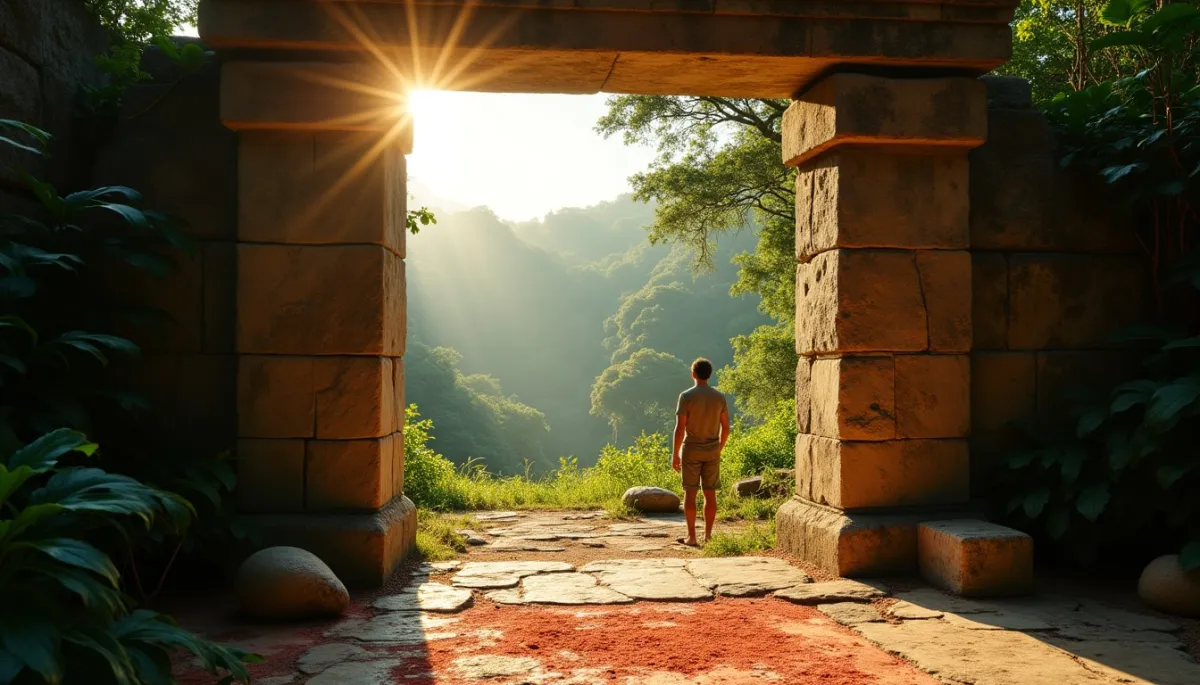
Imagine walking a narrow stone stair under humidity so thick it smells of earth, and finding a low doorway framed by glyphs. Entering, you would see a burial chamber where bones and ornaments once lay, dusted with a vivid vermilion pigment that looks, at first, like dried blood. That red dust is cinnabar (mercury sulfide), used by Maya ritual specialists to mark status and transform the dead.
The discovery of that chamber in Temple XIII, in the late 20th century, introduced the world to the figure we call the Red Queen. Unlike the famous tomb of K'inich Janaab' Pakal in the Temple of the Inscriptions, this burial showed a woman surrounded by fine objects. The consequence has been a rethinking of female roles in Classic Maya Palenque, and a fascination that bridges archaeology, mythology, and tourism.
Rouge et silence
Concrete examples anchor the mystery. The Red Queen's bones were found heavily coated with cinnabar, a practice that signals elite status and ritual purification. Nearby, archaeologists recorded jade beads, shell ornaments, and ceramics, goods typical of high-ranking burials in the Late Classic period (7th–8th centuries CE).
Visitors to Palenque's site museum can see replicas and contextual displays that help visualize how such burials fit into palace and temple complexes. The Temple of the Inscriptions, where Pakal's sarcophagus lid famously depicts a ruler at the threshold of the underworld, sits only a short walk away, inviting side-by-side comparisons of male and female funerary treatment.
Anecdotes add color. Local guides sometimes tell of how the vermilion dust seemed to stain the boots of early examiners, and how the nickname 'Reine Rouge' spread in press reports, feeding a public appetite for queens, curses, and royal drama. That popular narrative, however romantic, created expectations about identity that science has yet to satisfy.
Ombres et raisons
Why did the Maya bury this woman with cinnabar? The cause lies in ritual symbolism. Cinnabar's color evokes life, blood, and transformation. Coating a corpse in vermilion was both a mark of reverence and a ritual signal that the person passed into an altered state, perhaps with responsibilities in the afterlife.
Scholars propose several identities: a queen consort, an important noblewoman, or even a ruler in her own right. The presence of ornaments and the tomb's architectural prominence support the idea of political clout. Isotopic studies (which analyze teeth and bones) and proteomics are now common tools to trace origins and diets, and they help explain why archaeologists prioritize such burials.
International and Mexican teams have applied DNA analysis, but the humid, acidic soils of Chiapas often degrade genetic material. Consequently, causes of debate include preservation bias, past excavation methods, and the fact that important Palenque artifacts were moved to museums, making in situ comparison harder. This combination fuels both research and speculation.
Échos incertains
Contradictions persist. Some epigraphers read nearby inscriptions as indicating royal connections; others say glyphic evidence is ambiguous. The Red Queen's absence from explicit dynastic lists in surviving texts means we rely on burial context and material culture to infer status, which opens multiple interpretations.
Future developments point to promising technologies. Non-invasive imaging, micro-excavation, and refined radiocarbon calibration can tighten chronologies. Proteomic analysis of ancient proteins sometimes endures where DNA does not, and can identify species or even familial links. Yet funding, conservation ethics, and political decisions on artifact repatriation shape what science will reveal.
For travelers and curious readers, a few tips: hire an authorized guide, respect restricted areas, and remember that many original treasures are in Mexico City. Visit local museums in Palenque, time your visit for cooler mornings, and bring mosquito repellent. Behind the tourism, the Red Queen remains an enduring symbol of how much the ancient Maya still shelter from us.
Thanks for reading, and don't forget, Enjoy Life Moments!