Quiet luxury explained: why supreme elegance lies in the invisibility of logos
Quiet luxury is elegance that remains silent in order to be better noticed. In 2026, in the cafés of Paris, the workshops of Milan and the lounges of New York, the absence of a logo has become a distinctive sign.
🚀 The essentials
- Key concept: The value is in the material, cut and finish, not in the badge.
- Practical advice: Invest in cut and quality, have your pieces retouched.
- Did you know: The phenomenon was amplified by social networks as a reaction to the overbidding of logos.
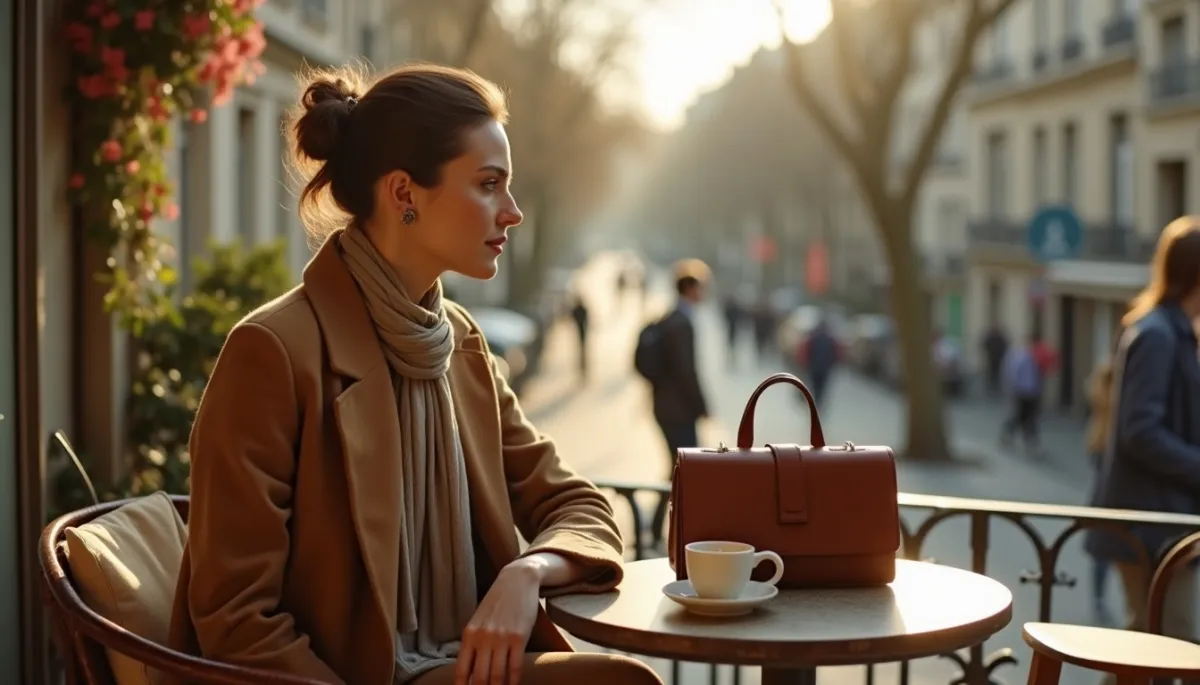
Imagine a sunny terrace in Saint-Germain, on a mild morning, where conversations are hushed and the coats speak through their texture. A man, in a camel cashmere coat, displays no logo, his appearance is enough.
This image sums up quiet luxury. Rather than flashy monograms, the emphasis is on the feel, cut and origin of the pieces. We see it in sober fashion shows, in discreet bags in airport lounges, and in offices where power is expressed through restraint.
Elegance that whispers
The consequences are concrete. Luxury houses today reduce the visibility of their external signs to highlight quality. Loro Piana, Brunello Cucinelli and The Row embody this strategy, where value can be read from the material and finish rather than from a printed logo.
In fashion and commerce, the signal of success changes form. We notice a perfectly fitted sleeve, single grain leather, invisible seam. Airport style columns analyze these indices, and journalists talk about 'quiet luxury' as a real social marker.
Real stories support the point. Financial circles have adopted the term 'stealth wealth' to describe wealthy people dressed in simple, impeccable pieces. Old money families have long favored this discretion, but the Internet has transformed this private code into a global trend.
Roots under the fabric
Why this fashion? The causes are multiple. Economically, the tremors of 2008, the pandemic and the market uncertainties of the early 2020s made ostentation socially delicate. Reserve has become a safe social language.
Culturally, social networks have caused a movement to reject signs that are too visible. Videos comparing 'invisible labels' and fake trappings have popularized the idea that authenticity and provenance are worth more than a logo. At the same time, younger generations prioritize sustainability and quality.
Finally, the trend is part of a fashion history. The minimalist rigor introduced by certain designers, the craftsmanship of Hermès and the slow fashion approach of independent actors prepared the ground, before hashtags spread the concept.
Contradictions and horizons
However, quiet luxury has its paradoxes. Brands are exploiting demand by launching 'logoless' lines at very high prices. Invisibility then also becomes a visible sign, sought after for its rarity.
Accessories remain a more direct signal space. Watches and certain jewelry remain obvious markers. A complicated timepiece or rare ring still functions as a standard, even in a discreet wardrobe.
In the future, we can expect hybrid responses: houses will offer sober basics and nostalgic capsules for logos, while second hand and repairs will take up more space. Dressing 'quiet' will require learning to read quality, not just labels.
Practical advice: have it repaired and retouched, choose wool, cashmere, silk, find out about the production workshops, avoid counterfeits dressed as 'stealth'. When in doubt, stick to neutral tones and one strong piece.
Definitions: quiet luxury (aesthetics valuing discreet quality rather than logos), stealth wealth (wealth displayed through restraint), old money aesthetic (intergenerational taste focused on provenance and sustainability).
Thanks for reading, and remember, Enjoy life's moments!