Private jets and sustainability: business aviation's ecological challenge
🚀 Key Takeaways
- Core concept : Private aviation emits disproportionately per passenger compared with commercial flights.
- Practical tip : Favor shared flights, empty-leg bookings and operators that use sustainable aviation fuel (SAF).
- Did you know : Empty-leg repositioning can represent a sizable share of private flights, sometimes up to 40%.
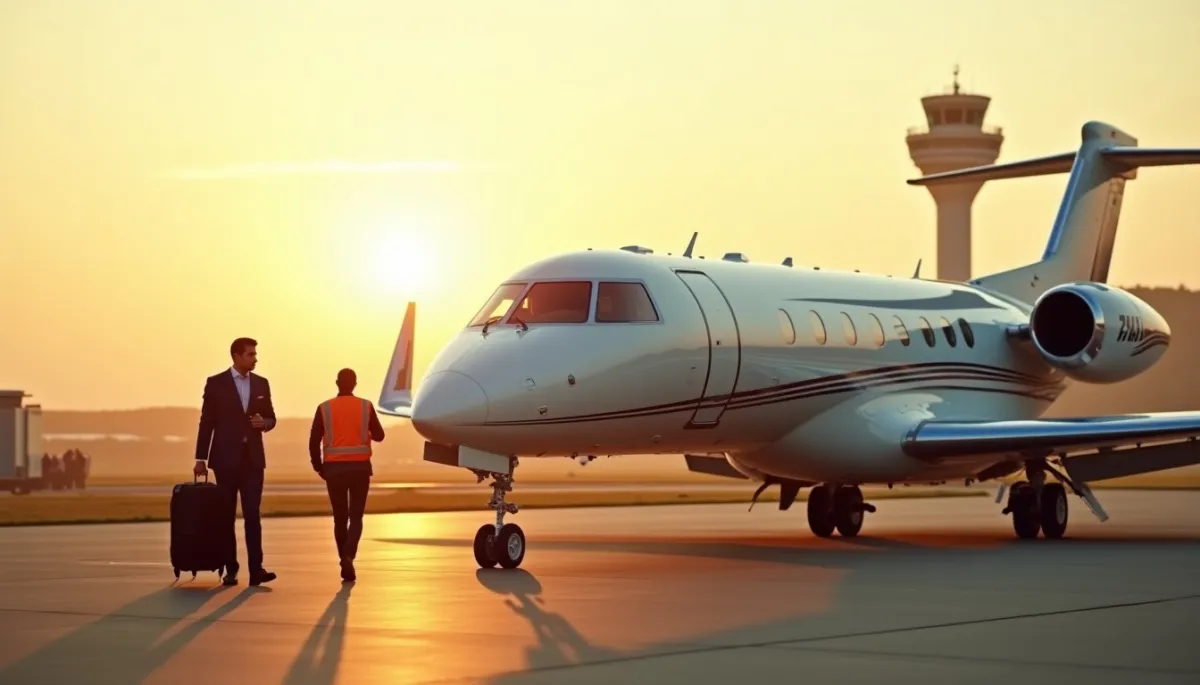
Speed tastes luxurious. Imagine descending to a private apron as the sun sets over Paris, the gravel crunching under a Rolls-Royce, while crew prepare a jet bound for a weekend in the Alps.
visible footprint
Private jets occupy a curious place in public debate, admired for convenience and criticized for their emissions. Though they represent a small fraction of global flights, their emissions per passenger are much higher than scheduled services, especially on short hops with few occupants.
Concrete numbers vary by study, but the pattern is consistent: a transatlantic private flight can emit several times the CO2 per passenger of a full commercial flight. The high carbon intensity comes from fewer passengers, frequent private repositioning legs, and often older, less efficient airframes.
Famous hubs illustrate the scale. Le Bourget, north of Paris, handles thousands of business jet movements annually. In the United States, Van Nuys and Teterboro are synonymous with private aviation traffic. These airports concentrate wealth and emissions in plain view of cities and holiday destinations.
roots of excess
The reasons behind the sector's outsized impact are structural and cultural. Private aviation privileges point-to-point travel, flexible schedules, and bespoke services, all of which reduce opportunities for economies of scale that make scheduled flights more efficient.
Operational practices amplify the problem. Empty-leg flights, where a jet returns without passengers or repositions to pick up clients, can account for a significant share of movements, sometimes up to 40% in busy markets. Fractional ownership and ad hoc charters increase flight-hours per aircraft compared with tightly scheduled commercial fleets.
Supply chains matter too. Jet fuel is kerosene based, and until SAF becomes widely available, operators rely on fossil-derived jet fuel. The limited production capacity and higher cost of SAF slow its adoption, while regulatory frameworks are still evolving to incentivize larger-scale uptake.
contradictions and solutions
The industry is far from inert. Manufacturers such as Dassault, Gulfstream and Bombardier continue to improve engine efficiency and aerodynamics, lowering fuel burn per flight. At the same time, startups and incumbents pilot radical concepts, from electric commuter aircraft to hydrogen-powered demonstrators.
Sustainable aviation fuel (SAF) is the most immediate lever. SAF is a drop-in replacement for conventional jet fuel, made from bio-based feedstocks, waste oils, or synthesized e‑fuels. It can cut lifecycle CO2 by up to 80% depending on feedstock and production method, but scaling production remains the bottleneck.
Market responses are multiplying. Operators such as NetJets and VistaJet offer SAF options to clients, and brokers propose empty-leg matching platforms to reduce unnecessary repositioning. Carbon offsetting programs are common, though their credibility depends on rigorous standards and long-term carbon accounting.
new habits, new rules
Client behavior is shifting. High-net-worth individuals and corporations are increasingly aware of reputational risk and ask for emissions data before booking. Some firms have internal travel policies that favor commercial flights or mandate SAF purchases for executive trips.
Regulation will accelerate change. The EU and ICAO are progressing on carbon pricing, SAF mandates and lifecycle accounting. Airports are investing in sustainable infrastructure, from SAF supply chains to electric ground handling equipment, reducing the sector's indirect emissions.
Practical choices matter. Travelers can reduce impact by sharing flights, choosing larger cabin aircraft with better seat-mile efficiency, booking empty-leg offers when useful, and selecting operators transparent about fuel use and offset programs.
looking ahead
Luxury and sustainability need not be strangers. The combination of technological innovation, customer expectations, and policy can reshape business aviation in the next decade. Electric short-range aircraft, hydrogen demonstrators, and scaled SAF production each contribute pieces of the puzzle.
Yet the transition will be uneven. Wealthy customers will have early access to cleaner options, while systemic solutions require public investment and industrial scale. The real test will be aligning lifestyle choices with collective climate commitments.
For the industry, credibility will come from measurable reductions, transparent reporting, and investments that lower the sector's absolute emissions, not only compensate for them.
Thanks for reading, and don't forget, Enjoy Life Moments!