Pierre Rabhi: an ode to happy sobriety and love of the land
🚀 Key Takeaways
- Core concept : « happy sobriety » is voluntary simplicity connected to nature.
- Practical tip : start with composting, mulching and planting diversity in a small plot.
- Did you know : Rabhi founded Terre et Humanisme in 1994 to teach agroecology.
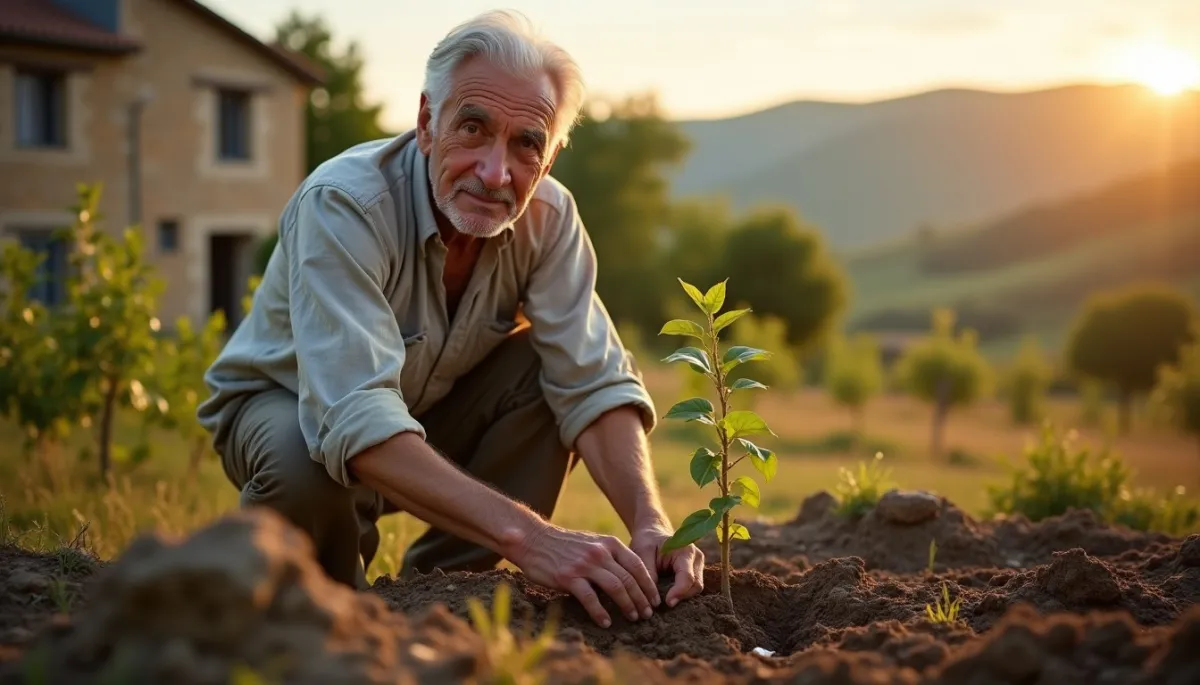
He smiled as he turned the soil with his hands, as if greeting an old friend.
Imagine a low stone house in a small Ardèche valley, fruit trees leaning over a vegetable patch, and a man with weathered hands explaining to a neighbour how to catch rainwater. That scene, repeated in dozens of gardens and stages, became an image-sentence of Pierre Rabhi's message: life can be fuller with less, provided we respect the living soil.
Racines visibles
Pierre Rabhi was born on 29 May 1938 in Kénadsa, a small oasis in the Algerian Sahara. His childhood in this arid landscape shaped an early intimacy with land, water scarcity and human resilience.
He moved to metropolitan France as a young man, worked in agriculture and wore many hats: seasonal worker, farmer, educator. Over decades he established small initiatives in Ardèche and Lozère, living the practices he advocated.
He published several books and popularized the expression « sobriété heureuse », a phrase that resonated widely in French-speaking environmental circles. In 1994 he founded Terre et Humanisme, an association dedicated to agroecology and training for sustainable cultivation.
Chemins et gestes
Why did his ideas spread so quickly? Because they were practical. Rabhi combined a moral plea with concrete techniques: composting, soil cover (mulching), agroforestry and respect for biodiversity in plots often measured in square metres rather than hectares.
He taught that agroecology is not an abstract theory. It is a set of farming techniques that restore soil life. In workshops held since the 1990s at training centres of Terre et Humanisme, students learned to build terraces, to plant nitrogen-fixing trees, and to design gardens that retain water—practices adapted to both drylands and temperate slopes.
His influence reached beyond farms. The Colibris movement, born in the 2000s around the idea of citizens acting locally for ecological transition, helped spread his ethic of small initiatives and community exchanges. Filmmakers, writers and educators have repeatedly cited him as an inspiration for low-tech, high-meaning lifestyles.
Ombres et héritages
No influential figure is without critics. Rabhi’s stature sometimes created tensions: critics warned against the personalization of a movement, and public debates examined his political positions and the scope of his prescriptions for modern societies.
After his death on 4 December 2021, conversations intensified about how to keep his teachings alive while avoiding cults of personality. Organisations he founded, and many grassroots projects, continue to practise and adapt agroecology in concrete contexts, from school gardens to peri-urban plots.
What remains clear is that his message—less consumption, more attention—has been integrated into numerous practical initiatives. NGOs, local councils and community groups have adopted elements of his methods to fight soil erosion, preserve seeds and build food resilience.
Conseils de terrain
Want to try Rabhi’s approach at home? Start small: set up a compost bin, cover the soil with mulch to keep moisture, and plant at least three different species in a single bed to encourage biodiversity.
Observe water flows. Even in temperate gardens, simple rainwater harvesting and gentle contouring can reduce irrigation needs. Favor native species and fruit trees as long-term allies of soil health.
Finally, share knowledge. Rabhi insisted on pedagogy: change is collective. Invite neighbours over, swap seeds, and document what works. The act of teaching multiplies the impact.
Whether one embraces every word he wrote or not, Pierre Rabhi left a legacy of concrete gestures and a provocative invitation: to measure well-being beyond material accumulation, and to place the love of land at the centre of daily life.
Thanks for reading, and don't forget, Enjoy Life Moments!