Organic architecture: when luxury villas merge with the surrounding nature
🚀 Key Takeaways
- Concept key : Organic architecture fuses building and landscape, privileging form, material and site.
- Practical tip : Prioritize native planting, passive orientation and materials that age gracefully.
- Did you know : Iconic precedents include Fallingwater and Casa Gilardi, both integrating nature into daily life.
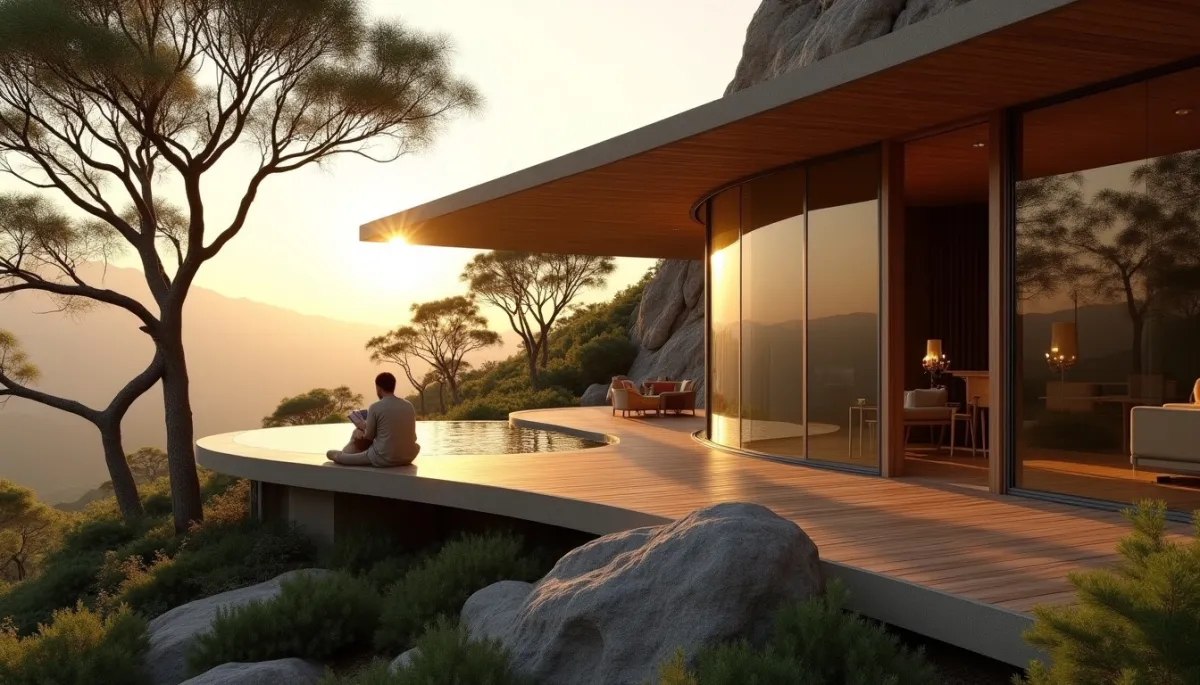
Light filters through a canopy, then crosses a concrete slab and falls into a shallow reflecting pool. You might imagine a painting, yet this is a breakfast table view in a modern villa, where architecture stops being an object and becomes an environment.
Stone and water
When Frank Lloyd Wright built Fallingwater in 1935, he offered a manifesto in stone and cantilevered terraces, a house daring to sit above a stream rather than dominate it. The image of a home entwined with a waterfall still shapes how luxury clients imagine intimacy with nature.
More recent examples echo that impulse. Villa Vals in Switzerland is carved into a mountainside, with a small window framing the valley like a painting. Casa Gilardi in Mexico City preserves a jacaranda tree at the heart of the house, letting seasons dictate interior light and shadow.
These villas are not mere postcards. They reframe amenity. Infinity pools and glass facades are rethought so that edges blur, and the vocabulary of luxury now includes weathered stone, living roofs and thresholds that dissolve into gardens.
Roots and reasons
The shift is both cultural and market driven. High-net-worth buyers increasingly seek privacy, wellbeing and authenticity. Biophilic design, the idea that humans have an innate affinity for nature, has migrated from academic papers into architects' client briefs.
Environmental regulations and rising energy costs have also nudged the market. Green certifications and passive strategies can improve valuations, and several studies suggest that sustainably designed properties can command a premium, often visible in resale prices and rental yields.
Technological advances help too. Carbon-friendly materials, advanced glazing and 3D topographic modeling let designers fit buildings to sites with unprecedented precision. Rather than forcing a standard plan onto a plot, architects now carve spaces out of the land, like sculptors following grain and slope.
Textures of contradiction
Yet blending luxury with wildness is not without tension. The very act of access can fragment ecosystems. A driveway, however discreet, changes hydrology. Large glass walls create bird strike risks. The paradox is that desire for untouched scenery can lead to intrusive development.
Regulation and stewardship are part of the answer. Thoughtful projects set strict limits on clearing, favor native species, and integrate stormwater management. Architects such as Tadao Ando and John Lautner, historically attentive to context, show that restraint and craft can lower impact while amplifying experience.
Future developments point to a hybrid model: villas that are luxurious and low-footprint, using prefabricated components to reduce on-site disturbance, and adaptive landscaping that returns to the wild when the owners are absent. The goal is a living property, not a staged set.
Lessons and tips
If you are considering such a property, begin with the site. A microclimate study, soil test and native vegetation survey are indispensable. Orientation matters for daylight, cross ventilation and seasonal comfort.
Choose materials that age with dignity: local stone, untreated timber, and concrete with a measured palette. Plan buffers between living areas and sensitive habitats, and consult an ecologist early to avoid unintended harm.
Finally, accept a different timeline. Nature is patient. The immediate wow of a glass box is tempting, but the quiet reward of a villa that gains character as lichen and vines settle in will be more enduring.
Thanks for reading, and don't forget, Enjoy Life Moments!