Matthieu Ricard: from genetics researcher to the Himalaya, the journey of the world's happiest man
🚀 Key Takeaways
- Core concept : A life that bridges science and contemplative practice.
- Practical tip : Start with five minutes of mindfulness daily, consistency matters more than length.
- Did you know : A 2004 neuroscience study recorded unusually strong gamma activity in Ricard's brain during meditation.
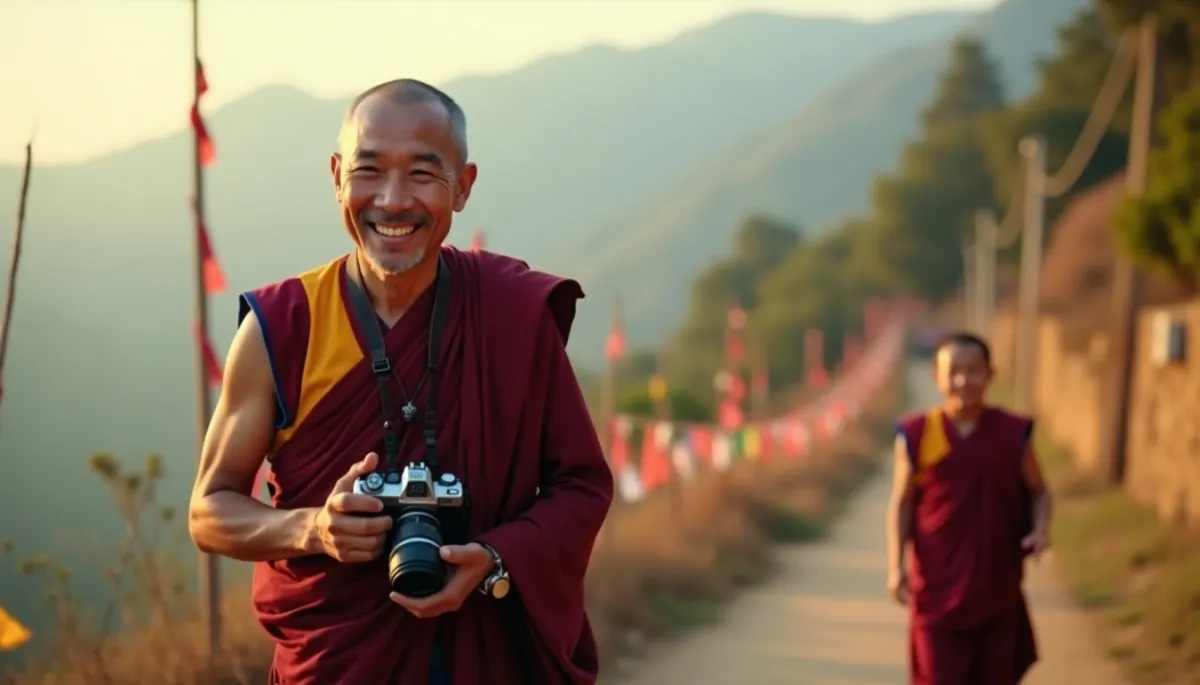
Un sourire qui semble inépuisable. Imagine a narrow path above Kathmandu, prayer flags fluttering, a man with a gentle laugh pausing to talk with a young monk about a camera shot, while a distant bell rings.
Sourire contagieux
Matthieu Ricard is a French-born Buddhist monk, photographer, translator and writer, often presented in the media as "the happiest man in the world" after neuroscientific studies highlighted unusual brain activity during his meditation. He was born in 1946, the son of the French philosopher Jean-François Revel, and grew up in an intellectual Parisian milieu.
He authored several books that reached international audiences, notably Le Moine et le philosophe (1997), a public conversation with his father that sold widely, and Happiness: A Guide to Developing Life's Most Important Skill, which popularized meditation for Western readers. He also translates Tibetan texts and documents traditional Buddhist teachings.
Beyond writing, Ricard co-founded Karuna-Shechen, a humanitarian organization that, since around 2000, supports schools, health centers and relief projects in Nepal, India and Myanmar. His public image combines spirituality, scientific curiosity and practical philanthropy.
Du laboratoire au monastère
Before the robe, there was the lab. Ricard trained in molecular genetics, completing advanced studies in biology in Paris. In the late 1960s and early 1970s he worked at the intersection of emerging genetic research and academic life, a world of microscopes and experiments that shaped his analytical mind.
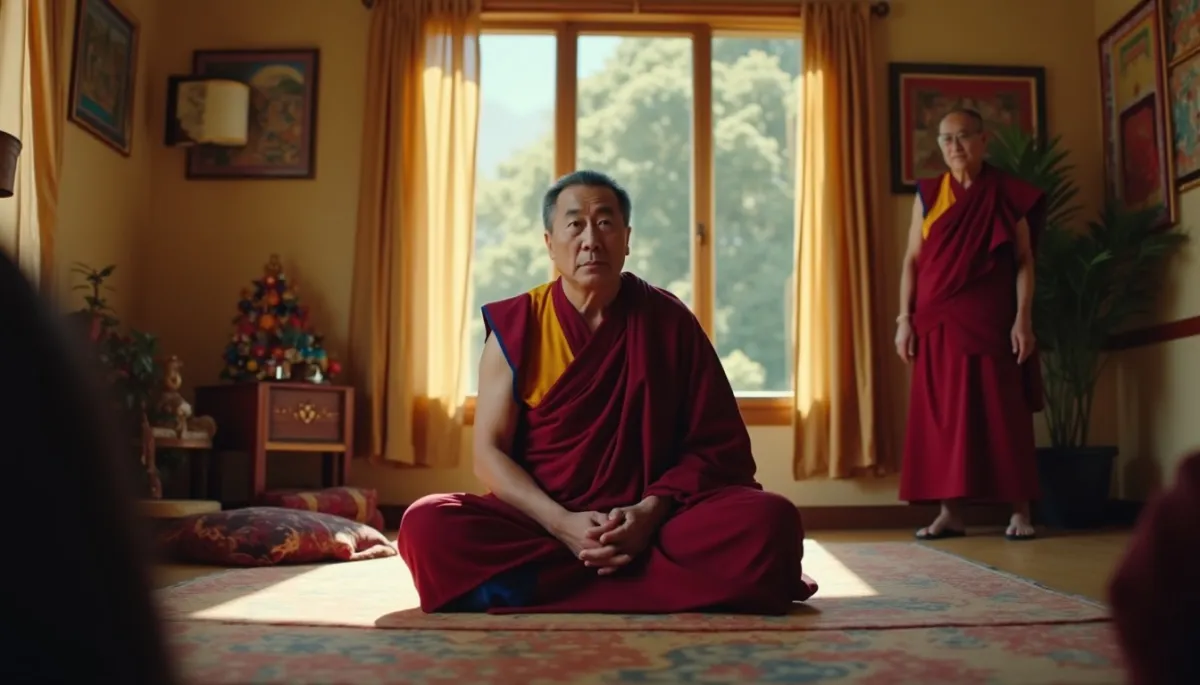
In 1972, he chose another path, moving to the Himalaya to study Tibetan Buddhism. That decision surprised peers and family, but it reflected a search for meaning that scientific success did not fully satisfy. Over time, Ricard was ordained as a monk and settled in the Shechen monastery near Kathmandu, where he practices, teaches and translates.
His scientific background never disappeared. Ricard has been a bridge between monastic wisdom and contemporary science, participating in dialogues with neuroscientists and the Dalai Lama, and welcoming research into attention, compassion and brain plasticity.
Science et méditation
In 2004, a study led by neuroscientist Richard J. Davidson attracted global attention. Using electroencephalography (EEG), the team measured Ricard's brain activity during meditation and found exceptionally high levels of gamma waves, associated with attention and integrative processing. The media dubbed him "the happiest man," though scientists stressed nuance.
Gamma activity, simply put, are fast brain oscillations that reflect synchronized neural firing, linked to focused awareness. Ricard's recordings suggested that long-term training in compassion and mindfulness alters neural patterns, a finding that prompted further research into meditation's effects on emotion regulation.
Ricard never claimed to be a scientific specimen. He emphasizes that these results point to the plasticity of the brain and the possibilities of training the mind, not to a fixed, permanent state. His humility reinforced his credibility in both scientific and spiritual circles.
Tensions et choix
Despite admiration, his trajectory raises questions. Critics warn against simple celebrity narratives: long-term happiness is complex, shaped by context, resources and social ties. A single EEG snapshot cannot capture suffering or the variability of inner life.
Ricard acknowledges contradictions. He lives modestly as a monk, yet travels internationally, speaks in auditoriums and benefits from book sales. Notably, he donates most royalties to Karuna-Shechen, a fact that aligns his public persona with concrete philanthropy.
Looking forward, Ricard remains committed to dialogue. He encourages practical exercises: cultivate attention, practice loving-kindness (a meditation aimed at increasing goodwill), and engage in small acts of altruism. These are accessible steps that readers can try today.
Three practical tips: begin with five minutes of mindful breathing, expand to compassion exercises twice a week, and combine reflection with concrete action, like volunteering locally. Change is gradual, and consistency beats intensity.
Matthieu Ricard's life is a lesson in possibilities. From Paris laboratories to Himalayan courtyards, he shows that curiosity, discipline and generosity can coexist. His journey invites us to explore science and spirit, and to test, patiently, what real happiness might mean.
Thanks for reading, and don't forget, Enjoy Life Moments!