From political prisoner to Nobel: Mandela’s destiny carved in stone
🚀 Key Takeaways
- Key concept : Mandela transformed personal sacrifice into national reconciliation.
- Practical tip : Visit Robben Island or read Long Walk to Freedom to feel history firsthand.
- Did you know : Robben Island became a UNESCO World Heritage site in 1999.
He walked slowly, but everyone followed.
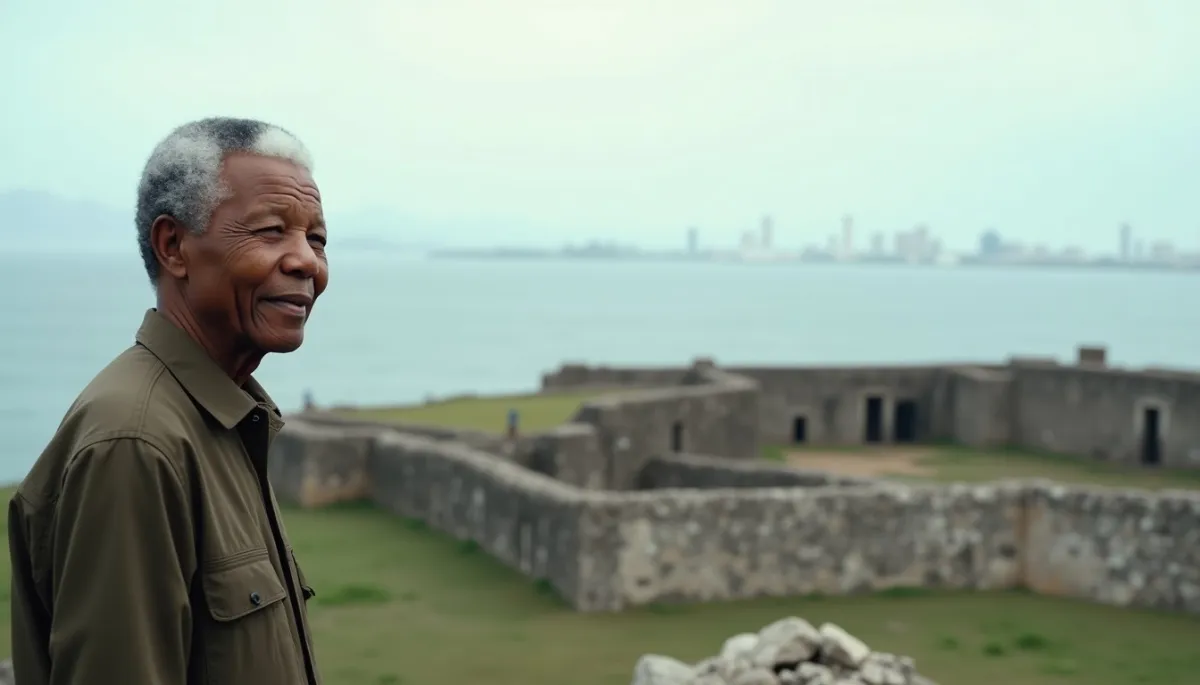
Imagine standing on the blustery shoreline of Robben Island, with granite quarries behind rusted walls, as a former prisoner guides a group of visitors. The wind seems to carry fragments of conversations from decades past: debates whispered in cells, letters that never arrived, and the cadence of a leader who taught patience as a political act. This island, just 12 kilometers off Cape Town, is both monument and classroom.
Un visage connu
Nelson Rolihlahla Mandela was born on July 18, 1918, in Mvezo, Eastern Cape. He trained as a lawyer, became a leader of the African National Congress (ANC), and co-founded Umkhonto we Sizwe (Spear of the Nation) in 1961, the ANC's armed wing.
Arrested in August 1962, Mandela was tried during the Rivonia Trial and sentenced to life imprisonment on June 12, 1964. His prison number, 466/64, became a symbol worldwide. He spent 18 years on Robben Island, then years in Pollsmoor and Victor Verster prisons until his release on February 11, 1990.
Recognition followed in many forms. In 1993, Mandela and then-president F.W. de Klerk shared the Nobel Peace Prize for their work in ending apartheid and initiating a negotiated transition to majority rule. He became South Africa's first Black president in May 1994, serving until 1999.
Les pierres du chemin
Mandela's trajectory did not fall from the sky. Apartheid, instituted legally from 1948, segregated every part of life. The ANC's campaign ranged from peaceful protest to sabotage, reacting to police brutality and laws that stripped rights from Black South Africans.
Key moments pushed Mandela further into the spotlight. The Sharpeville Massacre in 1960 and the state's increasing repression convinced many activists that nonviolent protest alone would not dismantle apartheid. Mandela's role in organizing protests and in forming Umkhonto we Sizwe led to his arrest after police found documents at Liliesleaf Farm, Rivonia.
Anecdotes humanize him. In the Robben Island quarries, Mandela and inmates minimized the humiliation by teaching each other; they held legal classes in secret, and Mandela completed a Bachelor of Laws through the University of London External Program. Small acts, like signing petitions or carving messages into stone, sustained morale.
Tensions et réconciliations
Mandel a was not without contradictions. After 1994, many expected immediate economic equality. Instead, South Africa's transition prioritized political freedom first, and economic disparities persisted. Critics accused Mandela of being too conciliatory toward former apartheid leaders, while others saw his restraint as the only viable path to peace.
His presidency saw the creation of the Truth and Reconciliation Commission (1996), chaired by Desmond Tutu, a bold experiment in restorative justice. The commission favored public testimony and conditional amnesties rather than retribution, a model studied worldwide, but also one that left victims wishing for more direct reparations.
Mandela's personal life was complex: four marriages, strains with family, and the sacrifices of decades in prison. He retired from politics but continued to speak for HIV/AIDS awareness and global human rights until his death on December 5, 2013. His flaws do not erase his achievements, they make him more human.
Empreinte durable
Robben Island, turned museum, teaches visitors about endurance and dignity. In 1999, UNESCO listed it as a World Heritage site, recognizing its universal value. Long Walk to Freedom, Mandela's autobiography published in 1994, remains a recommended read to grasp his inner life.
Practical advice: when you visit Cape Town, book a Robben Island tour early, join a guided walk that includes former inmates’ testimonies, and pair the visit with a reading of passages from Mandela's writings to feel the continuity between place and narrative.
Culture matters. 'Apartheid' (literally 'separateness') was an institutional system of racial segregation. 'Umkhonto we Sizwe' means 'Spear of the Nation', the name chosen to reflect a defensive struggle. These terms help frame the stakes of Mandela's choices.
Nelson Mandela's destiny was indeed carved in rock: not only the granite of Robben Island, but in the harder stone of political compromise. His life shows that moral authority grows from consistent choices over time, and that forgiveness can be political strategy as well as ethical stance.
Thanks for reading, and don't forget, Enjoy Life Moments!