Kitesurf and windsurf at river mouths: riding the bise when Lake Geneva stirs
🚀 Key Takeaways
- Core concept : The "bise" (northeasterly wind) can create ideal but challenging conditions at river mouths on Lake Geneva.
- Practical tip : Check MétéoSuisse and local clubs in Montreux, Vevey or Nyon before launching; expect gusts and cross-currents.
- Did you know : River mouths change the lake surface by creating standing waves, eddies and stronger currents in short stretches.
Pure, raw wind. You feel it on your face before you see the whitewater.
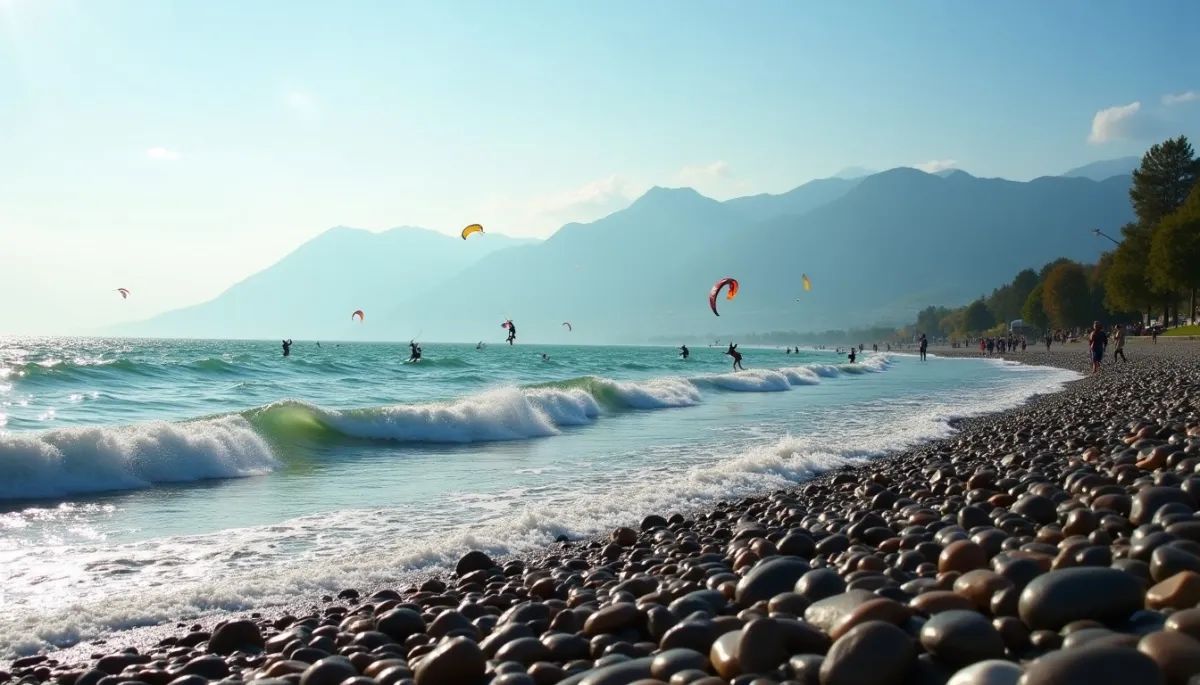
Imagine standing on the pebble beach near a small river mouth along the Riviera Suisse. Kites and sails dot the horizon, kites snapping like sails in a storm. The air is crisp, the light low; trunks of windsurfers carve through chop while kitesurfers surf bumps created where river current meets the lake. Boats give a wide berth. Photographers from Montreux and Geneva angle for the perfect frame. It is a mix of athleticism and local ritual, repeated every time the bise decides to blow.
Vent et vagues
When we speak of the bise on Lake Geneva, we mean a cold, dry wind typically from the northeast. On the lake it can blow from late autumn through winter, but episodes occur year-round, especially in transitional seasons.
At river mouths, like those along the Riviera between Nyon and Montreux, the meeting of fresh water and lake water distorts the surface. Currents funnel, forming standing waves, choppy patches and unexpected eddies. These features are prized by experienced riders because they add lift and technical sections to a session.
Local weather services such as MétéoSuisse and marina bulletins often report wind speeds and gusts. Riders aim for steady winds in the 15 to 30 knot range for comfortable kitesurfing or windsurfing, while gusty bise days can exceed that, demanding advanced control and quick decision making.
Pourquoi la bise
Why are the embouchures special? The physical cause is simple: topography and temperature differences. The bise flows along valleys and accelerates when funneled between relief. Where small rivers meet the lake, the flow of water and the shore geometry concentrate energy, amplifying local wind and wave patterns.
There is a human reason too. Since the 1990s, kite and wind culture has grown on both Swiss and French shores of Léman. Schools and clubs in towns such as Rolle, Morges and Vevey began mapping reliable spots. Riders share knowledge on forums and WhatsApp groups: deepest channels, safest launch zones and typical eddy patterns after heavy rain.
This local knowledge is crucial. The embouchure is not a uniform playground. A spot that is perfect on a gentle thermal afternoon can turn unpredictable under a strong bise. Experienced riders study bathymetric yields (maps of depth) informally, or consult local clubs for recent changes after storms.
Entre lois et espaces
There are rules to respect. Swiss maritime law and local commune ordinances regulate where you can launch, the separation between swimmers, and how close to bridges or protected reedbeds you may go. In busy summer months, municipal signs and seasonal zones appear, but during bise episodes, the timing of sessions often falls outside peak bathing hours, which reduces conflict.
Safety is a practical conversation: always check forecasts, bring a certified personal flotation device, a helmet for windsurfing and a leash for kites. Pay attention to river discharge after rain. A swollen embouchure can create strong offshore currents and submerged hazards.
For those starting out, local schools offer progressive learning. A common rule is to master bodydragging and self-rescue in controlled conditions before attempting a bise day at an embouchure. Join club sessions in Montreux or Nyon to learn local signals and emergency pick-up procedures.
Thanks for reading, and don't forget, Enjoy Life Moments!