Hästens craftsmanship: why the world's most expensive bed is worth every penny
🚀 Key Takeaways
- Core concept : Handcrafted beds using natural materials and traditional techniques.
- Practical tip : Try extended trials and prioritise natural fillings for breathability.
- Did you know : Hästens is a family-owned Swedish brand founded in the 19th century, known for its blue check pattern.
Pure comfort, made by hand.
Imagine a quiet atelier in Köping, Sweden, light filtering through high windows, and a handful of artisans assembling layers of horsehair, cotton and wool by hand. The smell is of natural fibres and timber. A finished Hästens bed waits on a raised platform, its blue check linen folded back like the curtain before a performance. Clients from Tokyo, London and Dubai come to see and feel what a fully handmade mattress can offer, and many leave convinced that price and patience meet at the headboard.
Nuit souveraine
Hästens has been associated with sleep excellence for more than a century. The company, founded in Sweden in 1852, evolved from a small family workshop into a global luxury brand, while keeping production rooted in Swedish ateliers. Its top-tier models are frequently described in the press as the most expensive beds in the world, with bespoke commissions reaching into the hundreds of thousands of euros or dollars.
These pieces are marketed not as mere mattresses, but as full sleep systems: a handcrafted wooden frame, hand-tied springs or a carefully engineered support structure, and multiple layers of natural fillings. The result is a bed that looks like a piece of fine furniture and behaves like a microclimate for sleep.
For clients, buying a Hästens is as much about the promise of restorative rest as it is about owning an artisanal object. Luxury hospitality and private clients who value provenance and craft often select Hästens for presidential suites and private residences. This confers cultural status as well as practical comfort.
Matériaux et gestes
The brand's signature lies in its materials. Horsehair, long valued for resilience and moisture regulation, forms part of the core fill. Layers of cotton and wool add softness and natural insulation, while flax and breathable textiles regulate temperature. The frame is typically crafted from kiln-dried wood, chosen for stability and longevity.
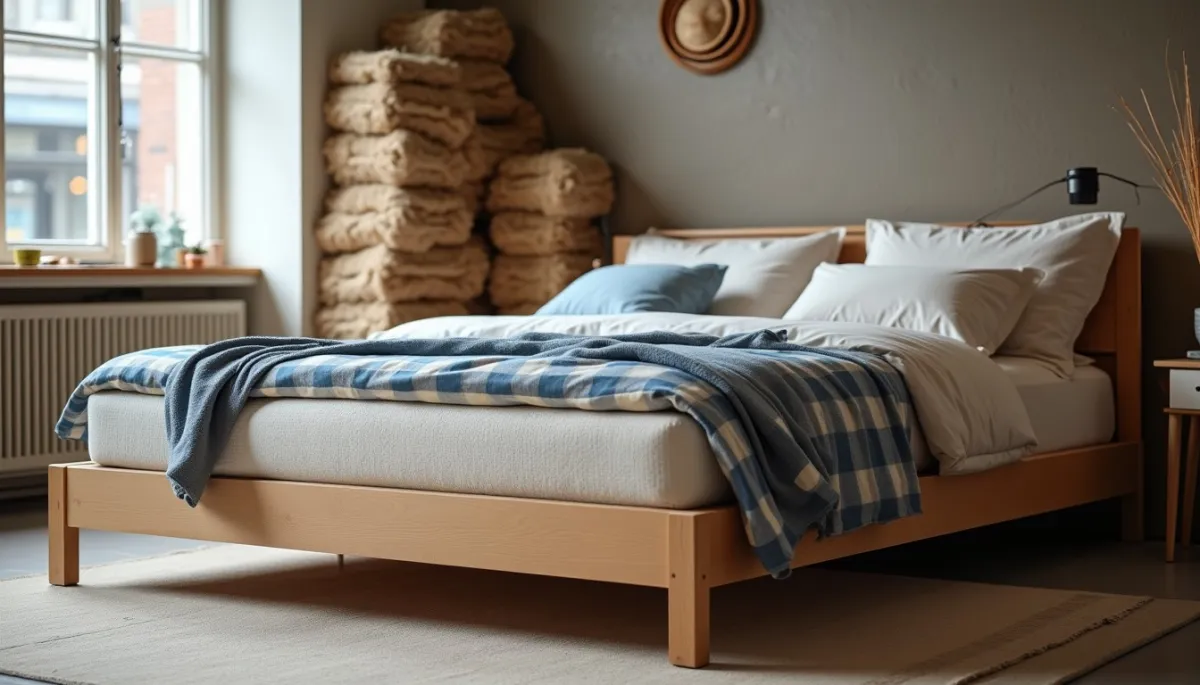
Crucially, many steps are manual. Craftsmen measure, cut and hand-stitch layers. Springs and fillings are positioned to maintain consistent support, and the mattress is finished with Hästens’ iconic blue check fabric. This level of manual attention increases labour time and cost, but it also allows for customisation and individual quality control.
Beyond material choice, the brand invests in testing and ageing. A handmade mattress is not the same as a mass-produced one; it requires bedding design knowledge and periodic care. Hästens often offers in-store fitting, long trial periods, and bespoke options, which all contribute to the final price and client confidence.
Héritage et débats
Heritage counts. A history that stretches back to the 19th century provides legitimacy. Family ownership and Swedish production create a narrative of continuity that resonates with buyers seeking authenticity. The blue check, the visible handcrafting and the numbered tags reinforce the sense that one is buying an heirloom.
Yet the price tag raises questions. Critics point out that similar sleep benefits can be achieved with modern materials and ergonomically designed mattresses at a fraction of the cost. Sleep technology, foam advances and adjustable bases offer competitive alternatives. The debate is less about sleep quality and more about values: is one paying for measurable performance, artisanal craft, brand aura, or a combination of these?
Looking ahead, Hästens and similar maisons will balance tradition with sustainability and innovation. Natural fillings have ecological advantages, but supply chains and animal welfare matter to modern consumers. The company’s future will likely depend on transparent sourcing, extended product lifecycles and services that make high-end sleep accessible as a long-term investment rather than a fleeting status symbol.
Practical advice for those considering a Hästens: test in person, inquire about trial and service, and treat the bed as an investment in health. Rotate and air the mattress regularly, use natural bedding to preserve breathability, and follow the brand’s maintenance recommendations to protect the value.
Thanks for reading, and don't forget, Enjoy Life Moments!