From prisoner of war to founder of the world's largest child aid NGO
🚀 Key Takeaways
- Core idea : Trauma can become a motor for large-scale social change.
- Practical tip : Start locally, partner globally; early wins build credibility.
- Did you know : UNICEF was created in 1946 to help children after World War II.
He returned with a number on his arm and a promise in his chest.
Imagine a grey train platform in 1945, snow melting into mud, a man whose uniform still smells of barracks greeting a group of shivering children evacuated from a nearby town. He folds his scarf around a little girl who keeps saying she is hungry, and he thinks: I will not let this happen again. That moment—small, tactile, human—becomes the seed of an idea that will grow into an international movement.
Visages connus
This story stands in a lineage of real lives. After World War I, Eglantyne Jebb founded Save the Children in 1919 to respond to the famine and displacement that decimated European children. In 1946, UNICEF was established by the United Nations to coordinate relief for children in the aftermath of World War II. These organizations show how individual conviction can seize historical moments.
Among individuals, there are striking parallels. Louis Zamperini, an American airman and prisoner of war from 1943 to 1945, returned to a life of speaking and engagement; his witness became a moral resource for younger generations. Nicholas Winton, who organized the rescue of 669 mostly Jewish children in 1938–39, later received global recognition for turning personal initiative into rescue on a mass scale. Their lives illustrate that trauma and exposure to suffering often catalyze lifelong public action.
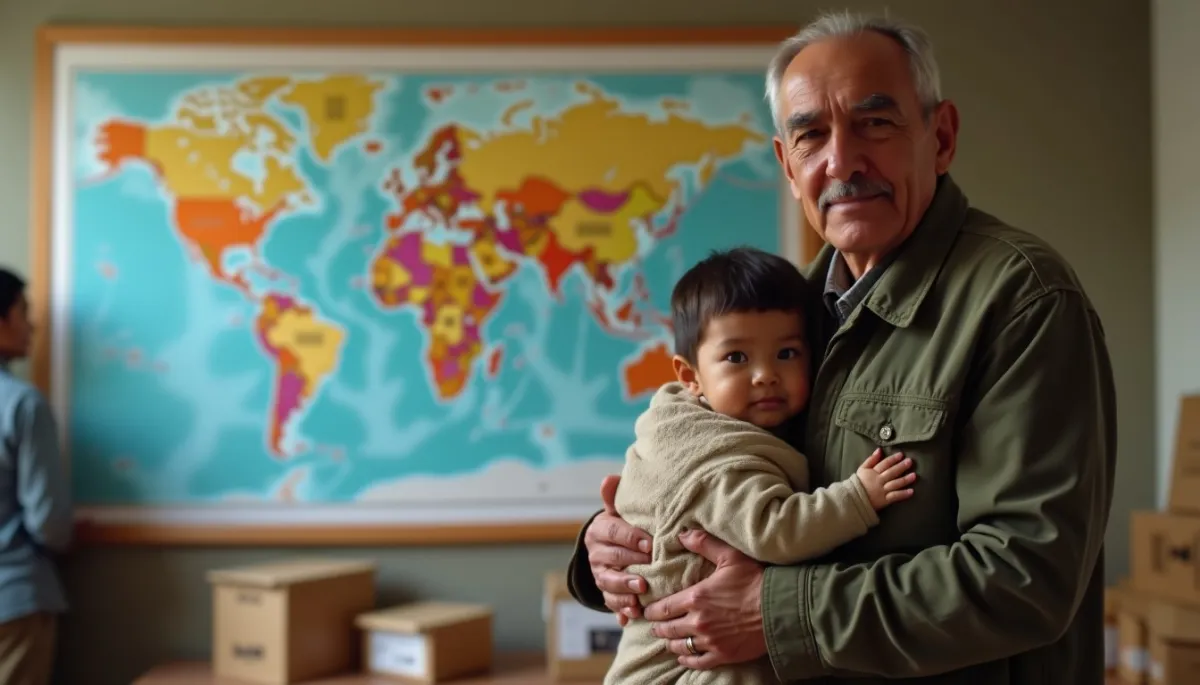
A hypothetical founder in our title fits this pattern: a former POW who, exposed to the catastrophic effects of war on children, dedicates his life to building an NGO that scales local intervention to global policy. Real milestones echo through this arc: the postwar years, the rise of international law for children (the 1959 Declaration of the Rights of the Child), and the adoption of the Convention on the Rights of the Child in 1989.
Chemins tissés
How does a former prisoner become a movement builder? The path usually combines three elements: first-hand witness, networks built in postwar reconstruction, and the ability to translate moral urgency into institutional tools. After 1945, millions of refugees, displaced persons, and orphaned children created an unprecedented humanitarian need. People like Maurice Pate, who led UNICEF from 1947, and Bob Pierce, who founded World Vision in 1950, converted relief operations into enduring structures.
Anecdotes matter. In 1939, when Nicholas Winton kept lists and tickets in a small London office, each name saved was an organizational triumph. In the 1950s, a series of radio appeals and church networks funded early international programs. These granular acts—writing a letter, convening a meeting, negotiating a ship passage—are the bricks of large NGOs.
Practically, the founder learns to combine empathy and systems thinking. Empathy fuels the mission; systems thinking secures funding, partnerships, and measurable outcomes. Early adopters include local hospitals, churches, and municipal authorities. Later comes the hard architecture: governance, donor transparency, program evaluation. The largest NGOs did not grow overnight; they evolved through decades of learning and institutionalization.
Entre ombre et lumière
Yet contradictions persist. A founder shaped by war may struggle with bureaucracy and compromise. NGOs that scale must professionalize, which can dull grassroots energy. Critics point out that large aid organizations sometimes reproduce power imbalances between donor countries and beneficiary communities.
There are also hopeful corrections. Since the 1990s, participatory approaches (involving communities in program design) and local leadership have become central. The Convention on the Rights of the Child (1989) shifted discourse: children became rights-holders, not passive recipients. That change required organizations to adapt governance and accountability models.
For readers who want to act: start small. Volunteer with local child welfare programs, support education initiatives, or sponsor evidence-based charities. Learn how NGOs report impact—look for audited financials, third-party evaluations, and local partnerships. History shows that sustainable change mixes passion with rigour.
From barbed wire to boardrooms, the arc is never linear. It takes grit, humility, and the willingness to be taught by those one seeks to help. When a former prisoner of war turns his trauma into an organization that protects millions of children, he transforms personal suffering into a global promise: that no child should pay the price of conflict.
Thanks for reading, and don't forget, Enjoy Life Moments!