From pok-ta-pok to 2026: the sacred and astrological meaning of the Maya ballgame
🚀 Key Takeaways
- Core concept : The ballgame linked ritual, politics and astronomy among the Maya.
- Practical tip : Visit the Great Ballcourt at Chichén Itzá at sunrise for an unforgettable view.
- Did you know : The Venus cycle (584 days) figured in ballgame symbolism and war timing.
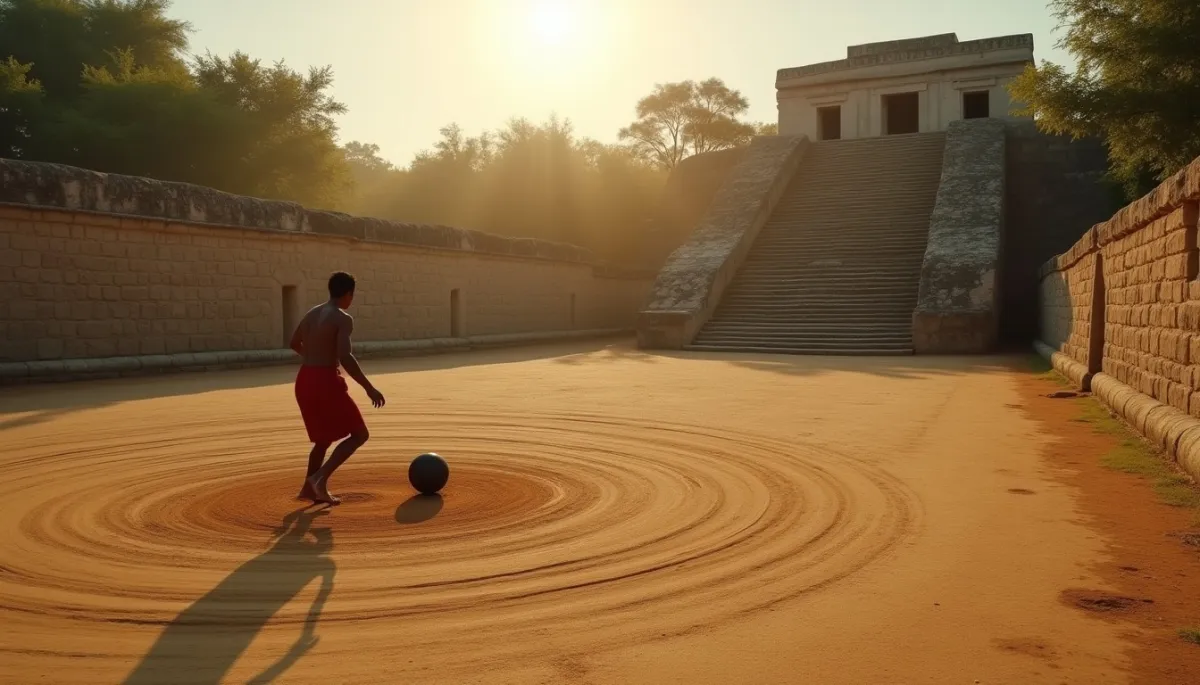
It is a sound that travels through time. Imagine a hush before dawn, the silhouette of a stone ring framing the pale light, and a single rubber ball thudding against ancient stucco.
Court of the heavens
The Maya ballcourt was not only a sports arena, it was a stage for cosmology. From the Classic period (about 250 to 900 CE) onward, courts appear across the Maya world, notably the Great Ballcourt at Chichén Itzá, built and reused between roughly 900 and 1200 CE.
Sculpted reliefs and hieroglyphic texts link the game to the Popol Vuh (the K'iche' Maya narrative recorded in the 16th century), where the Hero Twins, Hunahpu and Xbalanque, play a lethal ballgame in the underworld. That myth framed the game as a reenactment of celestial cycles, life and death.
Archaeologists and epigraphers such as Linda Schele and David Stuart have shown how ballcourt iconography mixes stars, bats, serpents and skulls. The stones are a map: alignments and decorations speak of celestial paths, eclipses and the movement of Venus.
Marked by Venus
The planet Venus occupies a special place in Maya astronomy. The synodic period of Venus is 584 days, a cycle the Maya observed and recorded, and scholars believe that key military campaigns and ritual events were scheduled with this rhythm.
Glyphic texts on stelae and in painted ceramics sometimes pair ballgame scenes with Venus glyphs, suggesting players could represent celestial actors. The competitive, often violent, nature of the match echoed the Morning Star’s role as a harbinger of conflict.
In political terms, rulers used the ballgame to stage legitimacy. Victories or ritualized capture of opponents reinforced a ruler’s cosmic mandate, a connection that unified celestial symbolism and earthly power.
Living echoes
Contrary to a frozen museum image, the ballgame persists. Modern ulama, played in parts of Mexico, preserves rules and techniques tied to ancestral practices. In Yucatán and Guatemala, communities and cultural projects revive ceremonial matches during festivals.
Today, renewed interest blends archaeology, astronomy and tourism. Apps and planetarium software let visitors visualize the Venus cycles and stellar alignments as they stand in ancient courts, a bridge between sky and stone that has grown in the 2020s.
Yet tensions remain. Preservation needs, tourist pressure at sites like Chichén Itzá, and debates on how to represent ritual violence complicate public presentations. Responsible visits, guided by local experts, help keep the memory alive while respecting living communities.
For curious travelers: plan dawn visits, ask for local guides who can explain glyphic motifs (the written signs recording names and events), and seek community festivals where the game is played as living tradition.
Thanks for reading, and don't forget, Enjoy Life Moments!