At the National Assembly, global tourism examines its fractures
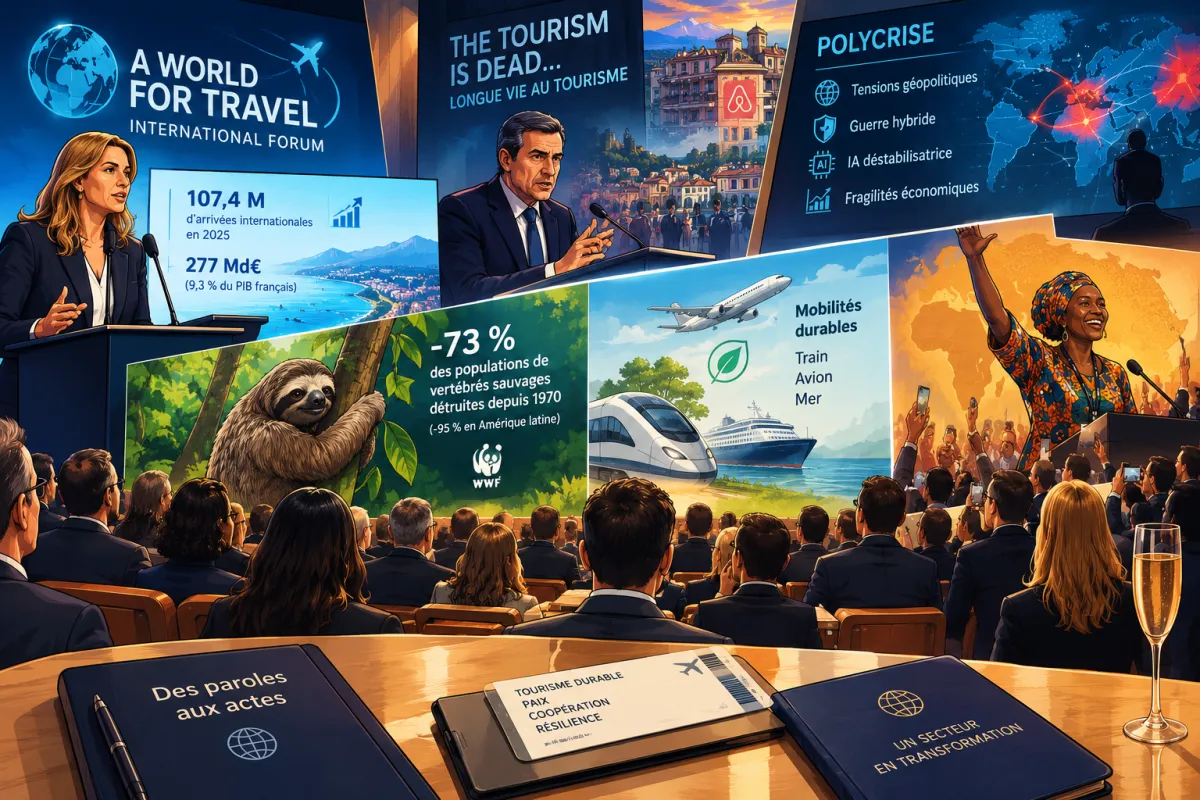
Under the marble gaze of Colbert and in the republican solemnity of the Palais-Bourbon, the 7th edition of the forumA World for Travel took up residence this Thursday October 29. Between protocol rigor, alarming diagnoses of the global polycrisis and pan-African fervor, the story of a marathon day at the heart of the new challenges of travel.
From 8:30 a.m., the entrance to 126 rue de l'Université sets the tone: meticulous searches, strict identity checks and passage through security gates. WelcomingA World for Travel (AWFT) within the National Assembly itself for its second consecutive Parisian stopover testifies to the institutional weight taken by this summit.
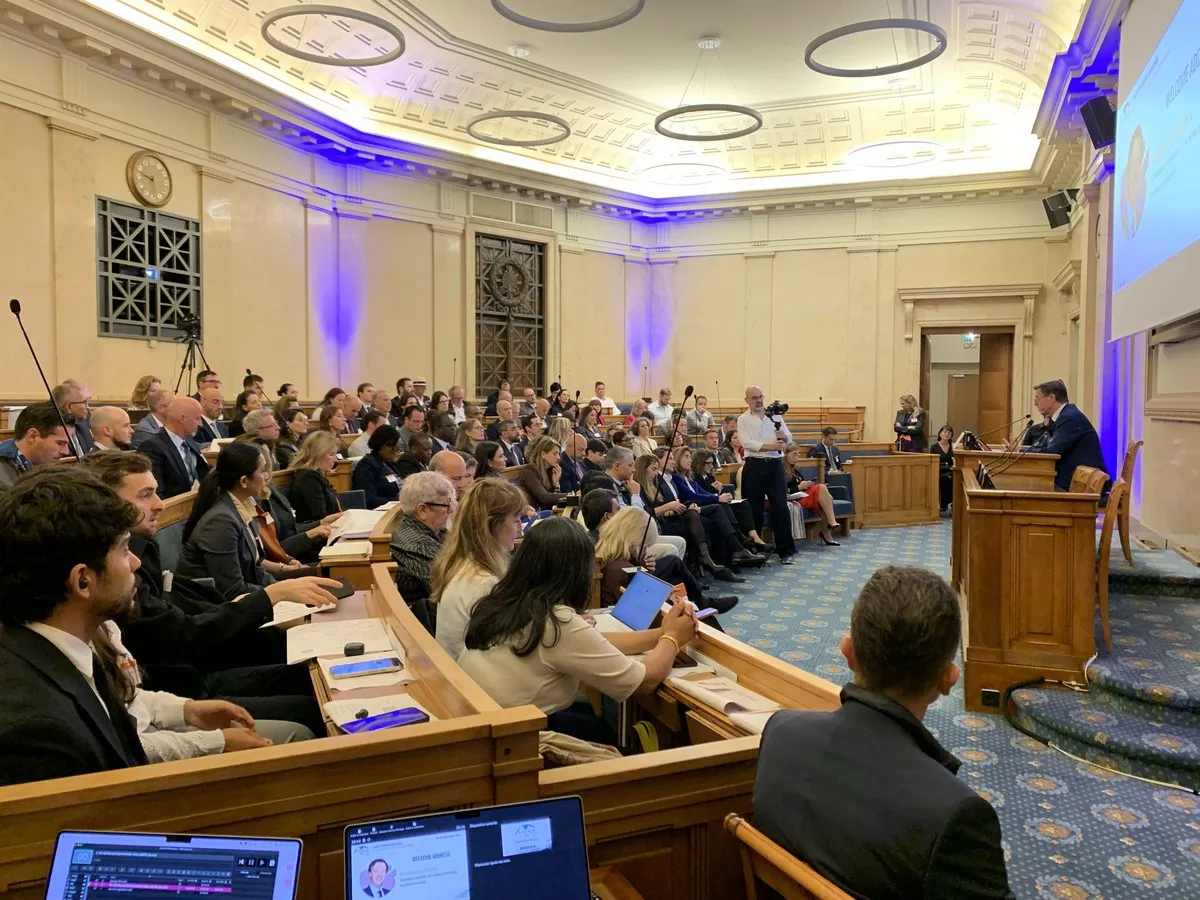
Once in the prestigious Salle Colbert, the setting commands respect. The semicircular rows of seats are bathed in bluish light under imposing circular chandeliers. The rules are austere: no coffee machines in the aisles, no photos possible in the corridors. On the platform, next to the lectern from which the speakers speak, the sculpted bust of Jean-Baptiste Colbert seems to watch over the debates as a silent judge.
Record figures and breathless model
The morning opens with a meticulous parade of individual presentations. The slides are full of macroeconomic charts. Gloria Guevara, president of the WTTC (World Travel & Tourism Council), recalls the insolent statistical health of France:107.4 million international arrivals in 2025 and a sector weighing277 billion euros (9.3% of French GDP).
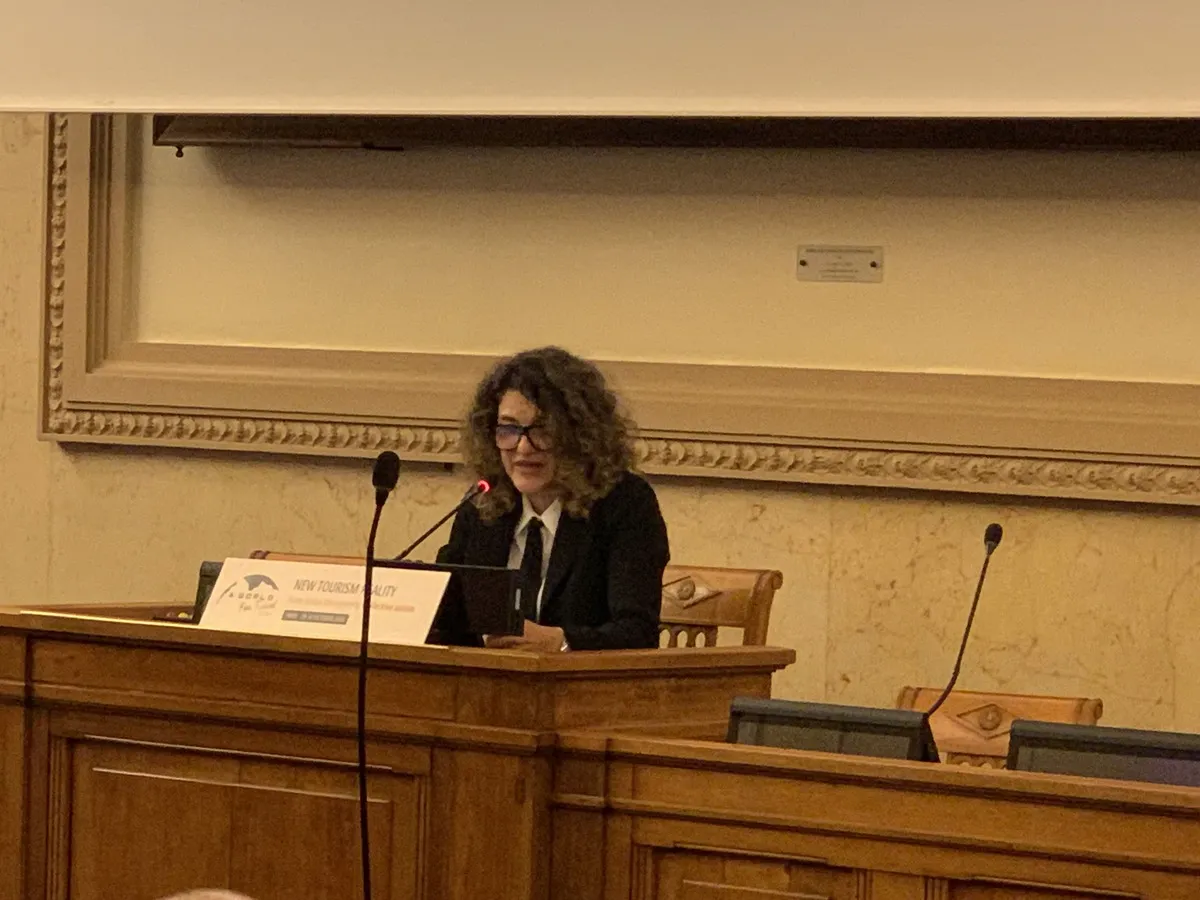
But behind this accounting triumphalism, the shock wave arrives with Luís Araújo, former president of Turismo de Portugal and respected figure in the sector. In an intervention with a punchy title (“The Tourism is Dead…”), he shares an intimate awareness:
« The best trip of my life was on the path to Santiago de Compostela. There, I understood that I had time. I passed through Gaia: a sea of hotels and Airbnbs, but only two supermarkets for the locals! By struggling to pile up the volumes, we forget the very life of the destinations. »
And to conclude, masterfully:“Tourism is dead, long live tourism. »
Geopolitics and ecology: the hour of the “Polycrisis”
The speeches follow one another without respite. Justin Crump, CEO of Sibylline Ltd, projects the dark maps of the“Polycrisis”: border tensions, hybrid warfare, destabilizing AI and economic fragilities intertwined. “Our structures were designed for isolated crises, but we are entering an era of simultaneous shocks”, warns the intelligence expert.
The ecological aspect is no less brutal. Daniel Turner (Animondial) reveals the image of a sloth clinging to its tree, backed by the latest WWF report:-73% of wild vertebrate populations destroyed since 1970 (-95% in Latin America). A scathing reminder: without preserved nature, the tourist product evaporates.
The afternoon of round tables: mobilities and resilience
After a quick lunch under the gilding of the Assembly, the format changes from 1:30 p.m. Solitary speeches give way to round tables composed of four experts facing delegates.
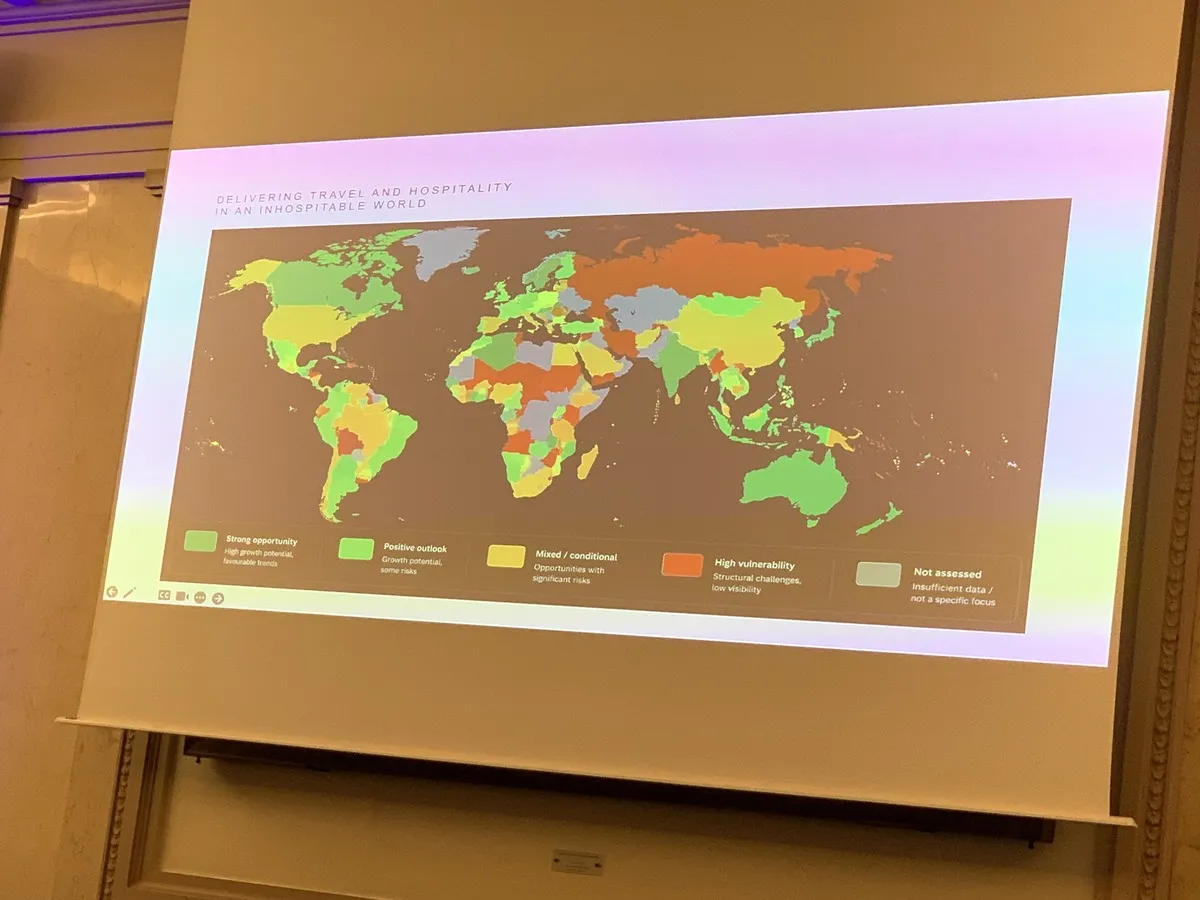
During his conference, entitled “Geopolitical Outlook”, the founder of Sibylline, Justin Crump presented this map relating to relationships in the tourism sector. Photo credit GG
Decarbonization of aviation (Air France, Amadeus), strategic renaissance of trains in the face of climate imperatives (Trainline, Pegasus Trains) and transformation of maritime fleets: each link of mobility is scrutinized. Domestic tourism is also rehabilitated by David Nouailles (Puy du Fou) and Alessandra Priante as the real anti-crisis shield of the territories.
The standing hemicycle for Africa
The summit, which until then had been very focused, shifted in the middle of the afternoon to a rare intensity.
After presenting the Great Green Wall project,Ola Wright, president of theWest Africa Tourism Organization(WATO), takes the podium for the session“Africa: Unlocking the Next Tourism Growth Story”. Sweeping away the fatalistic discourses to celebrate the creativity and potential of the continent, she suddenly shakes up the strict protocol of the Palais-Bourbon:
« Stand up! Everyone stand up!»
Surprise, smiles, then general compliance: all the decision-makers, ministers and bosses stand up as one. Phones brandished at arm's length, the entire room immortalizes a collective selfie under the hashtag #AWFT Africa. A burst of human energy and spontaneity that shatters the parliamentary reserve.
Around 6:15 p.m., the delegates leave the woodwork of the Salle Colbert to board the Tootbus buses. Direction La Samaritaine, facing the Seine, for the influential dinner and the presentation of theAWFT Awards, concluding with panache a day of truth for global tourism.