Francis Kurkdjian, the perfumer who bottles emotion and love
🚀 Key Takeaways
- Core idea : Kurkdjian transforms sensations into refined olfactory stories.
- Practical tip : Test fragrances on skin and layer lightly to personalize the scent.
- Did you know : He created Jean Paul Gaultier's iconic Le Mâle in 1995 and founded Maison Francis Kurkdjian in 2009.
Sensory and precise.
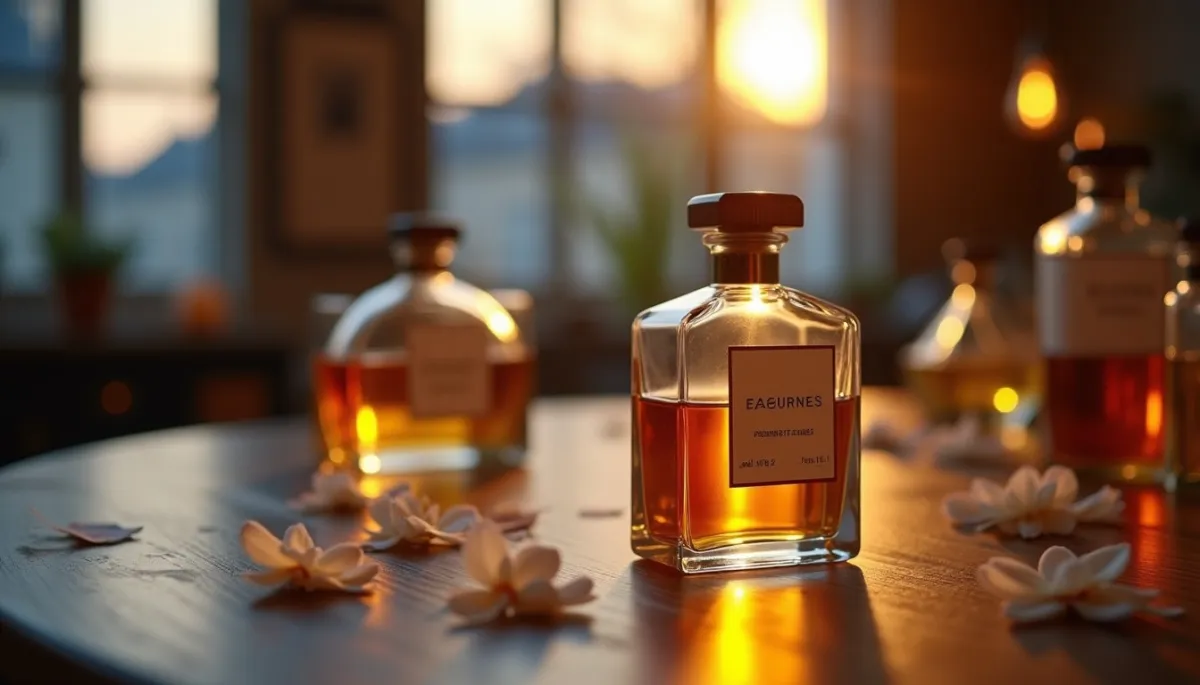
Imagine a Parisian atelier at dusk: bottles lined like tiny lighthouses, a trail of jasmine in the air, and a nose bent over a tiny, aromatic map. That scene, intimate and laboratory-like, is where Kurkdjian sculpts accords that later travel the world in glass.
Art in a bottle
Francis Kurkdjian is a perfumer recognized both by peers and by the public. Born in 1969, he trained at ISIPCA, the perfume school near Versailles. Early in his career, he composed for maisons and designers, and in 1995 he signed Le Mâle for Jean Paul Gaultier, an instant classic that redefined masculine fragrance with lavender, mint and vanilla.
In 2009 he co-founded Maison Francis Kurkdjian with entrepreneur Marc Chaya, a house that quickly became synonymous with elegant, modern perfumery. The 2015 creation Baccarat Rouge 540, made with the crystal maker Baccarat, cemented his status: a warm, amberous, slightly woody scent that became omnipresent in luxury circles and social conversation.
Beyond commercial success, his work is noted for clarity and restraint. Kurkdjian favors transparent textures, clean composition, a vocabulary where jasmine, saffron, amber, and cedar speak with equal weight. Clients range from fashion houses to collectors seeking bespoke scents for weddings or homes.
Roots of an odyssey
How did a perfumer become a storyteller of feelings? His path blends formal training and curiosity. At ISIPCA he learned raw materials and technique; soon after he worked with established brands, which taught him the language of wearable perfumes. Anecdotes from his early days tell of long hours sniffing molecules and of learning to translate a designer's brief into something intimate.
Kurkdjian's decision to launch his own maison was motivated by a desire for freedom, to marry traditional raw materials with contemporary sensibility. Opening his house in 2009 allowed collaborations that bridge craft and commerce, including partnerships with Baccarat and bespoke commissions for cultural institutions and private patrons.
He also invests in education and accessibility. Through workshops and talks, he explains perfume-making without mystification: scent is both chemistry and heritage, and understanding accords empowers personal choice. His public demonstrations demystify words like 'sillage' (the trail a scent leaves) and 'dry down' (the fragrance's final stage on skin).
Tensions and futures
Success brings contradictions. The viral fame of Baccarat Rouge 540 created imitators and a market of hype, while Kurkdjian insists on nuance and craftsmanship. He navigates between boutique exclusivity and global demand, keeping small-batch creations alongside bestsellers.
Another tension is sustainability. High-end perfumery relies on rare ingredients, some under pressure from ecological change. Kurkdjian has acknowledged the need to source responsibly, explore synthetic alternatives where appropriate, and champion practices that respect biodiversity, while preserving olfactory depth.
Looking ahead, he continues to explore scent as memory and social connector. From bespoke fragrances for weddings to installations in museums, his work asks us to slow down and notice. For the curious reader, a practical tip: when choosing a perfume, let it rest on your skin for at least an hour. Note the initial burst, the heart, and the dry down. Layering a light body lotion of neutral scent can help the fragrance reveal its true personality.
Thanks for reading, and don't forget, Enjoy Life Moments!