Flow: the trance where player and ball become one
🚀 Key Takeaways
- Core concept : Flow is peak focus created by a balance of challenge and skill.
- Practical tip : Set clear micro-goals and practise pre-performance rituals to trigger flow.
- Did you know : Neuroscience links flow to transient reductions in prefrontal activity (less self-critique).
Pure, immediate joy.
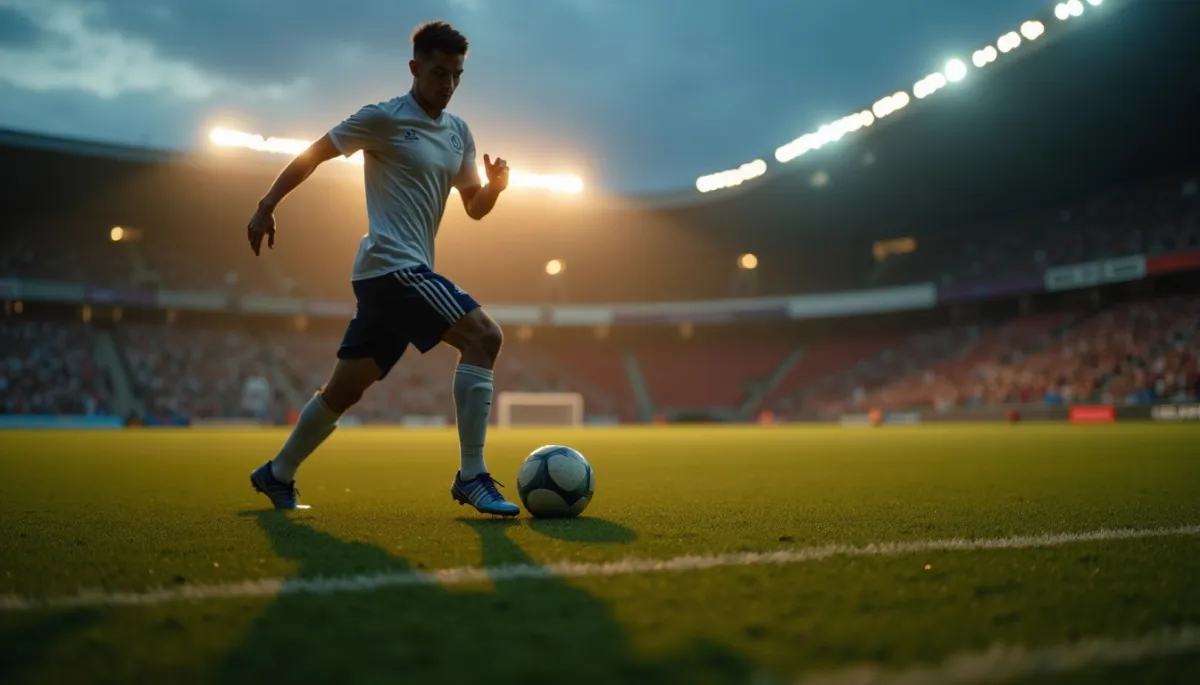
Imagine a late summer evening in Barcelona, 2012, the pitch luminous and the crowd humming. A player receives the ball, and for six, seven, ten touches everything feels inevitable: the pass comes before the decision, the space opens just in time. Observers call it poetry in motion. The player feels no fear, no doubt, only an unbroken thread between eye, foot and ball.
Quand le monde se tait
Flow is the psychological state where attention narrows to a single task. Sports psychologists adopted the term popularized by Mihaly Csikszentmihalyi in the 1970s and 1990s, and athletes often describe it as being "in the zone".
High-profile examples are many: basketball legends like Kobe Bryant spoke repeatedly of being "in the zone" during peak games; in tennis, players such as Roger Federer have described matches where movement and timing felt automatic; in football, Lionel Messi's rhythmic dribbling has often been likened to flow by commentators during his record-breaking seasons around 2011-2012.
Flow matters because performance and well-being rise together in that state. Studies in performance psychology show improved decision speed, precision and creative solutions under flow. For teams, shared flow can create synchrony and seemingly telepathic plays on the field.
Racines et équations
The concept originates with Mihaly Csikszentmihalyi, who first studied optimal experience in the 1970s and synthesized his ideas in the 1990 book "Flow: The Psychology of Optimal Experience." He defined flow by clear goals, immediate feedback, and the equilibrium between challenge and skill.
Neuroscience has since explored what underpins this state. A notable idea is the transient hypofrontality hypothesis (proposed in the early 2000s), which suggests parts of the prefrontal cortex temporarily reduce activity, lowering self-monitoring and doubt. EEG and fMRI research also report changes in brain rhythms (for instance, shifts in alpha and theta bands) during peak performance, consistent with deep focus and reduced inner chatter.
Beyond biology, cultural and situational factors shape flow. Stable practice routines, supportive teammates, and environments that minimize distractions (quiet stadium corners, familiar courts) increase the odds that an athlete will enter the state. Conversely, performance pressure, fatigue, or unclear roles can shut it down.
Mais la transe n'est pas magique
Flow is transient and fragile. Athletes who chase it exclusively can risk burnout by overtraining or by neglecting recovery. Elite performers often report that flow appears after long periods of disciplined practice, not as a spontaneous miracle.
There are ethical and social tensions too. The pursuit of constant peak states intersects with commercialization: broadcasters, data analysts and coaching staff may try to quantify and extract those moments, potentially disrupting the very spontaneity that creates them. Additionally, team sports require coordination; individual flow must align with collective strategy.
Finally, flow can mask learning needs. If a player relies solely on feeling, they may avoid constructive feedback, which limits long-term growth. Smart athletes pair flow experiences with reflective practice outside competition.
Comment inviter la transe
There are evidence-backed habits to increase the probability of flow. First, design practice with a precise balance: slightly stretch skills with drills that provide immediate feedback. Second, set micro-goals during performance—focus on the next pass or the exact timing of a run. Third, establish pre-performance rituals: controlled breathing, visualization for 60 seconds, or a fixed warm-up sequence help cue the nervous system.
Fourth, manage arousal: athletes often find moderate physiological activation optimal. Techniques like box breathing or progressive muscle relaxation before a match stabilize heart rate and attention. Fifth, cultivate environment hygiene: reduce extraneous noise, standardize kit and warm-up location, and ensure recovery through sleep and nutrition.
Coaches can help by clarifying roles, giving timely feedback, and nurturing trust so players feel safe to take risks. Over time, repeated episodes of flow strengthen confidence and creative play.
Thanks for reading, and don't forget, Enjoy Life Moments!