Flow: how to enter peak immersion and absolute productivity
🚀 Key Takeaways
- Core concept : Flow is the sweet spot where challenge matches skill, producing deep focus and intrinsic reward.
- Practical tip : Set a single clear goal, remove interruptions, and use time blocks of 60–90 minutes.
- Did you know : The term was studied systematically by Mihaly Csikszentmihalyi from the mid-1970s, and neuroscientists later linked flow to transient reductions in frontal lobe activity.
Everything clicks.
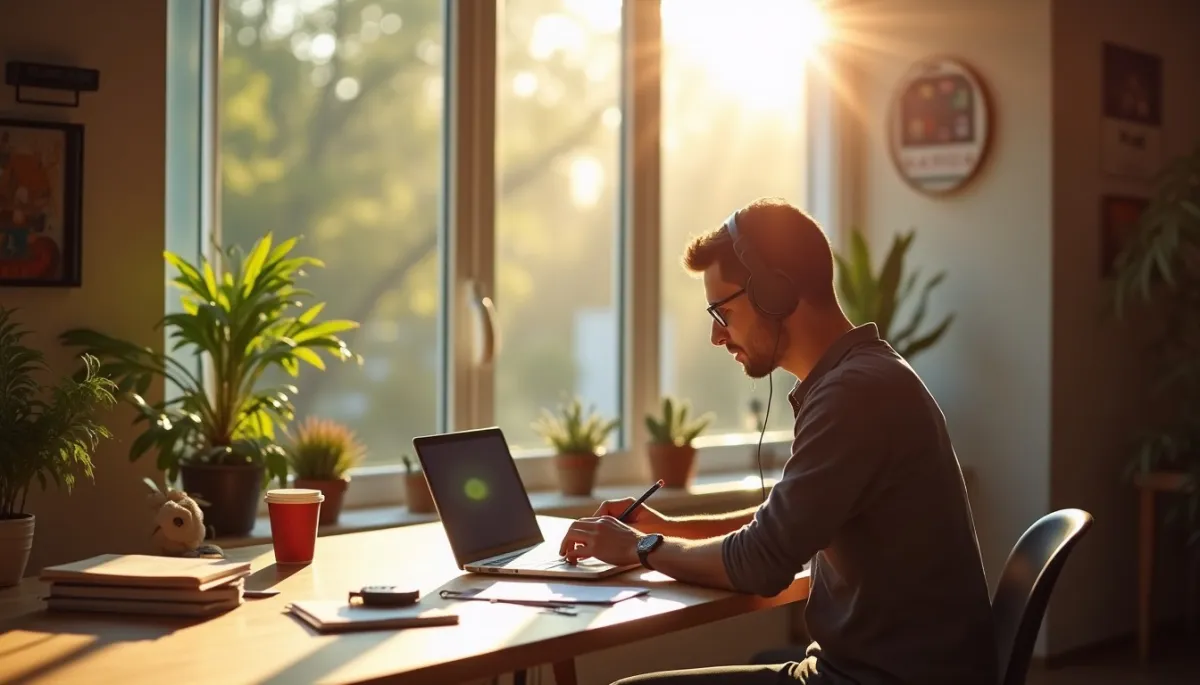
Imagine a late afternoon in a sunlit studio, a designer leaning over a sketchbook, headphones on, sketching line after line without glancing at their phone. Outside, the city hums, but inside, the room is a small universe of rhythm and decisions, where minutes melt and the hardest choices feel simple.
Sweet spot découvert
Flow is not new, but the vocabulary to describe it is. In 1975, psychologist Mihaly Csikszentmihalyi introduced the concept in research that later culminated in his 1990 book, "Flow: The Psychology of Optimal Experience." He observed artists, athletes and scientists reporting intense focus and enjoyment while performing demanding tasks.
Practically, flow occurs when a task’s difficulty matches the performer’s skill, producing absorption, loss of self-consciousness, and a clear sense of progress. Athletes call it being "in the zone." Musicians describe an effortless communication with their instrument.
Since the 2000s, interest has exploded. Productivity writers, like Cal Newport in "Deep Work" (2016), popularized disciplined work blocks to cultivate flow. Corporations and startups design offices and rituals with flow in mind: quiet zones, focus timers, and meeting-free days.
Pourquoi ça importe
Flow combines performance and wellbeing. Csikszentmihalyi showed that people who experience flow regularly report higher life satisfaction and creativity. For knowledge workers, flow correlates with faster learning and better quality outcomes.
Neuroscience adds texture. The transient hypofrontality hypothesis, discussed by Arne Dietrich in the early 2000s, suggests that parts of the prefrontal cortex temporarily quiet down during flow, reducing self-monitoring and inner chatter. Functional imaging studies from the 2010s support the idea that focused tasks create distinct brain states linked to sustained attention and reward.
Businesses notice the bottom line. Teams that reduce context switching and protect deep work time often deliver higher-impact work. Productive flow sessions can replace long, unfocused hours with concentrated bursts that feel shorter and more effective.
Rituels et obstacles
Why, then, is flow rare? Modern life is engineered for interruption. Smartphones, open-plan offices and constant notifications fragment attention. A 21st-century knowledge worker may switch tasks dozens of times a day, making deep immersion difficult.
Yet there are reproducible ways to invite flow. Start with a clear, proximal goal. Break projects into chunks with immediate feedback loops. Use rituals to signal the brain: a short walk, a specific playlist without lyrics, or putting your phone in another room.
Time matters. Many practitioners aim for uninterrupted windows of 60 to 90 minutes. The Pomodoro technique, created by Francesco Cirillo in the late 1980s, offers 25-minute sprints and short breaks, useful for training focus. For deeper creative work, extend those windows while scheduling restorative breaks.
Habitudes efficaces
Create an environment that reduces friction. Clear the desk of unrelated items, mute notifications, and communicate availability to colleagues. Physical comfort, light and a sense of control over your workspace matter as much as psychological conditions.
Train skills deliberately. Flow needs skill to meet challenge. That means practicing fundamentals until they become automatic, whether coding, composing, or negotiating. As skill grows, raise the challenge to keep the match dynamic.
Use approaches that combine structure and freedom. Time-blocking for specific outcomes, weekly review sessions to align goals, and pre-work checklists help. Combine them with flexible creative rituals: warm-up exercises, a short meditation to settle the mind, or an inspiring image on the wall.
Vers un usage durable
Flow is accessible but fragile. Regularly chasing it without rest leads to burnout. The goal is sustainable cycles: periods of deep immersion followed by recovery. Athletes alternate training and rest; knowledge workers should do the same.
Also, not all tasks deserve flow. Administrative chores often require low cognitive load. Reserve your deep energy for high-leverage activities where flow yields outsized returns: strategy, design, coding, or complex problem solving.
Finally, measure subtly. Keep a crude journal of focus sessions: what you worked on, duration, and how you felt. Over weeks, patterns emerge, revealing rituals that reliably bring you into flow, and conditions that disrupt it.
Thanks for reading, and don't forget, Enjoy Life Moments!