Cordovan leather: the story of luxury shoemaking's most durable material
🚀 Key Takeaways
- Core concept : Shell cordovan is a dense, non-fibrous leather from the horse rump, prized for longevity and shine.
- Practical tip : Use a horsehair brush and a light cream occasionally, rotate shoes and store with cedar shoe trees.
- Did you know : The name comes from Córdoba, Spain, where the craft was renowned in medieval times.
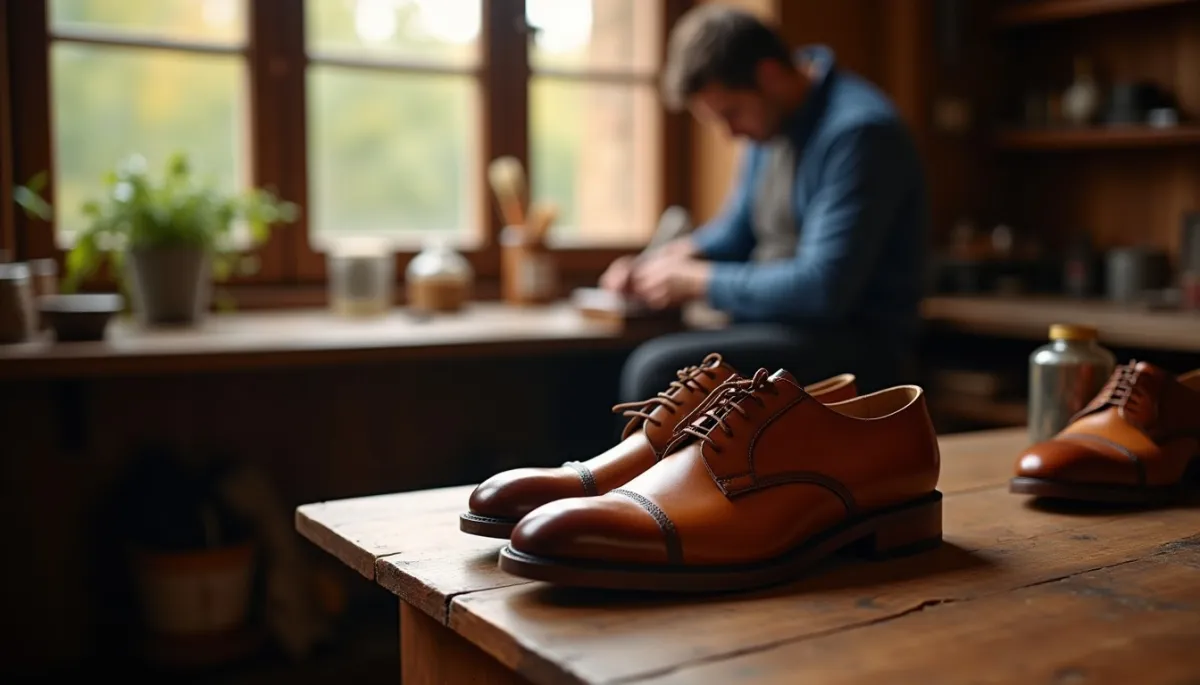
There is a quiet magic to a pair of shell cordovan shoes breaking in. Imagine stepping into a small, sunlit workshop where the air smells of fat and beeswax, where a shoemaker runs a careful hand over a smooth, glassy toe.
Patina and endurance
Shell cordovan is famous because it ages differently from calfskin. Instead of forming many small creases, it develops a deep, uniform patina and maintains structural integrity for decades. Collectors often pass a single pair down through generations.
The secret lies in the material itself. Shell cordovan is cut from the dense fibrous layer (known as the shell) of a horsehide rump. This area has a unique cellular structure, almost flat and tightly packed, which resists folding and abrasion.
In practical terms, a well-made pair of shell cordovan shoes can outlast several pairs of ordinary leather shoes. That longevity is why high-end shoemakers such as Alden in the United States, and specialist ateliers in the UK and Italy, keep it in their collections despite the cost.
Because the yield is low, only a small fraction of each hide becomes usable shell. This scarcity raises prices, but it also means each piece is precious. The result is an item that feels rare, not merely expensive.
Racines et savoir-faire
The word cordovan comes from Córdoba in Andalusia, where leatherwork was highly developed under Moorish rule. In medieval Europe, 'cordwain' referred to high-quality Spanish leather used for book bindings, shoes and saddlery.
Centuries later, American tanneries made shell cordovan famous worldwide. Horween Leather Company in Chicago, established in 1905, became synonymous with shell cordovan in the 20th century, supplying shoemakers and craftsmen with a nearly exclusive source of this material.
The tanning process is lengthy and artisanal. After selecting the butt portion of the hide, the tannery strips away layers to reveal the shell, then tans it (traditional methods use vegetable tannins or a combination of techniques), stuffs it with oils and fats, and polishes it repeatedly to achieve that characteristic glassy finish.
Each stage can take weeks. Finishing often includes hand glazing, a technique where the leather is treated with dyes and waxes to build depth and luster. That craftsmanship explains why shell cordovan remains linked to luxury.
Tensions et avenir
Shell cordovan is not without controversy. Because it comes from horsehide, sourcing practices vary by country and culture. In regions where horse meat is consumed, the hide is a byproduct, which some argue is a form of material efficiency. Elsewhere, buyers may find the idea difficult.
Environmental questions also arise. Tanning is historically water- and chemical-intensive. Some modern tanneries have reduced impact by adopting cleaner processes, recycling water and limiting harmful substances, but challenges remain for scaling sustainability.
At the same time, demand for durable goods and repairable fashion points in cordovan's favor. The leather economy is shifting toward longevity. Repairs, resoling and care extend the life cycle of shell cordovan products, aligning with responsible consumption trends in luxury.
New techniques and small-scale tanneries are experimenting with traceability. Buyers increasingly ask where the hide came from, how animals were handled, and which chemicals were used. Transparency may become the next hallmark of premium cordovan.
How to care
Caring for shell cordovan is simple, if precise. Use a horsehair brush daily to remove dust. When needed, apply a small amount of cream sparingly, and buff with a soft cloth to restore sheen.
Avoid aggressive conditioners or heavy oils, they can flatten the unique surface. For deeper scratches, many users rely on the tannery finish and gentle polishing rather than aggressive treatments.
Rotate shoes, keep them on cedar shoe trees, and avoid prolonged exposure to rain. If shoes get wet, let them dry naturally at room temperature. Regular resoling by a trusted cobbler will keep the structure intact for decades.
Investing in shell cordovan is as much about values as about style. It asks for patience, care and a willingness to treasure objects that endure. For those who appreciate craft and history, it remains unmatched.
Thanks for reading, and don't forget, Enjoy Life Moments!