The digital sunset ritual: how to reclaim your evenings
🚀 Key Takeaways
- Core concept : Stop intensive screen use at least 30–60 minutes before sleep.
- Practical tip : Replace scrolling with a warm light, a book, or a short breathing exercise.
- Did you know : Light in the blue spectrum delays melatonin, the hormone signaling night to your brain.
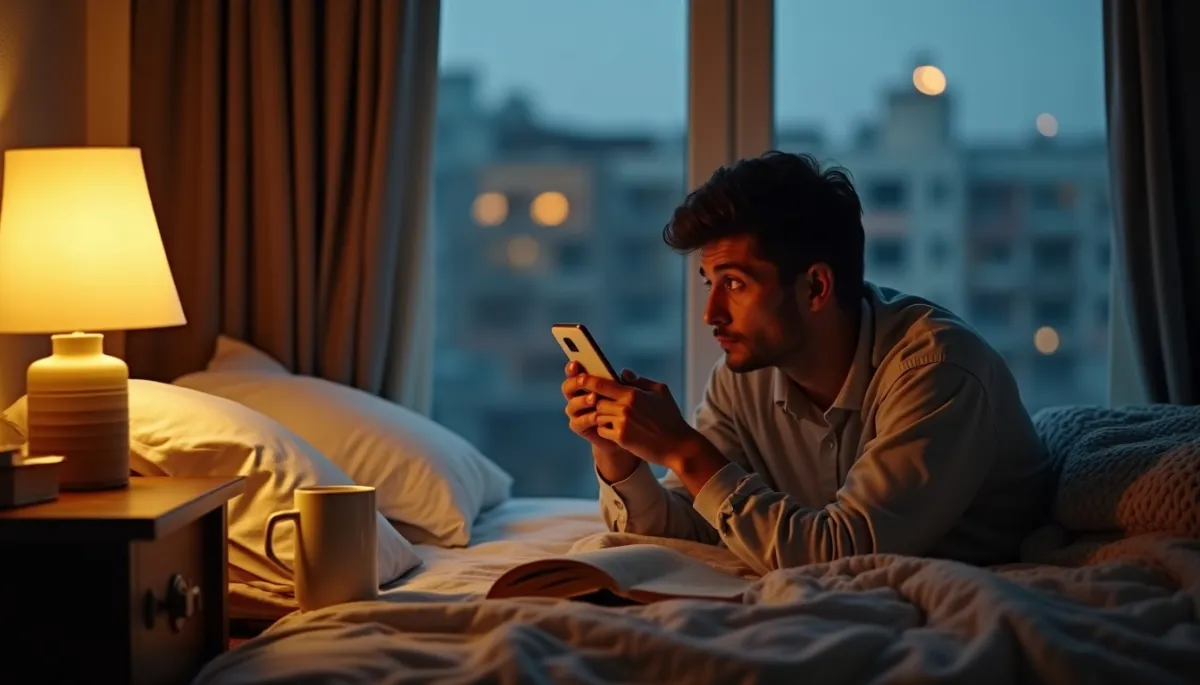
Close the tab. Let the light soften. Imagine a neighbor in Tokyo switching off notifications, a parent in Madrid turning the tablet face down, and a student in Toronto choosing a paper novel. The room fills with lamp light and the city hum becomes a distant companion.
Evenings rewired
Life after sunset no longer follows the rhythms of candlelight and conversation. Over the last two decades, personal screens have stretched evenings into an uninterrupted flow of information and interaction. Nighttime social media use and work e-mails mean that many people now think, worry and plan late into the night.
The consequences are tangible. Sleep quality declines, bedtime is delayed, and next-day alertness suffers. Multiple sleep studies have shown that late-night screen exposure is associated with shorter sleep duration and increased sleep latency (time to fall asleep). For shift workers or people with irregular schedules, the problem is amplified.
This cultural rewiring also affects mental rest. The brain has fewer transitions between activity and repose, which reduces the feeling of closure at the end of the day. That perpetual availability fuels stress and emotional reactivity.
Why it happens
At the physiological level, screens emit blue-enriched light that suppresses melatonin, the hormone helping regulate circadian rhythms. When melatonin production is delayed, your internal clock expects a later night, and sleep starts later as a result.
There is also a cognitive layer: content designed to capture attention. Algorithms curate novelty and emotional peaks, making it easy to keep scrolling. Notifications and the expectation of immediate response maintain a low-level state of alertness that competes with the onset of sleep.
Societal factors play a role too. Remote work, global teams across time zones, and the erosion of boundaries between work and personal life mean we often feel compelled to stay connected after hours. Economic and cultural pressures make disconnection a deliberate act, not an automatic one.
Gentle countermeasures
Start with small experiments. Try a 30-minute digital sunset: lights dimmed, phone on silent and face down, and one calming ritual—tea, reading, stretching. Many people report improved sleep within days. Arianna Huffington and other wellness advocates popularized structured shutdown routines; evidence and anecdote both support that small, consistent rituals change behaviour.
Practical tools help. Use blue-light filters or 'night mode' in the evening, enable scheduled Do Not Disturb, and set a charging station outside the bedroom. Create a short, repeatable ritual—five minutes of progressive breathing, ten minutes of journaling, or reading a physical book—that signals closure to your brain.
Remember, the goal is not digital asceticism. The idea is to choose when to engage. Reserve tasks that require energy for daytime, and use evenings for replenishment. Over weeks, a modest digital sunset can restore deeper sleep, calmer mornings, and the sense that your day truly ended.
Thanks for reading, and don't forget, Enjoy Life Moments!