Diane von Furstenberg: emancipation, love and building a fashion empire by herself
🚀 Key Takeaways
- Concept key : The wrap dress became a symbol of female freedom in the 1970s.
- Practical tip : A signature product, well-told, can bootstrap a brand across decades.
- Did you know : Diane founded the DVF Awards to support women leaders and activists.
She arrives in a room like someone who remembers every season she has lived through. Imagine Diane von Furstenberg standing amid a thrum of cameras and fabric swatches, a bold printed dress flowing, a glass of wine in hand, telling a younger designer how to keep momentum without losing joy.
A signature moment
Diane von Furstenberg, née Diane Halfin on December 31, 1946 in Brussels, is the designer behind the iconic wrap dress. In the early 1970s that dress, simple and flattering, became an instant symbol of women's liberation and practical elegance.
She founded her label in New York in the early 1970s, and by 1974 the wrap dress had entered the cultural vocabulary. It was worn by actresses and everyday women alike, and credited with reshaping ready-to-wear for a generation of professional women.
Her public profile grew beyond fashion. Diane's voice, through memoirs and interviews, and her leadership roles in institutions such as the Council of Fashion Designers of America, made her a figure who spoke about style as a form of personal power.
From Brussels to New York
Diane's early life shaped a restless independence. Born to Jewish parents who survived the Second World War, she grew up with a sense that life could be restarted, rebuilt and reimagined. That feeling follows many of her choices.
She married Prince Egon von Fürstenberg in 1969, a union that introduced her to New York society and European aristocratic networks. The couple had two children, Alexander and Tatiana, and for a time their names helped bring attention to her label, which leveraged both glamour and accessibility.
After the initial success of the wrap dress, Diane experienced the ups and downs common to fashion entrepreneurs. She divorced in 1983, later married media executive Barry Diller in 2001, and kept returning to design and business with renewed energy.
Creations and consequences
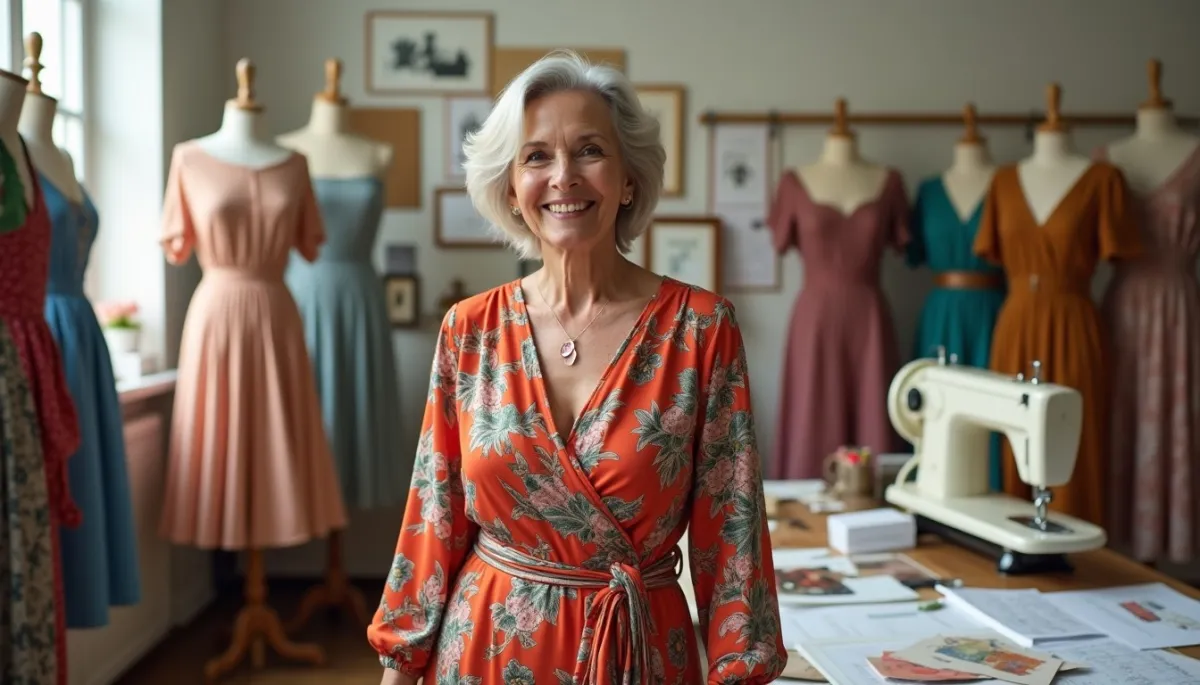
The wrap dress was not just a garment. It became a social object. In the 1970s it helped women transition into workplaces that demanded both authority and femininity. Photographs of celebrities and politicians wearing the dress meant that Diane's creation entered editorial pages and boardrooms.
Commercially, the dress proved that a single, well-conceived product can define a brand. Diane's company grew into a global lifestyle label, adding accessories, fragrances and home items while preserving the brand's identity around print, color and femininity.
Her visibility allowed her to expand into philanthropy. In 2010 she launched the DVF Awards, honoring women who combine leadership and activism. The awards underline a conviction she often voiced: success obliges social responsibility.
The making of a brand
Diane's rise combined design instincts and relentless networking. She leveraged celebrity friendships, editorial relationships and an ability to tell a story about why a dress mattered. That storytelling turned customers into advocates.
Her approach to business also evolved. She returned to the brand in the 1990s and 2000s to relaunch it for new markets, proving that heritage labels can be modernized without erasing their soul. She curated collaborations, licensed strategically, and used social media to speak directly to consumers.
For designers and entrepreneurs, the lesson is concrete: develop a recognizable core, protect it, and be willing to reinvent the packaging around it while keeping the product's honest purpose intact.
Contradictions and continuities
There are tensions in Diane's story. Her image evokes glamour, yet she built an empire on a democratic item of clothing. She cultivated an aristocratic aura while promoting female independence and merit.
Critics note how fashion can commercialize feminism. Diane confronted that critique by channeling profits and attention into causes that support women's leadership. The DVF Awards and foundation work are attempts to translate brand prestige into civic impact.
Ultimately, her career shows how contradictions can coexist: a luxury brand can champion accessibility, and an individual can move between public pomp and private resilience.
Lessons to bring home
If you are an aspiring creator, start with a clear idea and make it repeatable. Diane's wrap dress was simple to produce and emotionally resonant. Simplicity, when paired with narrative, scales.
Prioritize relationships. Diane's friendships with editors, celebrities and fellow designers opened doors that fabric and sketchbooks alone could not. Networking is not opportunism when it is reciprocal.
Finally, use success to lift others. Whether through awards, mentorship or donations, turning a personal brand into a civic tool multiplies meaning beyond sales figures.
Thanks for reading, and don't forget, Enjoy Life Moments!