Dian Fossey's extraordinary destiny: dying for the survival of mountain gorillas
🚀 Key Takeaways
- Key concept : Dian Fossey dedicated decades to studying and defending the mountain gorilla (Gorilla beringei beringei).
- Practical tip : Support conservation by choosing responsible gorilla trekking in Rwanda or Uganda and donating to established NGOs.
- Did you know : Fossey founded the Karisoke Research Center in 1967 between Mount Karisimbi and Mount Bisoke.
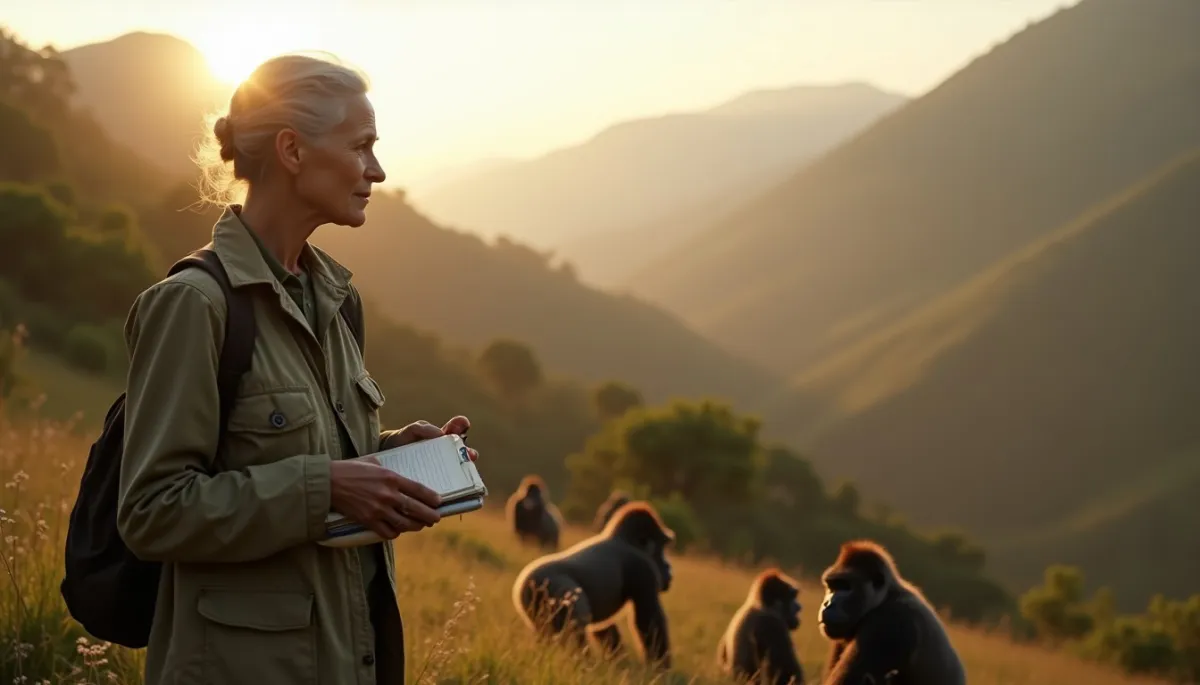
She lived among giants. Imagine mist, volcanic slopes and the deep, slow rustle of gorillas moving through bamboo and groundcover, a field notebook in hand.
Une vie dédiée
Dian Fossey (1932-1985) arrived in Rwanda in the late 1960s and established the Karisoke Research Center in 1967, positioned between Mount Karisimbi and Mount Bisoke in the Virunga Mountains. Her focus was the mountain gorilla, a subspecies then little-known and critically threatened.
Her major works include long-term behavioral studies and public-facing writing. The 1983 book Gorillas in the Mist brought her research and her moral urgency to a global readership, translating scientific observation into popular empathy.
Fossey's scientific importance is recognized alongside contemporaries funded by Louis Leakey, like Jane Goodall and Biruté Galdikas. While their methods differed, all three created new models of field primatology by habituating animals and observing natural behavior over decades.
Pourquoi elle est arrivée
Before Karisoke, Fossey made several trips to Africa; she arrived determined to understand gorillas in the wild. Her interest was fueled by both scientific curiosity and moral outrage at poaching and habitat loss accelerating during the post-colonial period of the 1960s and 1970s.
An emblematic turning point came in 1977 with the brutal killing of Digit, a silverback Fossey had studied and cherished. Digit's death at the hands of poachers led her to create the Digit Fund, the first concerted fundraising effort to protect gorillas and their habitat.
Her tactics combined careful ethology (detailed study of behavior) and direct action. She trained local trackers, documented snares, and exposed illegal trade in gorilla parts. Her famous National Geographic articles, and later her book, galvanized international support and funding.
Héritage difficile
Fossey's methods were sometimes confrontational. She publicly condemned local poachers, park officials, and even researchers she suspected of enabling exploitation. Stories of her burning poachers' camps and cutting snares circulated widely; scholars debate the ethics of such tactics even now.
On December 26, 1985, Dian Fossey was found murdered in her cabin at Karisoke. The crime remains officially unsolved. Many suspected poachers retaliated for her aggressive anti-poaching work, but no definitive conviction resolved the case.
Despite controversy, her legacy is measurable. In the 1980s mountain gorilla numbers were perilously low. Decades of protection, tourism revenue, and cross-border conservation efforts have helped populations rebound; by the 2010s, counts exceeded 1,000 individuals. Institutions she inspired, including the Dian Fossey Gorilla Fund, continue scientific monitoring and community programs.
Leçons pratiques
Visit gorillas responsibly: trekking permits fund conservation and communities. In Rwanda and Uganda, strict visitor rules (small groups, masks, distance, short visits) reduce disease transmission and stress on animals.
Support transparent NGOs that invest in local livelihoods and anti-poaching. Conservation succeeds when park protection goes hand in hand with education, alternative income and respect for human rights.
Remember the nuance: heroic narratives matter for awareness, but effective long-term protection requires science, governance and community partnership, not only charismatic activism.
Thanks for reading, and don't forget, Enjoy Life Moments!