The wood artisans of Les Diablerets: ancestral craft of carved chalets
🚀 Key Takeaways
- Core concept : A living alpine woodcarving tradition, rooted in local timber and joinery techniques.
- Practical tip : Visit Les Diablerets in summer for craft demonstrations and ask at the tourist office for workshop times.
- Did you know : Traditional chalet elements use spruce (Picea abies) for façades and Swiss stone pine for interiors, prized for its aroma and durability.
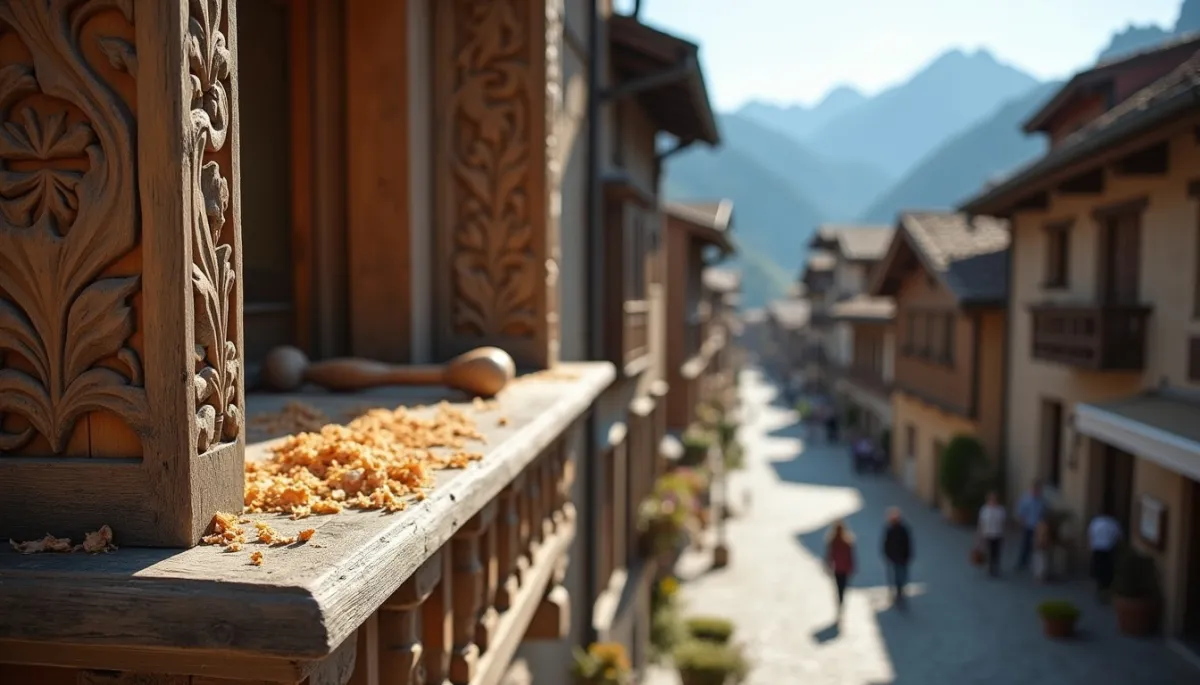
Close your eyes and listen to a mallet against a chisel. The rhythm is the language of the mountain. In a small workshop in the village of Les Diablerets, sunlight pours on wood shavings, while outside the peaks of the Diablerets massif keep watch.
caractère vivant
The story begins with the chalet style that spread across the Alps in the 19th century, when tourism and mountain romanticism encouraged ornate wooden houses. In Les Diablerets, men and women adapted that style to local needs, carving balconies, window frames and gable boards that protect against wind and snow and brighten the long winters.
Walk through the old streets of the village and you still find examples of that craftsmanship: balconies with floral motifs, carved hearts and stylized edelweiss, eaves that cast patterned shadows in late afternoon. Each motif is more than decoration, it is a signature, a family memory often repeated for generations.
These decorative elements are not merely aesthetic. They reflect technical needs, such as generous overhangs to protect façades, and the use of wide boards of spruce treated by smoke or oil to resist humidity. The result is a built landscape that speaks of climate, timber knowledge and local taste.
racines et bois
The cause of this tradition lies in the environment. The Ormont-Dessus valley, where Les Diablerets stands, was heavily forested until the late 19th century. Access to spruce and fir made woodwork a natural local industry, from roof framing to household furniture.
Technique matters: artisans use assemblages like mortise and tenon, dovetail joints, and wooden pegs rather than nails in many restorations. Carving tools range from the trusty gouge and knife for fine reliefs to the bandsaw for profile cutting. These methods preserve the structural logic of old chalets while allowing aesthetic detail.
Transmission is also crucial. Many craftsmen in the area learned as apprentices. Some families in Les Diablerets count three or four generations of carpenters or carvers, and local schools or associations occasionally organize short training sessions, especially in summer, to introduce young people and visitors to basic wood techniques.
contrastes contemporains
However, the tradition faces contemporary challenges. Modern building codes, labor costs and competition from industrial façades have reduced the number of artisans. Between conservation projects and new construction, many craftsmen now combine restoration with contemporary design to remain viable.
At the same time, tourism creates opportunity. Since the 2000s, restoration projects for historical chalets and hospitality venues near Glacier 3000 or the Berneuse have increased demand for authentic carved work. Local tourist offices and associations support craftsmen by promoting heritage trails and craft markets, often in July and during the December festivities.
Looking ahead, innovations appear. Some workshops use digital design (CNC) to draft complex motifs that artisans then finish by hand, blending precision and human warmth. Others favor sustainably managed local wood, certified by Swiss forestry programs, to meet ecological expectations without losing the character of traditional carving.
To visit: start at the village square of Les Diablerets, ask for the list of workshops at the tourist office, and combine a craft visit with a ride to Glacier 3000. If you can, attend a live carving demonstration; watching a balcony corner come to life in an hour is an unforgettable lesson in material and patience.
Practical note: spruce is easy to work but needs good protection outside, while Swiss stone pine is ideal for interiors and chests because of its scent and stability. Basic care extends an exterior carving's life: annual oiling and checking joints for moisture. For restoration, always seek an artisan who documents their methods and uses compatible materials.
Thanks for reading, and don't forget, Enjoy Life Moments!