Yvoire: crossing the lake to discover the medieval gem on the French shore
🚀 Key Takeaways
- Core concept : A short crossing from the Swiss shore leads to a perfectly preserved medieval village.
- Practical tip : Use CGN ferries from Nyon, Lausanne or Thonon; arrive early in high season and taste local perch.
- Did you know : Yvoire is famed for its floral displays and a sensory garden created in the late 20th century.
Light catches on the lake, and for a moment you think you have stepped into a painting.
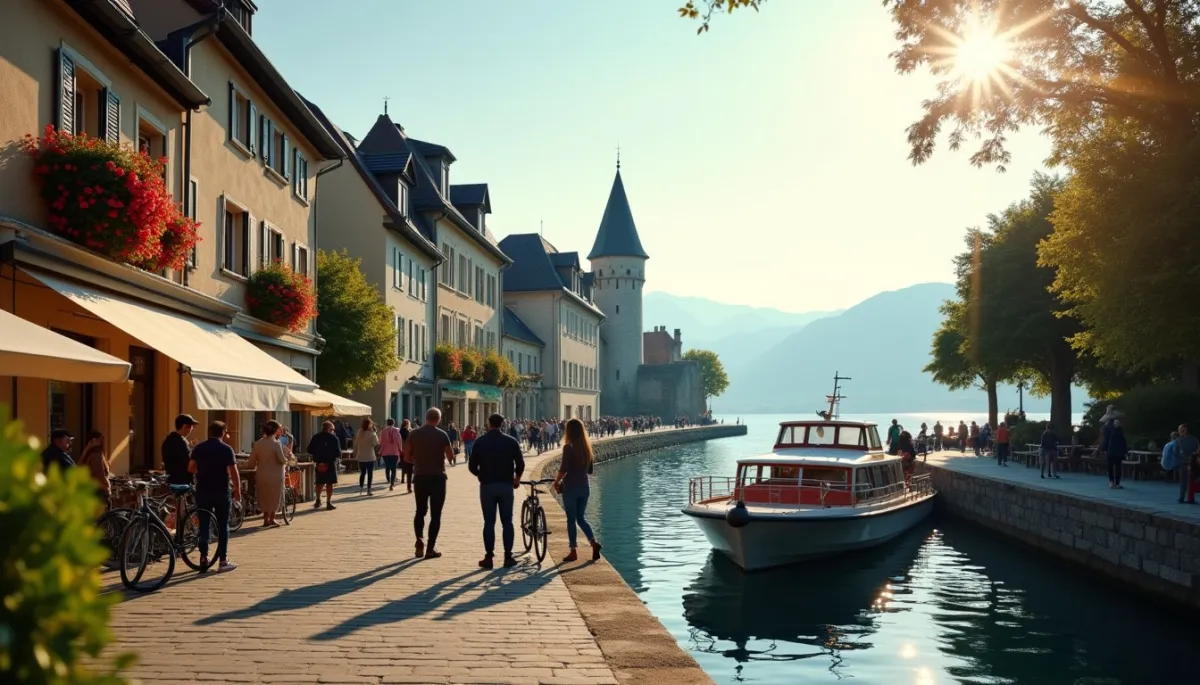
The ferry slows, gulls wheel, and the quay of Yvoire appears: a ring of stone houses draped in geraniums, a small medieval gate, and the silhouette of the castle keep. Tourists and locals chat softly as they disembark, bicycles clatter, and the scent of lake fish mingles with cut flowers from the village stalls.
Traversing the mirror
A crossing across Lac Léman is the simplest kind of travel that still feels like an adventure. Boats run daily year-round between Swiss towns (Nyon, Lausanne) and French harbors (Yvoire, Thonon-les-Bains), operated chiefly by the Compagnie Générale de Navigation (CGN). Depending on your departure point, the trip takes between about 20 minutes and an hour and a half, but time matters less when you glide over the glass of the lake.
Choosing the ferry rather than driving changes the rhythm of a visit. The arrival by water frames Yvoire as an island of stone and color, and lets you gauge the scale of the village before stepping into it. Photographers, couples and families often pick the late afternoon sail for the warm, directional light.
Practical note: within the Schengen area there are usually no passport controls on short cross-border boat trips, but carry an ID. The village uses the euro, though many businesses also accept Swiss francs. In high season, prefer early departures to avoid queues at the quay and at the main gate, Porte de Rive.
Remparts et racines
Yvoire’s current footprint owes much to efforts that began in the medieval period. The village was fortified at the beginning of the 14th century, when the Counts of Savoy reinforced lakeside positions to control navigation and trade. The imposing keep and the compact layout of winding streets are reminders of those strategic plans.
Centuries of lives have layered over these stones. In the 19th and 20th centuries, artists and seasonal visitors rediscovered the village, and local restoration pushed Yvoire back toward its medieval character. Today, the village is frequently listed among France’s most picturesque, thanks to its conserved ramparts, the castle ruins and the rue pavée lined with artisan shops.
One of the modern joys is the Jardin des Cinq Sens, conceived in the late 20th century to engage sight, smell, touch, hearing and taste. Compact and meticulously planted, the garden demonstrates how contemporary landscape design can dialogue with medieval urban fabric and community life.
Entre fleurs et tables
Yvoire’s second identity is floral. The windows and walls burst with seasonal blooms; the village has long competed in regional flower competitions and lives its reputation as a ‘‘cité fleurie’’. Stroll slowly: you will notice carefully pruned roses, espaliered fruit trees, and small displays curated by residents.
Food is another narrative. Lake fish, especially filets de perche (perch fillets), form a local specialty, often simply grilled with lemon and herbs. Pair it with a white wine from the nearby Savoie or Bugey vineyards for an authentic meal. Several family-run restaurants sit on the quay, offering views over the bay where boats bob gently.
If you want to escape the busiest lanes, follow alleyways up to terraces where you can watch the sunset over the Jura and the Swiss Alps, or join a guided walk offered by local associations that explain the village’s history and hidden corners.
Tonight and tomorrow
Yvoire is idyllic for daytrips but also rewards slow visits. Accommodation options are small: guesthouses, a few hotels and B&Bs that emphasize calm rather than luxury. Staying overnight lets you enjoy the village after the daytrippers leave: light on stone, streetlamps, and near-empty cafés.
Seasonal events bring another layer. In summer you will find open-air concerts, artisan markets and flower festivals. In autumn and winter the crowds thin and the village reveals quieter rhythms; restaurants focus on local produce and hearty dishes.
Finally, respect the living village. Yvoire is both a tourist destination and a community with residents who maintain their homes and gardens. Tread softly, shop locally, and carry a mask and hand sanitizer if you join crowded boats during high season.
Thanks for reading, and don't forget, Enjoy Life Moments!