Coatis and spider monkeys: how to coexist with the wildlife in your hotel?
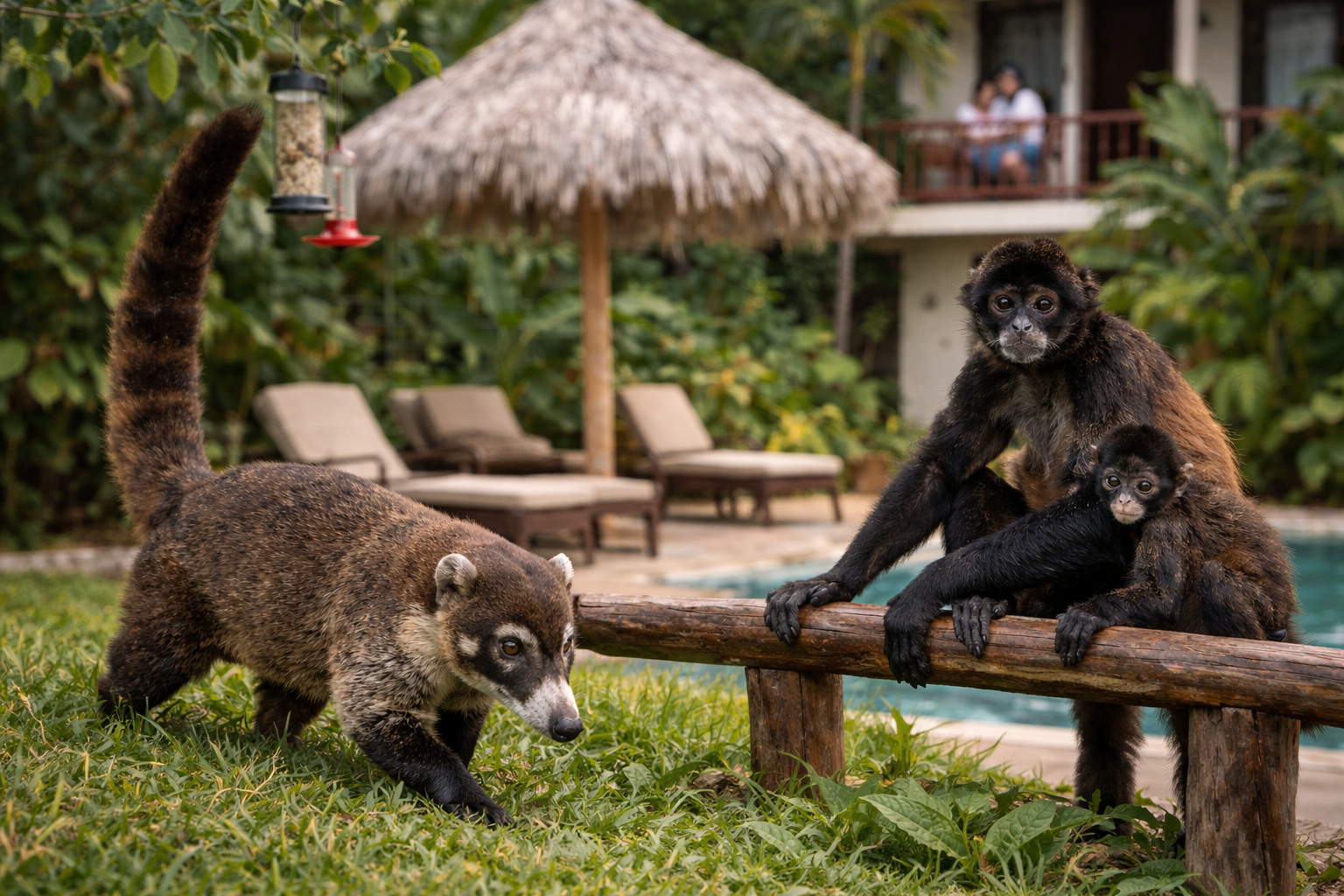
On the Riviera Maya, wildlife has sometimes gotten into the habit of coming to check out the area before travelers. In 2026, coatis and spider monkeys regularly frequent hotels from Tulum to Playa del Carmen, pushing for new rules and best practices.
🚀 The essentials
- Key concept: Cohabitation requires limits, not expulsion.
- Practical tip: Secure food and garbage, install anti-wildlife bins and train staff.
- Did you know: The Mayans often depicted monkeys in their art, symbols of skill.
Imagine waking up, in a bungalow overlooking the jungle, the subdued light and the whispering foliage. Above the terrace, a spider monkey swings; below, a coati cautiously searches the edge of the pool. This mixture of wonder and the unexpected attracts many visitors.
Meetings are very real and often shared on networks. From boutique hotels in Tulum to resorts near Playa del Carmen, to the outskirts of the Sian Ka'an reserve, staff and vacationers report coatis opening bags, monkeys crossing the palm trees of a property, or videos of curious people getting too close. These situations have concrete consequences for the hygiene, safety and reputation of establishments.
Dawn in the jungle
On the operational level, the consequences are immediate. Several hotels have had to review access to outdoor buffets after publications showing coatis helping themselves. For the teams, it is about reconciling customer reception and health prevention.
There is also a security issue. A surprised coati may bite if cornered, and spider monkeys, if frightened, may react abruptly. Incidents linked to attempts at feeding or contact have led to minor injuries and animal stress, which has prompted authorities and establishments to recall the rules.
Finally, the reputation of a place can change. A hotel touted for its “wild encounters” may be criticized if those encounters are the result of habituation due to human diet or poor waste management. Hence the emergence of more responsible communication focused on respectful observation.
Shared traces
Why are these visits increasing? The causes are multiple. Urbanization and construction fragment forests, forcing animals to use gardens and corridors that cross private land. Rapid tourism growth since the 1990s has changed landscapes and food sources.
Human behavior plays a big role. Accessible trash, bags left open, and tourists feeding them teach coatis and monkeys that hotels are easy sources of food. This behavior is quickly transmitted, especially among coatis who share their research techniques.
The conservation context is decisive. Protected areas like Sian Ka'an, classified as a UNESCO biosphere reserve, offer refuge, but the corridors between these spaces are fragile. When housing declines, hotels and gardens play a role of stopover, making cohabitation essential.
Towards a balance
Practical solutions exist and are spreading. We're talking about closed, animal-proof trash cans, covered composters, secure storage for staff meals and multilingual signs informing customers. Training of staff in non-intervention and reporting of animals is becoming frequent.
Certain measures target the habitat itself: replanting native species to provide natural resources, creating buffer strips and collaborations with local NGOs to monitor populations. These actions reduce problematic interactions and protect animal health.
Despite this, contradictions remain. Tourism often funds conservation, but its expansion can also harm habitats. The future requires coordination: municipal rules on waste management, awareness campaigns for visitors and continued protection of natural corridors. Vacationers can help by following the instructions: do not feed, close doors and windows, secure food and notify staff.
Practical tips: keep your food sealed, store snacks in the trunk, take photos from a distance and never try to touch or attract an animal. If a coati enters a room, remain calm, close interior doors and call reception. For a spider monkey in the trees, observe silently and avoid sudden movements.
Finally, a cultural note: the Mayans often depicted primates in their art and myths, sometimes associating them with inspiration and skill. Thinking about cohabitation from the perspective of respect, and not domination, is a way of honoring this heritage.
Thanks for reading, and remember, Enjoy life's moments!