The art of calligraphy and luxury stationery: the return of handwritten correspondence
🚀 Key Takeaways
- Concept key : Luxury calligraphy marries craft and identity.
- Practical tip : Start with a fountain pen with a medium nib and a quality cotton paper.
- Did you know : Several maisons de luxe have reported renewed demand for bespoke stationery since 2020.
There is a sweetness to ink on paper.
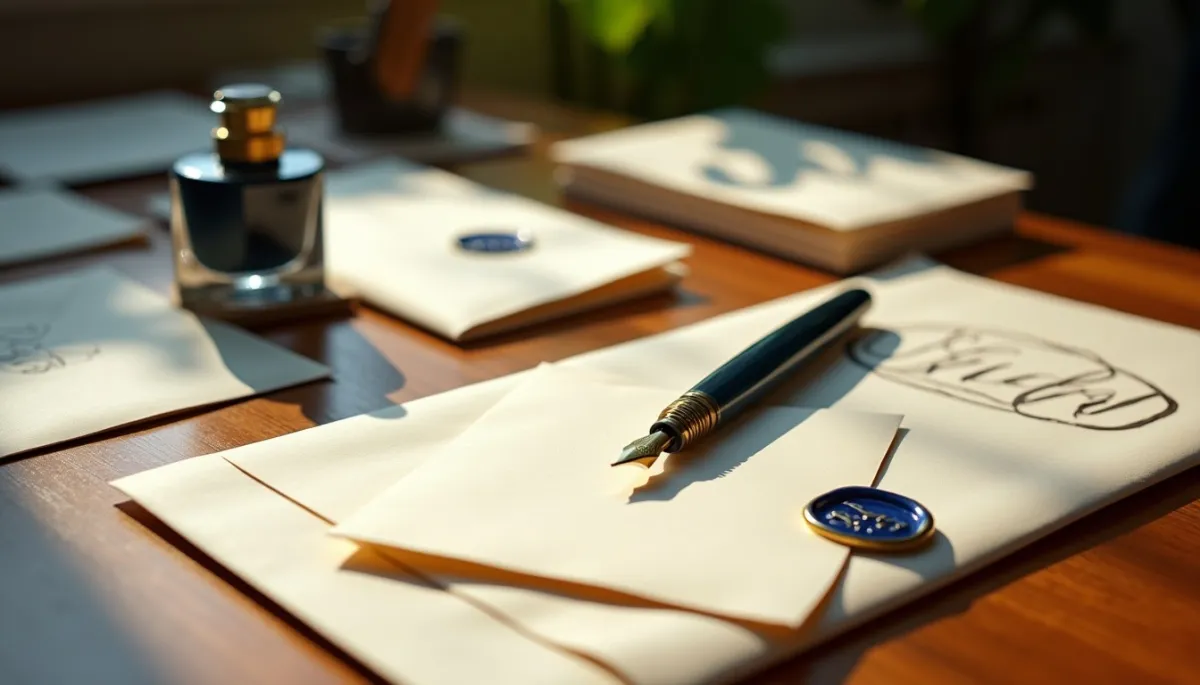
Imagine a sunlit atelier in Paris, a wooden table strewn with envelopes, a pot of blue-black ink and a steady hand forming an S that swings like a small bridge. A client waits to entrust a marriage announcement; a calligrapher gently rotates the paper, listening to the rhythm of the nib. Outside, the city hums, inside, time slows.
Paper as stage
Luxury stationery has stopped being mere packaging. It is the scene where a personal story unfolds, the first physical expression of a thought. Brands from Smythson to G. Lalo, and niche houses like Papier Tigre or France's Atelier Laizé, have expanded bespoke services, offering engraved envelopes, deckled edges and hand-marbled endpapers.
Hotels and fashion maisons commission custom correspondence kits. At Ritz Paris and Aman resorts, clients request personalized note cards after memorable stays, a practice that ties hospitality to memory through tactile keepsakes. Even corporate gifting now includes calligraphed notes rather than mass-printed cards.
The market signal is clear: beyond ephemeral digital messages, consumers pay for rituals that imply attention, taste and time. In fine stationery stores, sales associates report longer, more intimate shopping conversations—an indicator of demand for curation over selection.
The slow craft
Why this return? One answer is simple: human tempo. The pandemic encouraged people to reclaim slowness and to seek tangible tokens. Writing by hand requires presence; it resists the instant. That cultural shift opened a door for craftsmanship.
Another driver is the luxury industry itself. Maison brands have reinterpreted calligraphy and stationery as heritage services. Montblanc, for instance, continues to develop bespoke nibs and personalized writing instruments. Smythson and Crane provide embossed paper and monogram services that translate identity into object.
Digital influencers and social platforms fuel desire too. Images of ornate envelopes and nib strokes populate feeds, translating calligraphy into shareable aesthetics. Yet, the underlying motivation often remains private: people write to reconnect, to commemorate, to grieve, to celebrate.
Between tradition and reinvention
Calligraphy is no museum piece. Contemporary artists such as Martina Flor have bridged lettering and commercial design, while independent calligraphers run workshops in cities like New York, London and Barcelona. These workshops teach technique, but also how to compose a line that feels like a voice.
There are distinctions to clarify. Calligraphy refers to the art of beautiful writing, where form and rhythm matter. Lettering or hand-lettering is composing letters as shapes, often for logos or posters. Both inform luxury stationery: calligraphy gives personal notes their cadence, lettering informs monograms and logos.
Still, contradictions appear. The very visibility on social networks risks transforming an intimate practice into a performance. Some artisans report clients requesting overly ornate scripts for ephemeral uses, which dilutes the meaning. The future lies in balancing spectacle and sincerity.
Start your own letter
If you want to try, begin simply. Choose a smooth, cotton-rich paper (90 to 120 g/m² minimum for correspondence). A fountain pen with a medium nib is forgiving; later, experiment with oblique nibs for copperplate styles. Ink matters: waterproof pigment inks last, while iron-gall inks age with character.
Practice basic strokes before words: ovals, underturns, entrance and exit strokes. Copy historic exemplars to understand proportion, but let your hand find a natural rhythm. Most importantly, write short, meaningful notes. A single well-penned sentence often resonates more than pages of ornament.
For collectors, commissioning a suit of stationery—envelopes, letterhead, a seal—adds ceremony. Conservators recommend storing paper flat, away from sunlight, in acid-free envelopes to preserve ink and fiber. Bespoke stationery becomes an heirloom when cared for.
Thanks for reading, and don't forget, Enjoy Life Moments!