Bio-architecture: living in interiors that breathe and filter energy
🚀 Key Takeaways
- Core concept : Homes designed to mimic living systems improve air quality and well-being.
- Practical tip : Combine cross-ventilation, clay plasters and a few hardy plants like Sansevieria or Dracaena.
- Did you know : The Bosco Verticale in Milan (2014) is a landmark of integrating trees into architecture at scale.
It feels alive.
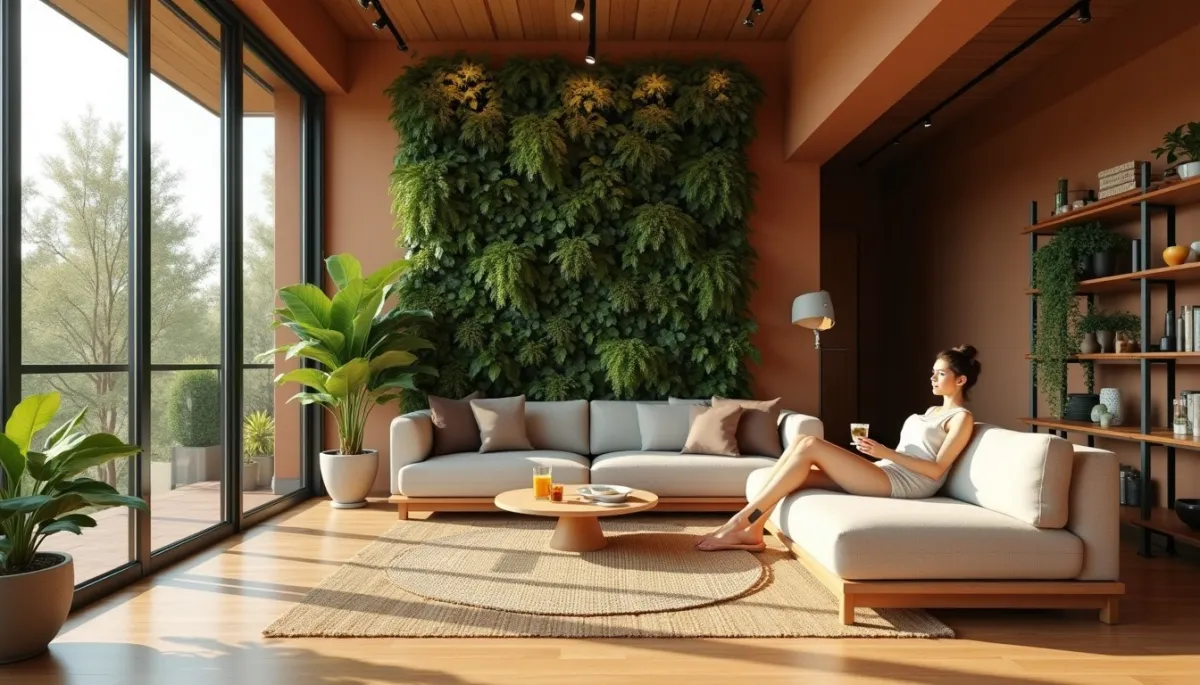
Imagine entering a living room warmed by late afternoon sun, where a green wall hums with small life, clay plaster softens echoes, and a lattice lets a cool breath of air through. A neighbor's cat stretches on a woven rug, while the faint scent of lemon balm drifts from a window herb garden, and your smartphone reports a steady CO2 level below 800 ppm. You feel calmer, and the room seems to answer back.
spaces that act
Bio-architecture is less a single style than a family of approaches that treat buildings as ecosystems. Designers mix biophilia (our innate love for living nature), passive ventilation, phytoremediation (plants removing pollutants), and materials that store and release moisture, to create interiors that literally breathe.
The trend is visible from single-family renovations to large projects. Stefano Boeri's Bosco Verticale in Milan, completed in 2014, popularized the vertical forest idea, while offices such as The Edge in Amsterdam (2015) introduced sensor-driven indoor environments focused on wellbeing.
On a human scale, tenants report measurable benefits. Studies tied to WELL Building Standard projects, introduced in 2014, show improvements in sleep, concentration and perceived air quality. The idea is tangible: spaces that act, not just shelter.
roots of renewal
Why this surge now? Part comes from evidence. The 1989 NASA Clean Air Study first documented that some houseplants can reduce volatile organic compounds, and since the 2000s, researchers at universities such as Harvard and MIT have linked indoor environmental quality with productivity and health.
Regulatory and market pressure matters too. Buildings account for around 37 percent of energy-related CO2 emissions globally, according to industry reports, so architects and developers explore strategies that cut energy use and improve resilience. Consumers also demand healthier homes after pandemic-era attention to ventilation and air quality.
Finally, material innovation is key. Mycelium composites, hempcrete, and breathable clay plasters reappear in contemporary projects, offering thermal inertia, VOC-free finishes, and the capacity to moderate humidity. These materials echo traditional techniques while meeting modern performance needs.
practical tensions
Bio-architecture is not a magic cure. Integrating vegetation at scale demands maintenance, irrigation systems, and biodiversity planning. Bosco Verticale required structural recalculations and long-term tree care, reminding us that living facades are an ongoing commitment.
There is also greenwashing. Labels like "natural" or "biobased" do not guarantee low emissions or healthy indoor chemistry. Certification systems, including the Living Building Challenge (launched 2006) and WELL, provide frameworks, but buyers must read specifications and lifecycle data.
Lastly, climatic and urban constraints shape what is feasible. In dense, polluted cities, outdoor air may carry particulates, making filtration essential. In humid tropical contexts, materials and ventilation strategies differ from dry continental climates. Bio-architecture adapts, it does not prescribe one solution for all.
simple rituals
Anyone can adopt bio-architectural habits at home. Start with cross-ventilation, open windows for short, regular bursts of air, and install a hygrometer to monitor humidity between 40 and 60 percent. Replace high-VOC paints with natural clay or lime plasters, which regulate moisture and chemical off-gassing.
Introduce plants strategically: Sansevieria (snake plant), Epipremnum (pothos) and Dracaena are resilient and help reduce common VOCs. For odor and formaldehyde control, add peace lily or spider plant, but be mindful of pet safety.
Consider low-tech elements: a window-mounted trellis for deciduous vines provides summer shade and winter light, while a thermal mass bench or tiled floor evens temperature swings. These small moves make interiors feel alive and less mechanical.
Thanks for reading, and don't forget, Enjoy Life Moments!