The aviator of the impossible: Beryl Markham, first woman to fly east to west across the Atlantic
🚀 Key Takeaways
- Core idea : Beryl Markham was the first woman to fly solo east to west across the Atlantic, in 1936.
- Practical tip : Visit museums and African sites (Nairobi, Cape Breton) to feel the context of her life.
- Did you know : She was also a bush pilot and a celebrated memoirist, author of West with the Night (1942).
She looks like a woman who would rather chase horizons than headlines.
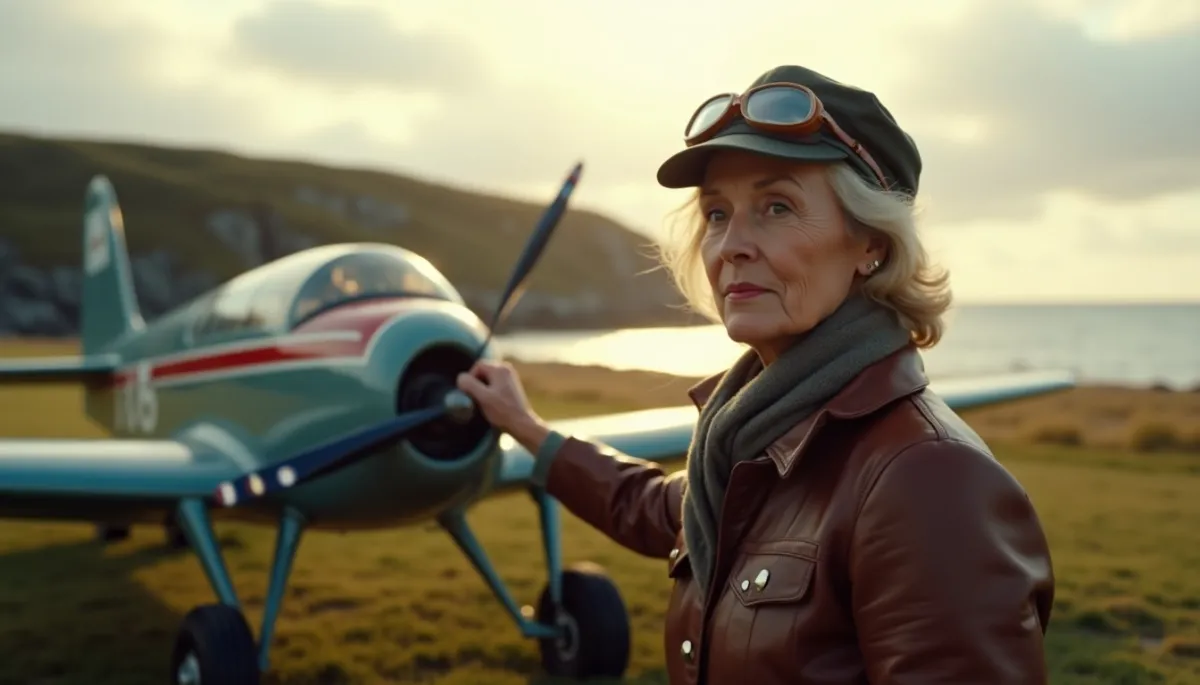
Imagine a grey morning over the Irish Sea, an elegant, single-engine Percival Vega Gull warming its engine while a lone pilot, dusty from African roads and smelling faintly of horses, checks her compass and oil. The plane's polished fuselage reflects cloud, and the pilot, sunburned and focused, sets course for Newfoundland. That scene, equal parts stubbornness and grace, is the image that follows Beryl Markham into history.
Un nom dans le ciel
Beryl Markham (1902–1986) was a British-born aviator raised in Kenya, known both for her flying feats and her literary talent. By the 1930s she had established a reputation as a bush pilot, delivering mail, ferrying people between remote airstrips, and learning to read weather the way others read a map.
On 4 September 1936, flying a Percival Vega Gull, she took off from England and after a long, difficult crossing, crash-landed on the coast of Nova Scotia. That flight made her the first woman to fly solo from east to west across the North Atlantic, a route considered harder because prevailing winds are against the pilot.
Beyond that single headline, Markham is the author of West with the Night, first published in 1942. The book blends memoir and lyrical observation of the African landscape, and it helped shape her image as both a practical aviator and a poetic storyteller.
Comment elle est arrivée là
Her life began far from any runway. Raised in colonial Kenya, Markham learned to ride and handle animals, skills that translated into calm under pressure. She became a racehorse trainer and a pilot in a period when both professions were dominated by men.
She earned her spurs flying in bush conditions: improvised airstrips, sudden storms, and long solo legs. Those experiences taught her navigation without fancy instruments, how to manage fuel and fatigue, and how to make quick decisions — all essential for a transatlantic attempt.
Personal episodes also shaped her. Her marriages, friendships with figures of colonial East Africa, and the practical demands of living remotely pushed her toward independence. Flying became as natural to her as handling a horse on the savannah.
Contradictions et postérité
Markham's legacy is bright but complex. Her 1936 flight made headlines, yet she was not primarily a publicity seeker; she often resisted being turned into a simple heroine. Her life combined risk-taking with a careful, technical approach to flying.
There was also debate about her literary voice. West with the Night received acclaim and occasional controversy over authorship, but many critics and writers have praised its prose and its portrait of colonial Africa seen from a very personal angle.
Her life after the flight was quieter; she continued flying, returned to Kenya, and later lived in England. Yet the image of the lone woman pilot landing on a Canadian shore endures as a symbol: resilience, technical skill, and a refusal to accept limits.
Conseils et visites
If Markham's story inspires you, consider practical steps to connect with it. Visit aviation museums that preserve early aircraft, read West with the Night for its atmospheric prose, and explore Kenyan history to understand the world she came from.
On the travel side, Cape Breton and Nova Scotia hold local museums and coastal trails that recall early aviation landings. In Nairobi, places linked to colonial and literary histories (including the Karen Blixen Museum) help situate the African side of her life.
For aspiring pilots or travelers, the takeaway is concrete: learn navigation fundamentals, respect weather patterns, and cultivate a blend of technical skill and calm judgment. Those qualities made Beryl Markham's crossing possible.
Thanks for reading, and don't forget, Enjoy Life Moments!