Berluti's bespoke art: the perfect patina that makes every shoe unique
🚀 Key Takeaways
- Core concept: Patina is a handcrafted, layered dyeing process that gives depth and individuality to Berluti’s Venezia leather.
- Practical tip: Rotate shoes, use cedar shoe trees, and request periodic touch-up patina to keep colours alive.
- Did you know: Berluti offers bespoke lasts and personal consultations, so the patina can be tailored to a client’s history and style.
Elegance revealed, one brushstroke at a time.
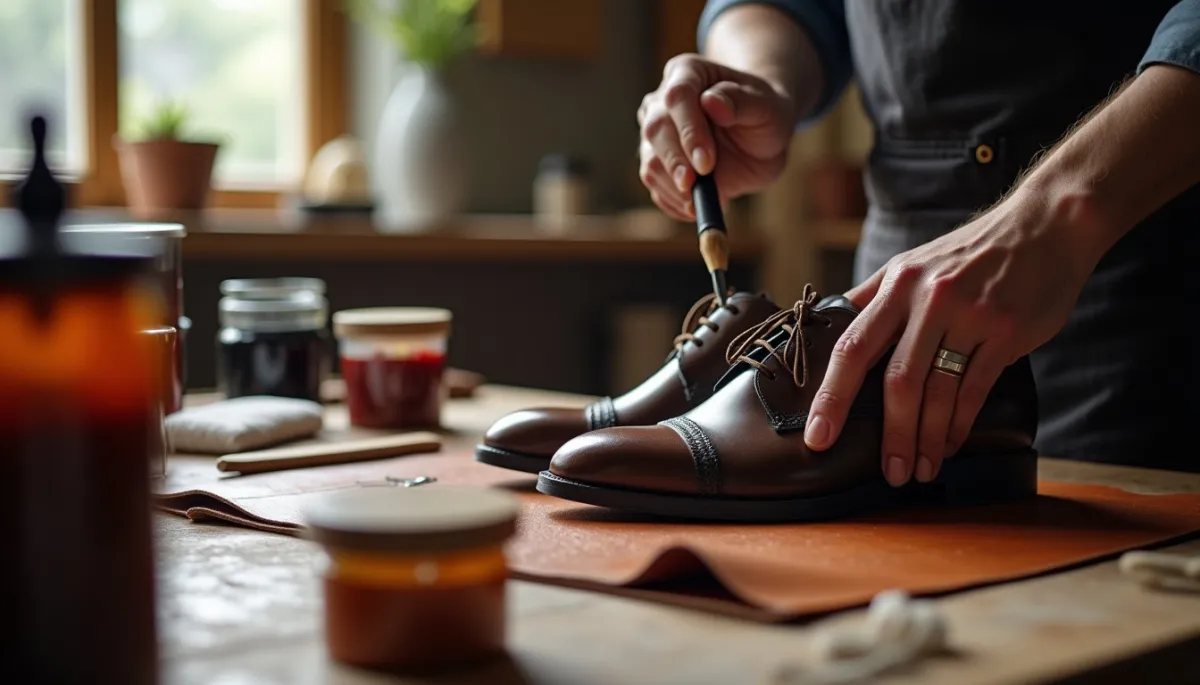
Imagine a quiet atelier in Paris, morning light slanting through tall windows, a master artisan bent over a walnut bench. Around him, jars of dyes, cotton rags and round brushes await. On the last, a pair of calf leather shoes has already been burnished once. The artisan applies a thin layer of dye, then polishes it, watching the grain drink the colour and the surface deepen. It is a choreography of hands, patience and memory.
the patina as signature
Berluti’s patina is more than a finish. It is a language that translates leather into personality. Using Venezia calf, a supple, full-grain hide known for its ability to take dye, artisans build colour in translucent layers. The result is not uniform. Highlights, shadows and tiny irregularities create depth, like the natural ageing of well-loved objects.
This approach has practical consequences for clients. A hand-patinated shoe adapts to light and movement; at a distance, it can read as a deep brown, up close, hints of red or tobacco reveal themselves. Collectors and connoisseurs prize this complexity. For the house, it becomes a point of difference in a market where machine finishes can feel flat and homogeneous.
Examples exist across Berluti’s clientele. From bespoke shoes commissioned for diplomats to limited-edition calfskin loafers in avant-garde tones, each pair carries an imprint of the artisan’s hand. In retail spaces in Paris, Milan and Tokyo, patina demonstrations are staged like performances. Clients watch dyes bloom on leather, and often choose colours that echo a memory, a place or an outfit.
how the craft persists
Why does patina enjoy renewed attention today? Several factors converge. First, a broader luxury trend favors craft and authenticity. Consumers increasingly pay for visible human labour and stories. Second, the rise of personalised luxury makes sur-mesure services attractive. Patina is the ultimate personalization: two shoes with the same base can become visually distinct once patinated by different hands.
At Berluti, the technique is taught within ateliers that combine apprenticeship and controlled experimentation. Artisans learn to mix aniline dyes, to test absorbency on scraps, and to judge when polish should stop. This tacit knowledge is hard to digitize. It relies on feel, not only measurements. The house complements this tactile know-how with consultations where clients discuss wardrobe, travel habits and even skin tone, so the patina can be harmonised with an individual’s life.
There is also a sustainability dimension. A durable, well-maintained patina extends a shoe’s life. Repair and re-patina services encourage ownership over disposability. For luxury houses seeking to align with environmental concerns, offering repairs and re-finishing is both ethical and strategic.
limits and tensions
Yet artisanal patina faces contradictions. Scalability is one. Hand-patinating each pair is time consuming and costly, which can limit availability. High demand, especially for iconic colours, sometimes creates waitlists. Brands balance exclusivity with accessibility, offering ready-to-wear patinas alongside bespoke appointments.
There is also a risk of mythologizing. Marketing can over-promise a romantic vision of craft, while the reality requires rigorous quality control and sometimes multiple reworks. Clients must understand that patina evolves with wear. A freshly darkened toe will soften and develop patina gradients with time. This evolution is part of the appeal, but it requires care.
Finally, innovation pushes the craft forward. Some ateliers experiment with novel pigments, water-based dyes or digital colour references to help clients preview results. These tools do not replace the hand, but they expand possibilities. The future of patina may be hybrid: artisanal layering informed by technological precision, without losing the idiosyncrasies that make each shoe singular.
Thanks for reading, and don't forget, Enjoy Life Moments!