Acqua di Parma: the Italian cologne beloved by Hollywood stars
🚀 Key Takeaways
- Concept clé : Colonia is a citrus-aromatic eau de cologne created in Parma in 1916, known for its bright top notes and elegant simplicity.
- Practical tip : Apply Colonia on clothes or hair for a longer, softer trail, avoid rubbing wrists which breaks down the scent.
- Did you know : The brand's yellow packaging became a signature look, evoking Italian sunshine and sophisticated minimalism.
Close your eyes and imagine a Mediterranean terrace at dawn.
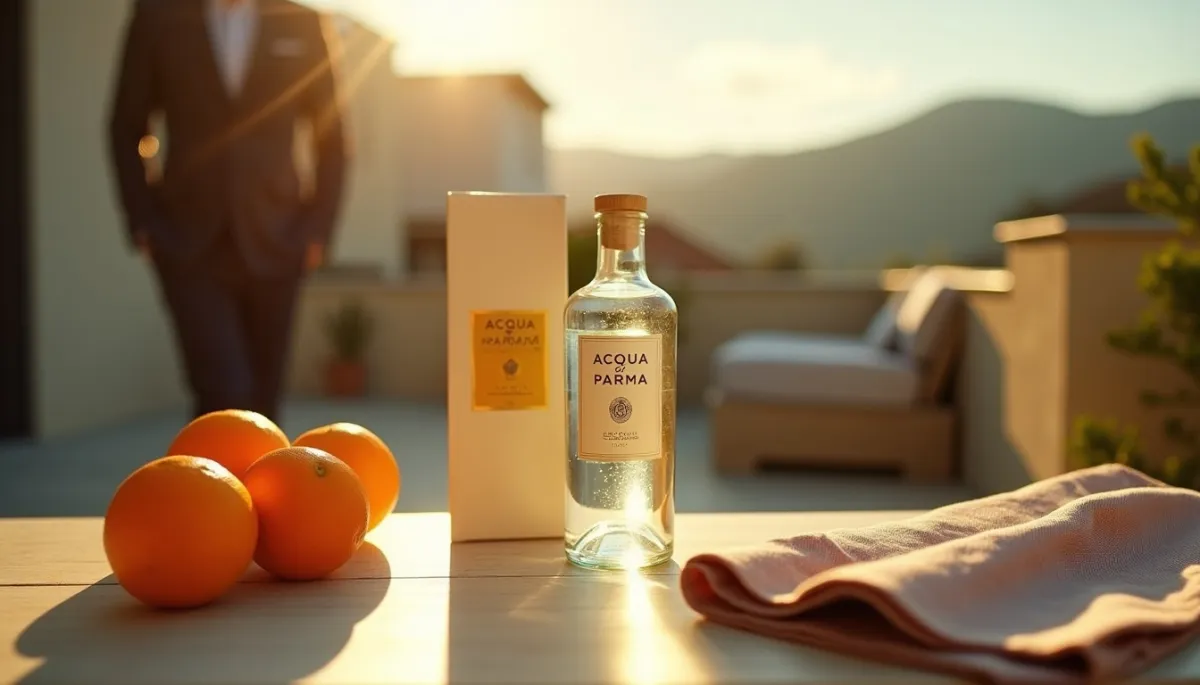
The air is fresh with lemon and bergamot, a tailor adjusts a suit in the corner, and an actor steps into the light. This is the world where Acqua di Parma's Colonia has lived in memory and on skin, perfuming dressing rooms from Parma to Sunset Boulevard.
Un parfum, une époque
Acqua di Parma was created in 1916 in Parma, northern Italy, as a modern interpretation of the classic eau de cologne. Its original formula privileged bright citrus notes—lemon, sweet orange, bergamot—supported by aromatic herbs and a light woody base. The result is an elegant freshness, neither too sharp nor overly sweet.
Through the 1920s to the 1960s, Colonia became synonymous with an international idea of Italian style: understated, sunlit and refined. Its compact bottle and the famous yellow box (a deliberate chromatic choice that signals warmth and luxury) helped the fragrance travel on trunks and in hand luggage across oceans.
Hollywood took notice. While the brand never relied solely on celebrity endorsements, the scent fitted perfectly with the cosmopolitan glamour of mid-century film stars. Colonia's presence on sets and in dressing rooms made it an accessory as essential as a tuxedo or a pair of sunglasses.
Les coulisses de la séduction
Why did Colonia appeal to Hollywood? First, its profile is versatile. The citrus opening reads as fresh and accessible during daytime, while the aromatic heart and woody trail bring a discreet sophistication suitable for evening. This versatility matches the demands of performers, who move from daylight interviews to night premieres.
Second, the fragrance carries an evocative, almost narrative quality. A single spritz can summon images of Italian summers, baroque terraces and classic tailoring. For actors, a scent that suggests a character's background or mood is valuable, whether for personal use or for creating an off-screen persona.
Third, Colonia was non-intrusive. Unlike heavy orientals or overly sweet compositions, its balance allowed it to be worn in close proximity without overwhelming co-stars or directors. In the tight quarters of a set, that discretion counts.
Héritage et avenir
Across decades, Acqua di Parma expanded beyond the original Colonia into a full lifestyle house: grooming, candles, bath products and bespoke services. Yet Colonia remains the emblem. Celebrations of the brand's milestones, including centenary events, reinforced the product's cultural place rather than moving it away from its roots.
There are contradictions in modernizing a heritage fragrance. Contemporary consumers ask for innovation, sustainability and variety, while collectors demand fidelity to the original formula. The brand has navigated this by offering flankers (new variations on Colonia) alongside careful preservation of the classic edition.
For anyone curious to try Colonia, a few practical tips: test it on skin rather than paper, wait for the opening to settle before judging, and store the bottle away from direct light and heat. A light application on clothes extends the scent's presence without concentrating it at skin level.
Colonia's real power is social and sensory. It ties places and memories together, from the tiled streets of Parma to the mirrored hallways of Hollywood hotels. That is why, even in a crowded market, an Italian cologne from 1916 still finds admirers in the 21st century.
Thanks for reading, and don't forget, Enjoy Life Moments!