The Roman Salute: Its Legacy and Controversy in the Mediterranean World
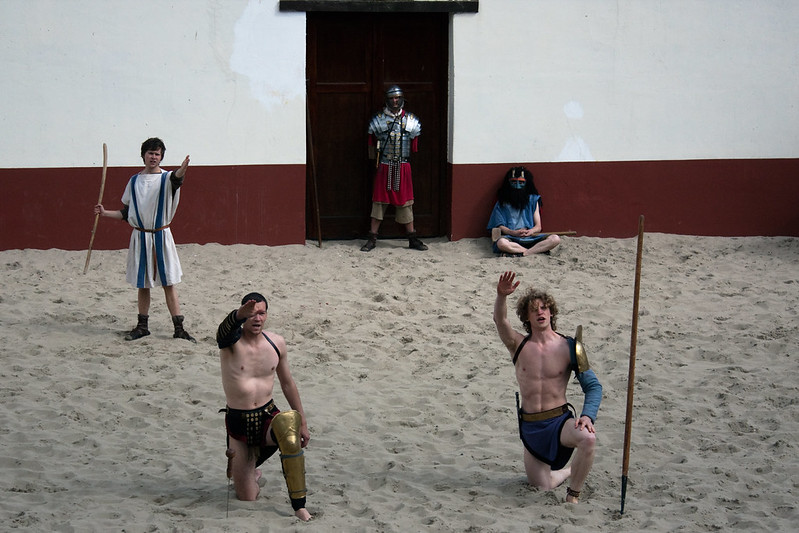
During his speech at Donald Trump’s inauguration, Elon Musk tapped the left side of his chest with his right hand before extending his arm with an open palm. This gesture, performed twice, is considered by many as the Roman salut.
Often associated with the Roman Empire, the Roman salute, an outstretched arm with the palm facing downward, has evolved over centuries, transitioning from a symbol of respect in ancient times to a gesture laden with modern political connotations.
Origins and Ancient Use
In ancient Rome, the salute was believed to be a gesture of respect or allegiance, particularly in formal or military contexts. It was used in ceremonies, such as honoring victorious generals, and may have signified loyalty to the state. The Roman salute’s connection to Roman identity endured for centuries, symbolizing duty and order within the empire.
The origin of this gesture in Roman culture, however, is not entirely clear. It is often associated with depictions of Roman soldiers and figures in military settings. Some archaeological evidence shows the salute represented on objects like a brick from the Cohorte II Hispanorum in Croatia. However, the depiction may be a later addition, as the character shown is dressed in a toga and holding a lance, which could suggest a post-Roman interpretation.
This symbol was also used by emperors, such as in the famous statues of Augustus of Prima Porta and the equestrian statue of Marcus Aurelius in Rome. Despite these representations, the salute’s exact historical roots remain somewhat speculative and may not have been as prominent in ancient Roman daily life as commonly assumed.
The Fascist Revival: A Symbol of Authority
In the 20th century, the Roman salute was resurrected by fascist regimes, particularly by Benito Mussolini's Italy and Adolf Hitler's Nazi Germany. Leaders of these totalitarian governments adopted the gesture to evoke the strength and grandeur of the Roman Empire, drawing on its symbolism to assert control, unity, and national pride. Under Mussolini, the Roman salute became a central part of the fascist image, used in rallies, public events, and military displays.
While the salute originally carried meanings of loyalty and respect in Roman times, under fascism, it took on a darker association with oppression and authoritarian rule. Its use during this period has made the Roman salute highly controversial, as it is now tied to the atrocities of WWII and the violent ideologies of fascist regimes.
Modern Mediterranean Views
Today, the Roman salute is a symbol deeply embedded in the collective memory of the Mediterranean world, but its meanings have been heavily shaped by the 20th-century fascist revival. In countries like Italy, the salute’s use is legally prohibited due to its connection to fascism. Public displays of the gesture can result in legal repercussions, reflecting the widespread rejection of the salute’s fascist connotations.
Yet, the Mediterranean's connection to ancient Rome remains strong. The Roman Empire’s influence on art, architecture, law, and culture still resonates throughout the region. In historical contexts, the Roman salute is occasionally seen in film, reenactments, or academic discussions, where it is more likely to evoke the ancient Roman ideal of discipline and respect rather than modern political meanings.
Legacy in Popular Culture
The Roman salute continues to appear in popular media, especially in films about ancient Rome, like Ben-Hur or Gladiator. In these settings, the salute is portrayed as a neutral, respectful gesture among Roman citizens or soldiers.
However, the historical context in which the Roman salute was later revived (particularly its use in fascist regimes) means that the gesture remains politically charged. In recent years, the salute has appeared in various forms of protest or as a symbol among far-right groups, which has further complicated its meaning in the public eye.
The Roman salute's journey from an ancient symbol of Roman power and unity to a controversial political gesture reveals the complexities of historical symbols and their evolving meanings. Despite its later appropriation, the Roman salute’s origins remain unclear, with no direct documentary evidence linking it to widespread Roman practice.
Its use by fascist regimes, while symbolic of the past, does not have firm historical foundations in ancient Rome, as suggested by the lack of clear documentation. This complicated legacy ensures that the Roman salute will continue to be a topic of ongoing discussion, both in historical scholarship and in popular discourse.