Urban art and street art: when the walls of Nice and Cannes bloom with color
🚀 Key Takeaways
- Core concept : Street art turns public walls into accessible culture.
- Practical tip : Walk the port and old town at golden hour for the best light on murals.
- Did you know : The mosaic technique used by some artists (like Invader internationally) dates back to ancient decorative arts, adapted to the street.
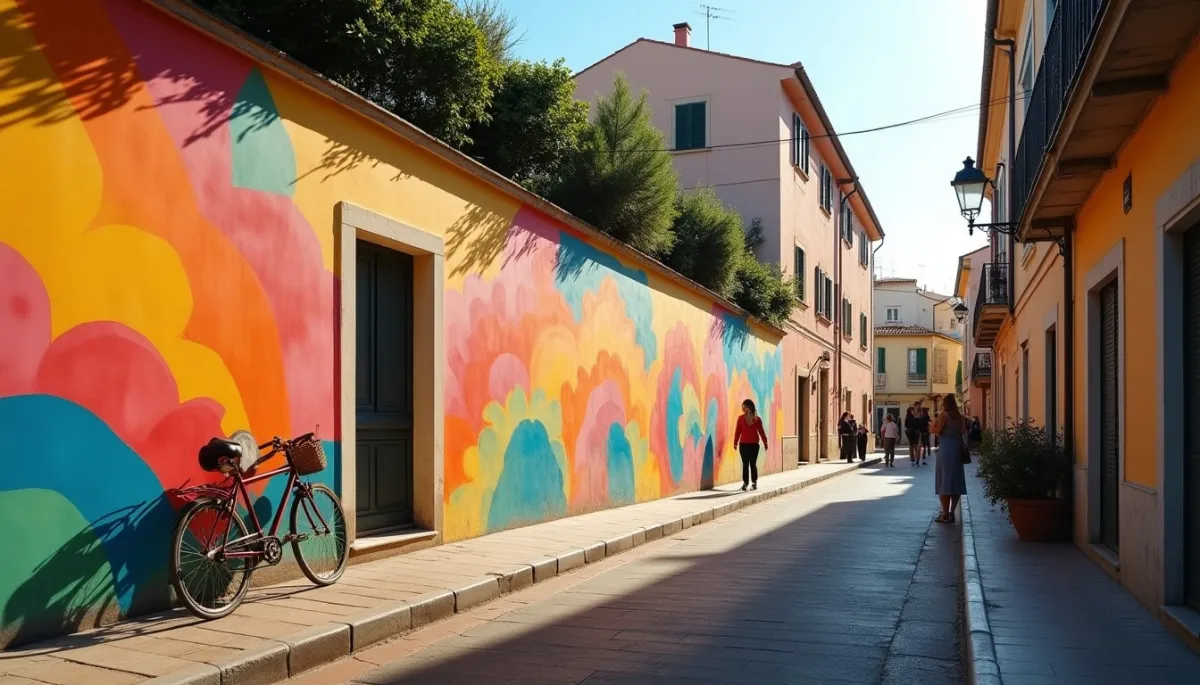
Color breathes on stone. Imagine a narrow lane in Vieux-Nice, shutters half-closed, a spray-painted portrait filling a full wall, a group of locals pausing to point and comment.
Murs qui parlent
On the Riviera, walls became storytellers. In Nice, the historic districts, the port area and parts of the Liberation neighborhood now show large-scale works that converse with markets, cafés and tramlines. In Cannes, murals pop up in La Bocca and near the old port, softening concrete facades and adding new reasons to stroll off the Croisette.
Street art here is not only decorative. It offers memory and commentary. A mural might recall a local fisherman's life, or celebrate a vanished cinema, it might respond to seasonal events like film festivals, or simply brighten a neglected façade.
Visitors increasingly seek these city canvases. Guided street-art walks are offered by local guides and associations, and informal routes circulate on social media. For tourists who credibly want local experiences, a mural hunt is an easy, free way to discover neighborhoods beyond the postcards.
Coups de pinceau et raisons
The movement you see today is the result of two decades of change. Since the 2000s, French cities have evolved from tolerating illegal graffiti to commissioning legal walls and festivals. Artists who began with stencils and paste-ups embraced larger formats and murals, sometimes collaborating with municipalities or businesses to reduce vandalism and support urban renewal.
International figures helped shape the language of the street. Invader began placing tile mosaics in 1998, making pixelated characters that travel across cities worldwide. Stencil art, popularized in France by creators from the 1980s and 1990s, made images quick to reproduce and easy to spread. Today, a mix of techniques coexist: wheatpaste posters, roller-painted murals, spray can gradients, mosaics and even 3D installations.
Local factors accelerate the trend. The Riviera benefits from high tourist flows, year-round cultural programming, and a dense heritage of urban spaces that invite artistic intervention. Cultural associations, galleries and private patrons fund projects, while younger residents and visitors expect dynamic public spaces.
Entre loi et liberté
Acceptance does not mean absence of tension. The line between sanctioned murals and illegal graffiti remains a live debate. Municipal 'legal walls' (spaces where artists can work with fewer restrictions) limit clandestine tagging, but critics argue that official commissions can sanitize street art, turning rebellious expression into commissioned decoration.
There are also practical constraints. Conservation rules in historic areas limit what can be painted, and restoration of murals requires budgets and skilled conservators. Climate matters too, salt air and Mediterranean sun age pigments faster than inland conditions, so materials and maintenance are real costs.
Nevertheless, new formats are emerging. Pop-up murals, community projects led by schools or associations, and collaborations between local artists and international names all point to a plural future. Respectful tourism and community involvement can ensure that walls remain both beautiful and meaningful.
Conseils pour voir
Start at dawn or golden hour, when light sculpts paint and mosaics. In Nice, walk from Place Massena toward the Port and wander into the old town to spot alleys adorned with paste-ups and stencils. In Cannes, leave the Croisette for La Bocca and the Rue d'Antibes side streets to find unexpected works.
Join a guided street-art tour to meet artists and learn the stories behind pieces. Always photograph respectfully, avoid touching works and check local rules: some pieces are fragile or temporary. If you like a piece, seek out the artist online; many sell prints or hold exhibitions that extend the experience beyond the wall.
Finally, remember that street art is living culture. New works appear quickly, and what you see today may be altered tomorrow. That ephemeral quality is part of the charm: the Riviera's walls continue to tell evolving stories, brightening daily life for residents and enriching visits for travelers.
Thanks for reading, and don't forget, Enjoy Life Moments!